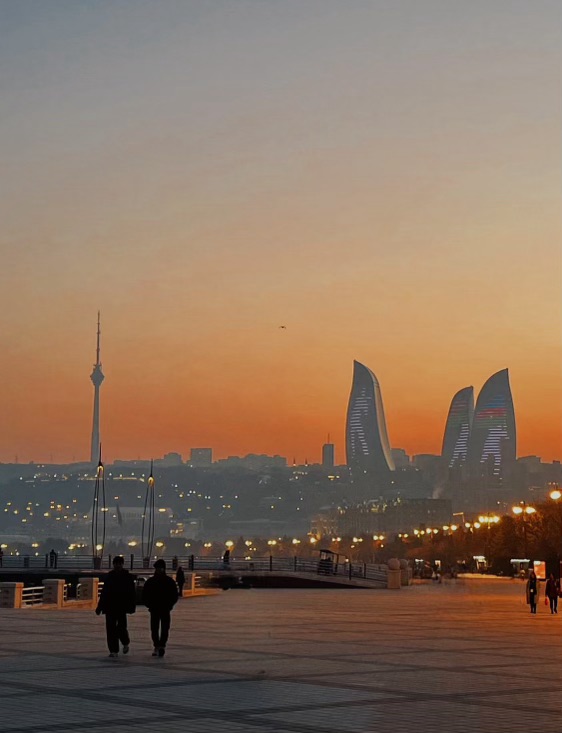
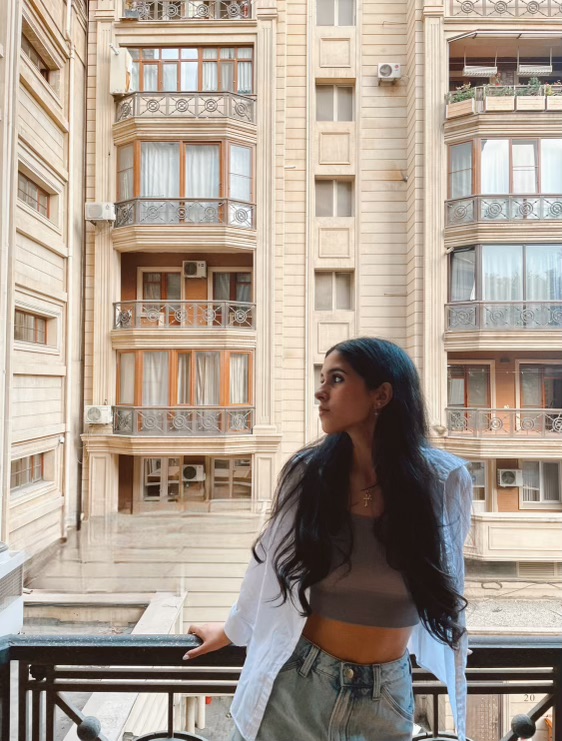
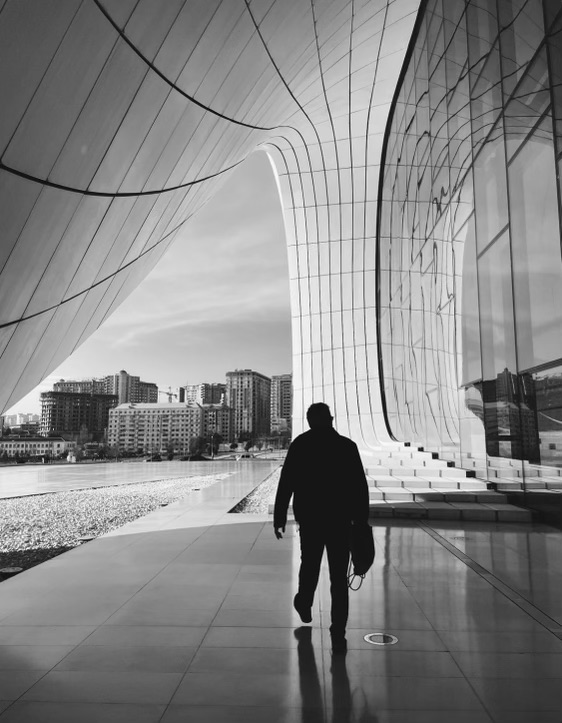
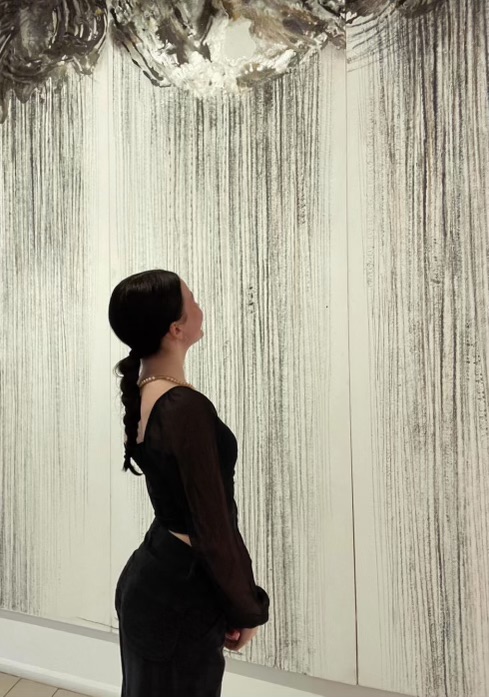
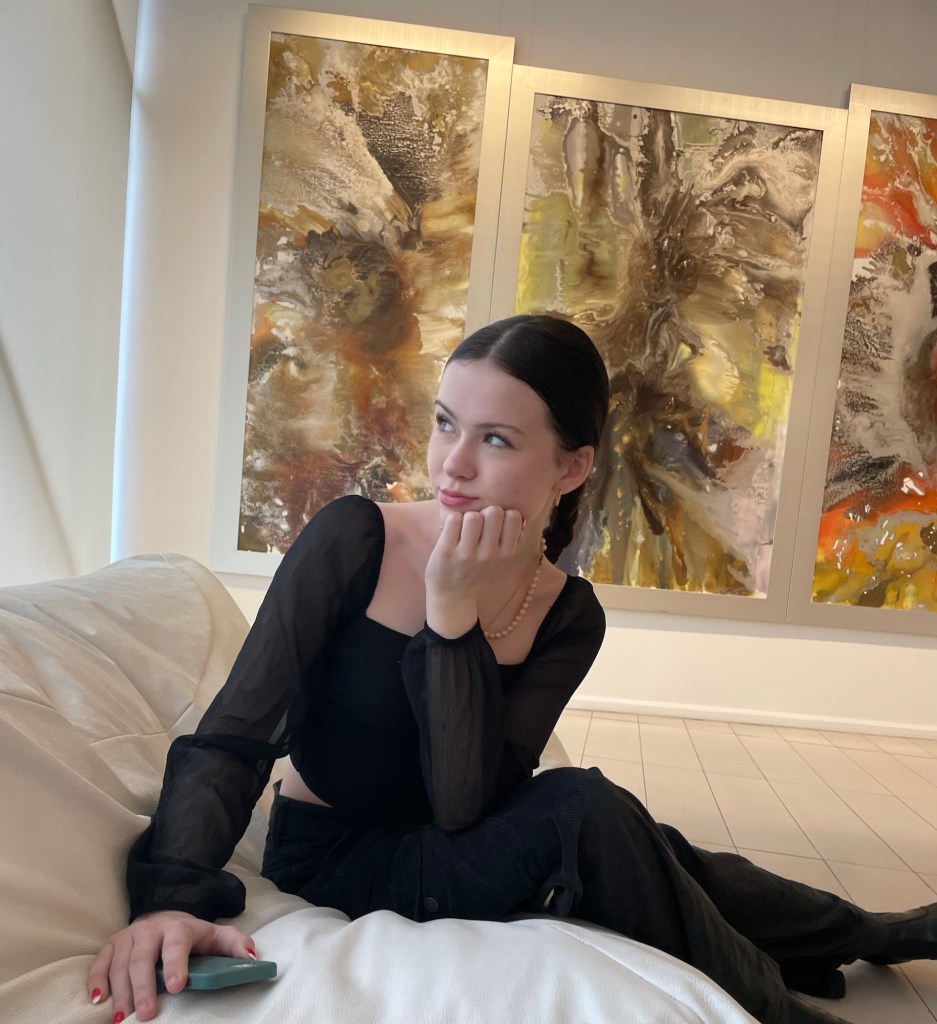
I asked Eva about contributing to this blog and finally managed to get 10 pictures from her. I asked for “10 of her favorite pictures from Azerbaijan” and these are what she chose to share. She sees things a little differently than me and it comes through in her pictures. It was a lot of fun sharing this adventure with her.
I am so tempted to try and explain these or at least caption them. Maybe I can get Eva to do it, but we have been home 3 months and I am trying to wrap up some loose ends.
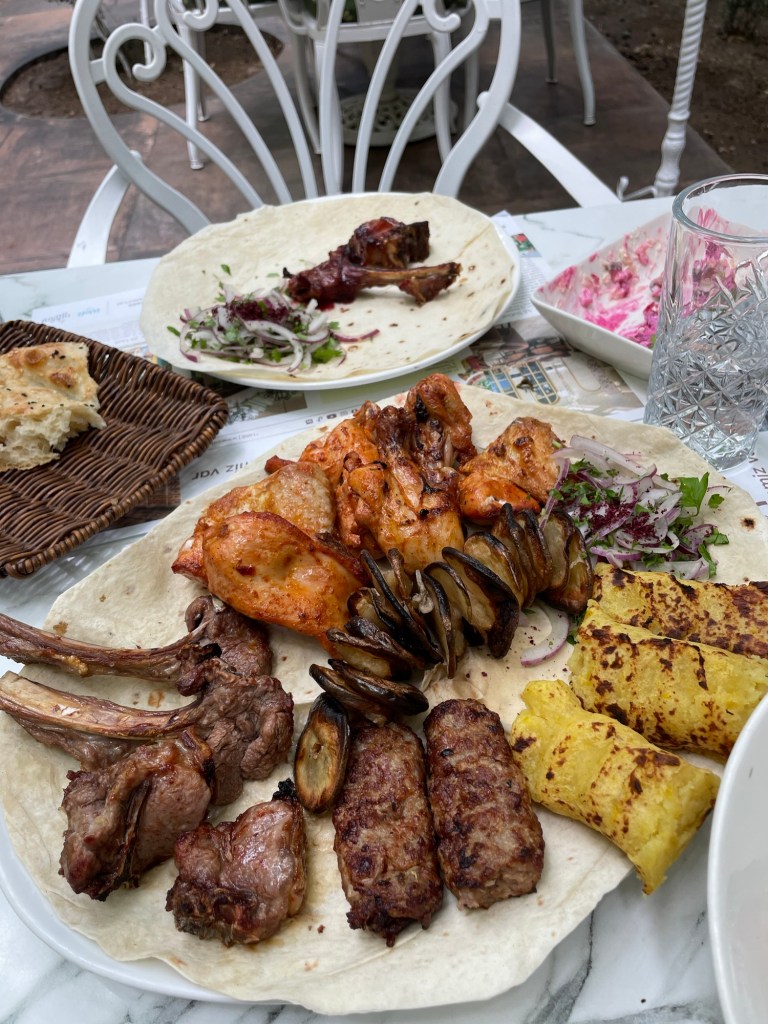
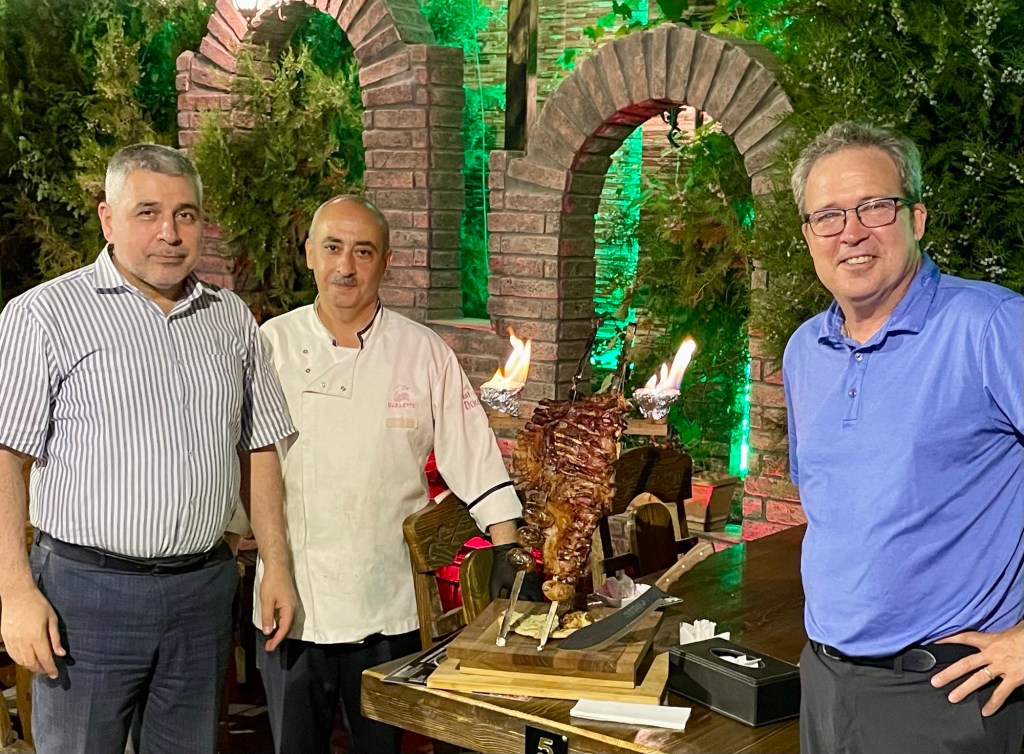
Of course the food, drink, and sharing of meals has been an important part of our journey. Above is traditional dance and costume at a Azerbaijani restaurant I visited for a work function. It really helped to have our Azerbaijani friends show us how to order and get the most out of our dining experiences in restaurants. And, we shared a few meals in our friends’ homes, which was extra nice. Below is a beautiful plate of grilled lamb, chicken, lamb and beef kebabs, potatoes, and eggplant.
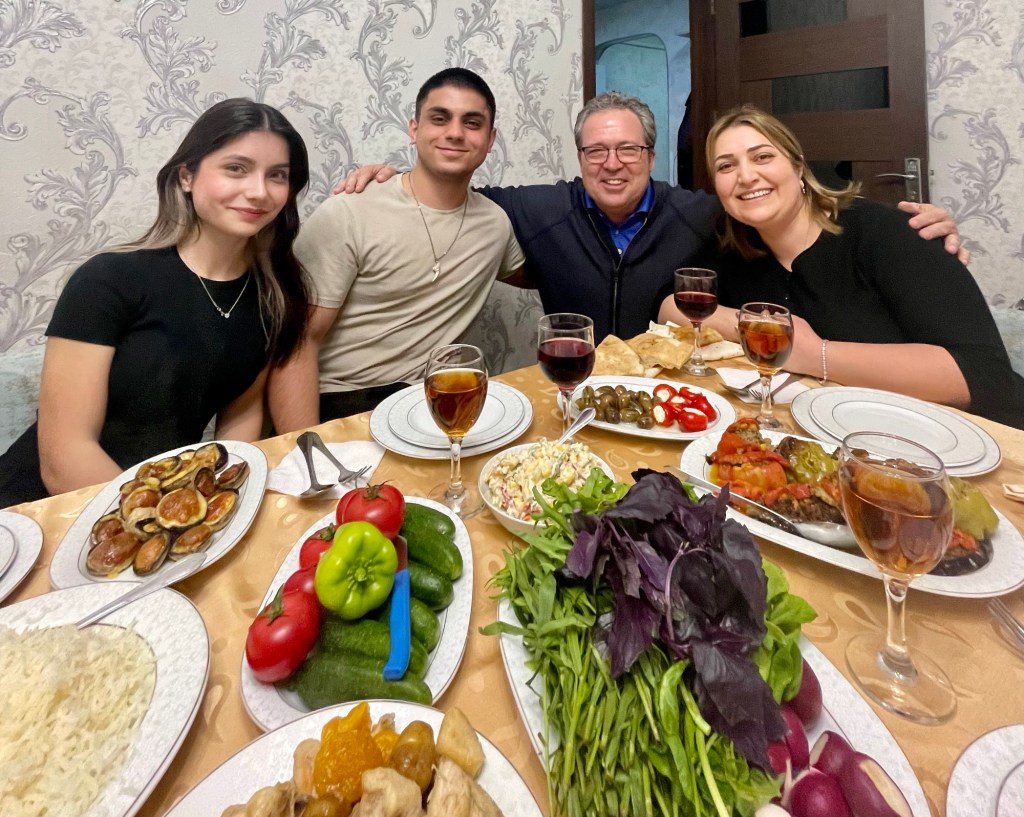
We had a huge dinner at Nurlan’s house with his sister and mother. We had vegetables stuffed with meat, and the rice dish Plov, and a variety of salads. It is common to serve fresh herbs that you eat simple and raw. I have always appreciated tea, but learned a greater appreciation for it in Azerbaijan where it is a huge part of the culture.
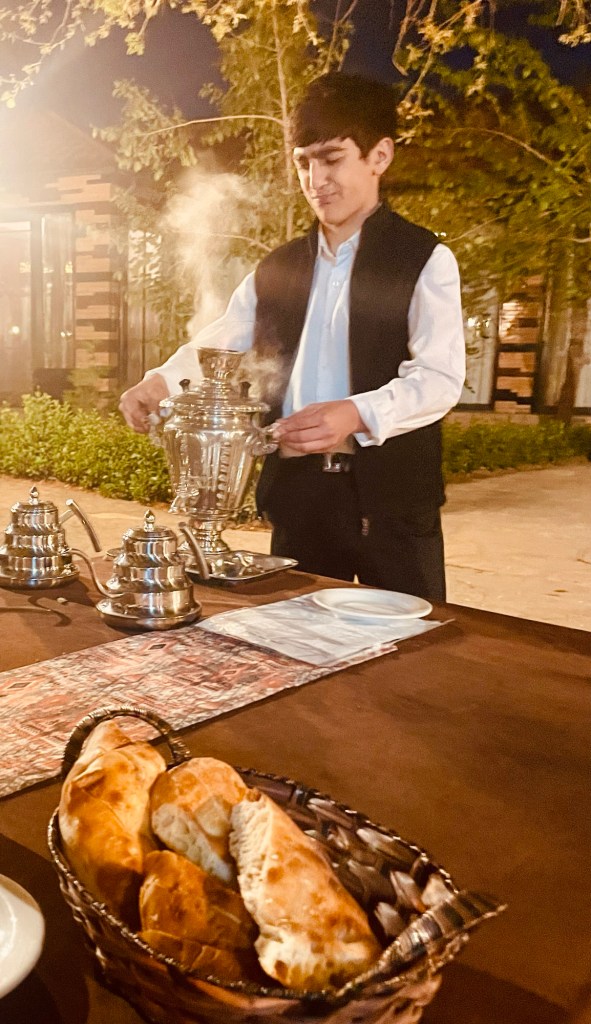
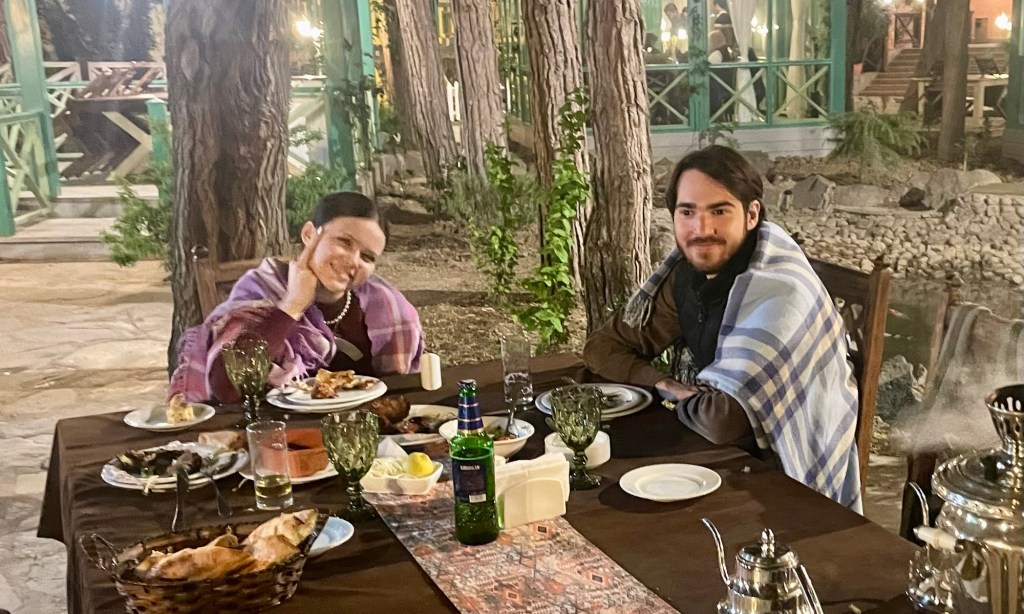
Here the tea is made in a samovar, which maintains both hot water and hot concentrated tea. They are heated with burning wood. We had a nice meal with Nick, who brought us to this neat outdoor restaurant. Below is Turkish coffee.
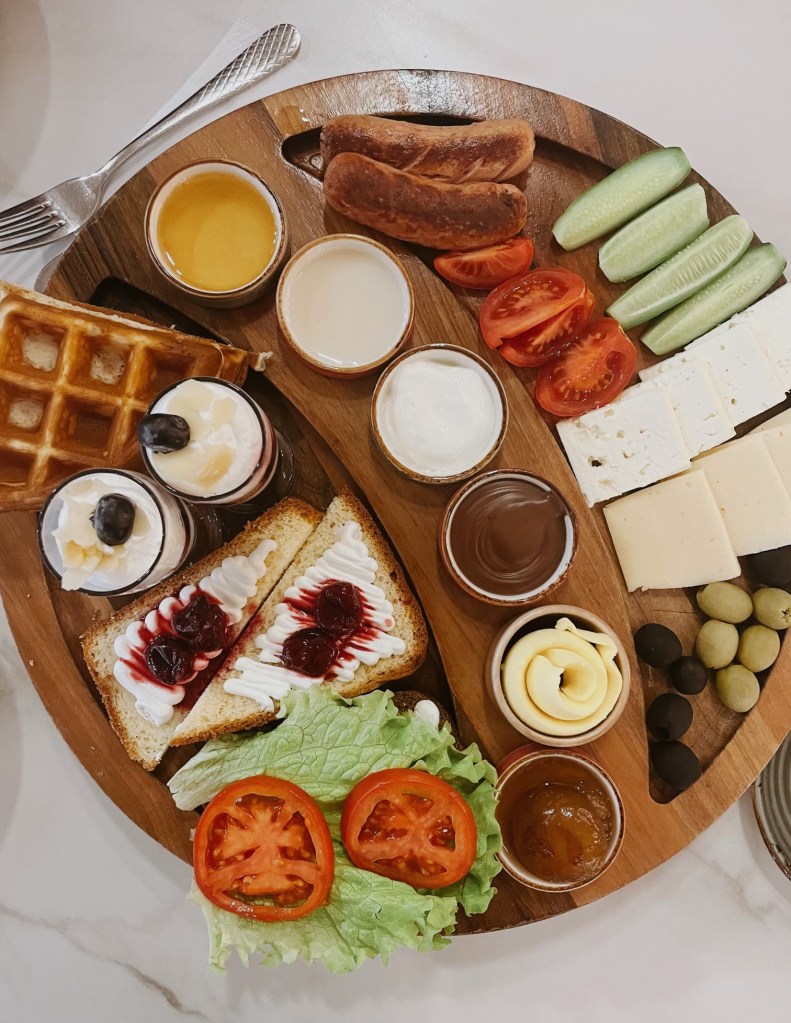
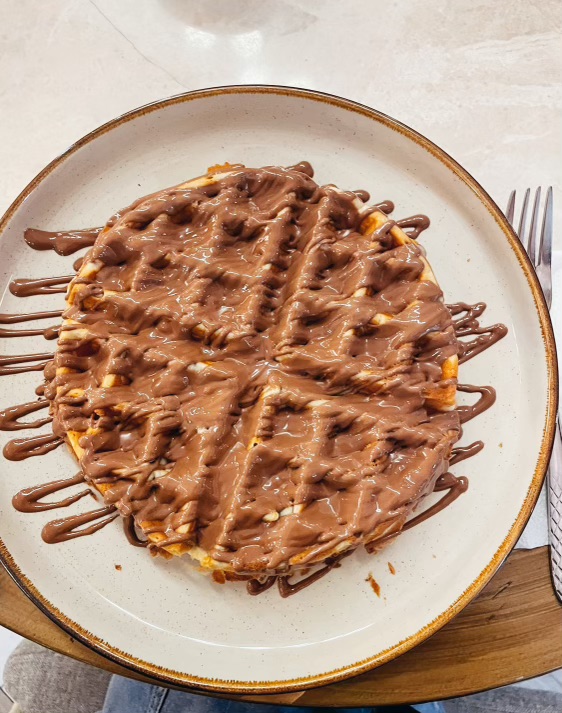
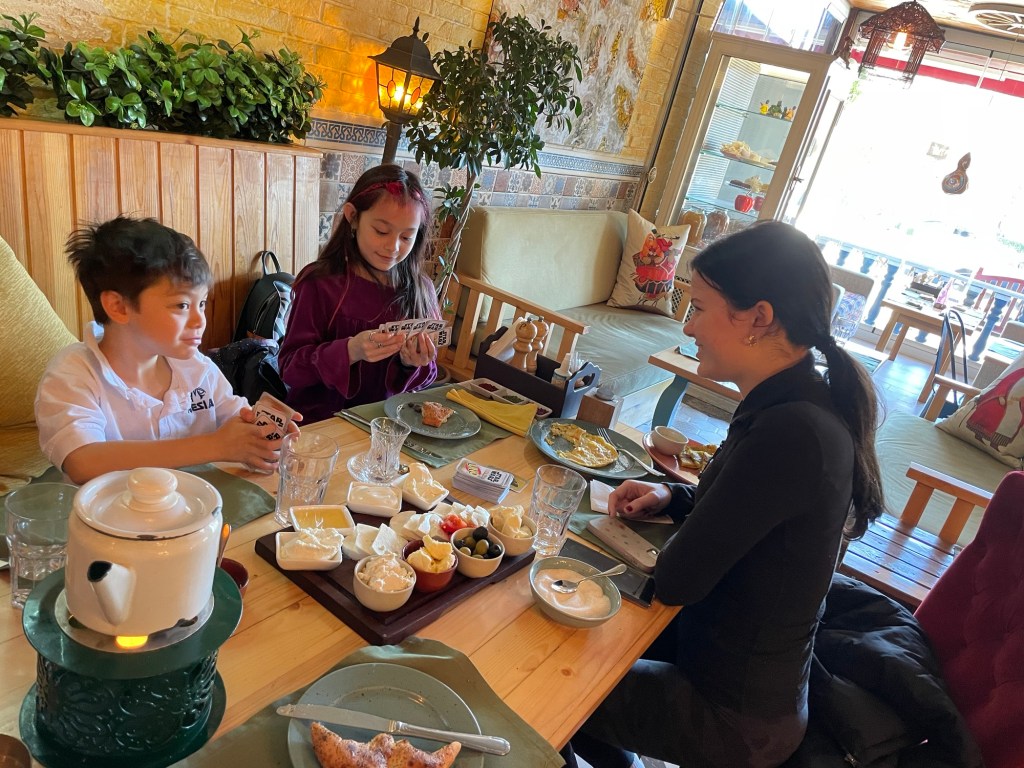
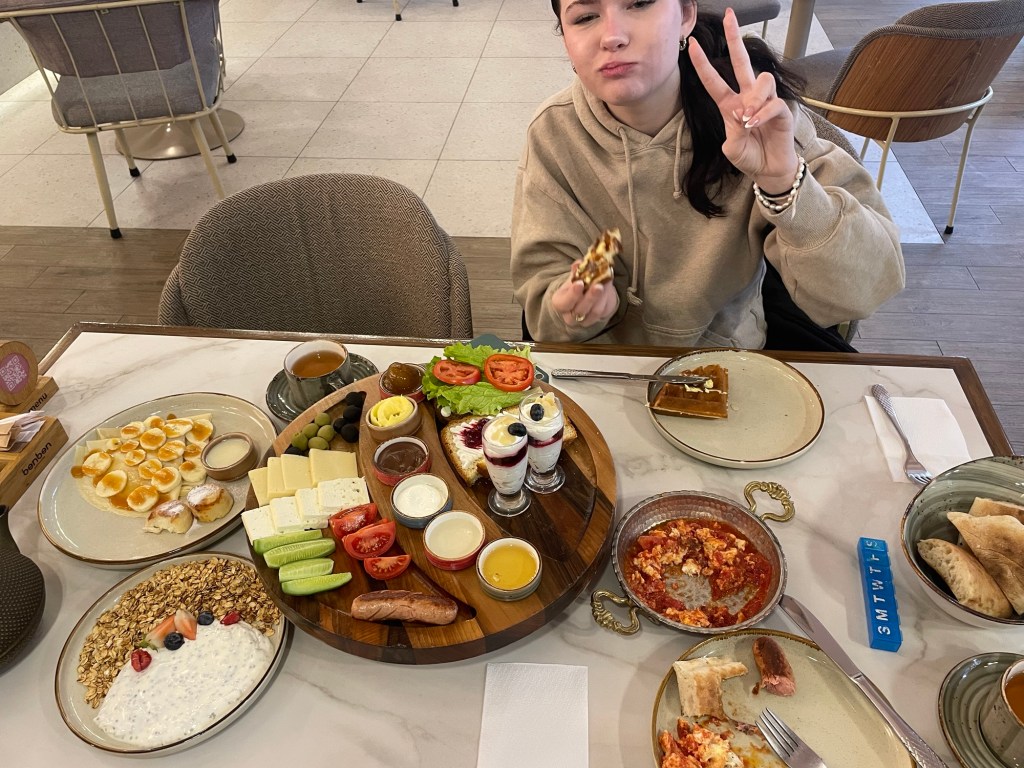
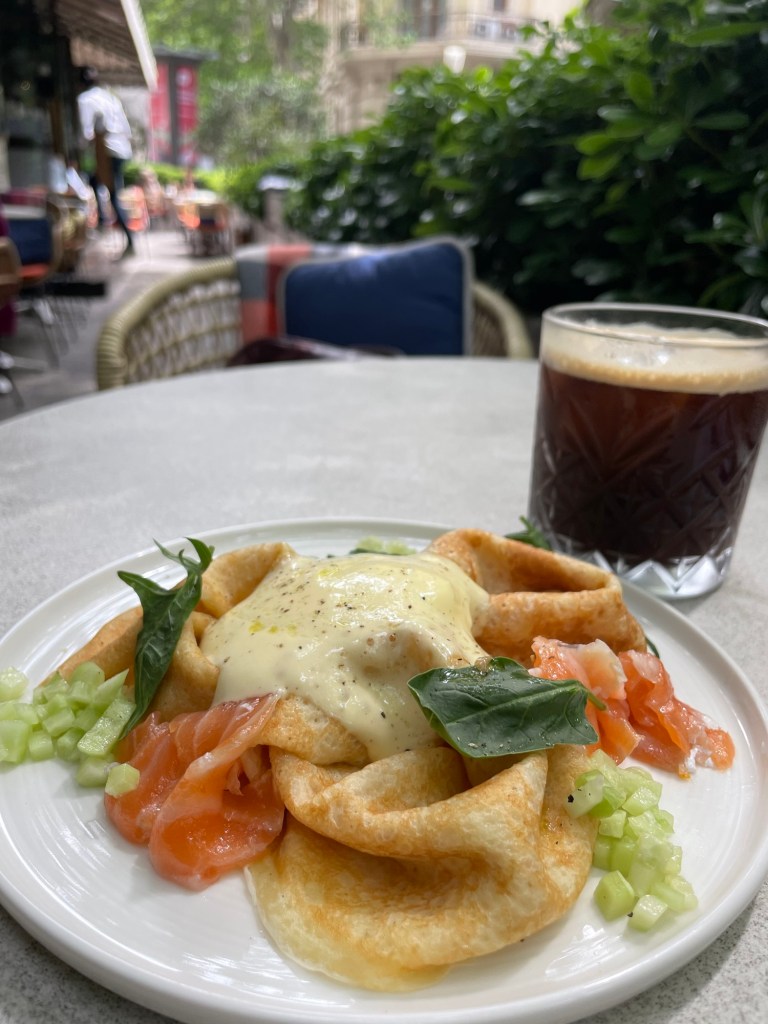
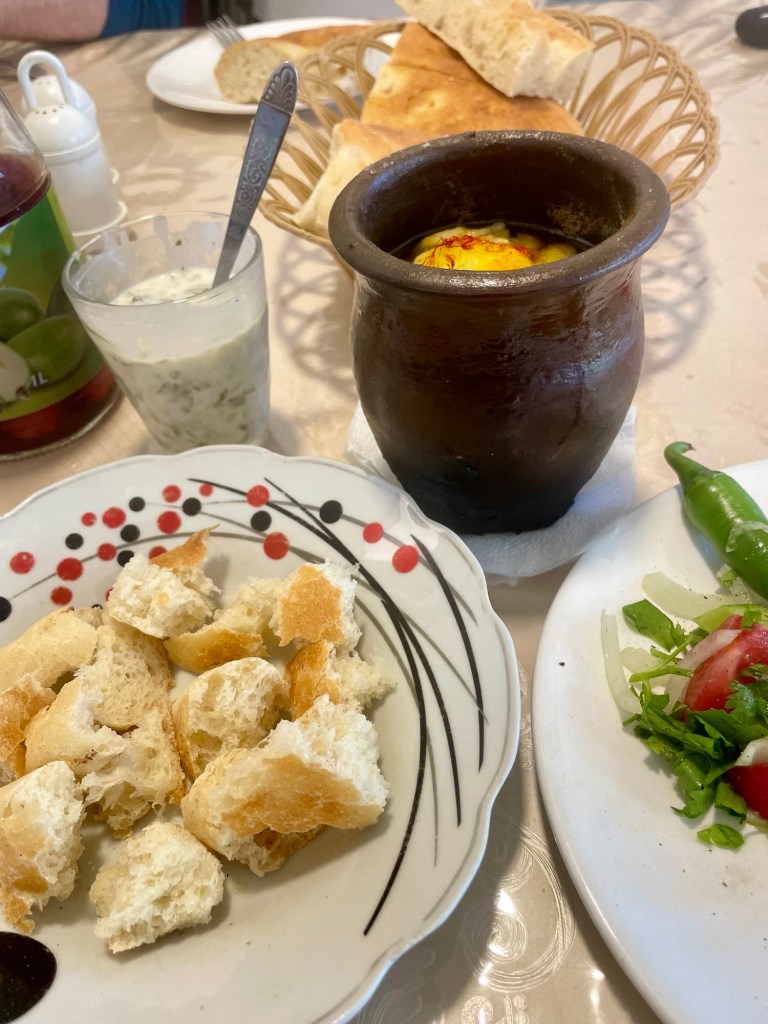
We loved breakfast in Azerbaijan. Above with some American friends who introduced us to the big breakfasts and below at our neighborhood favorite. That breakfast below with a big pot of tea costs $18.
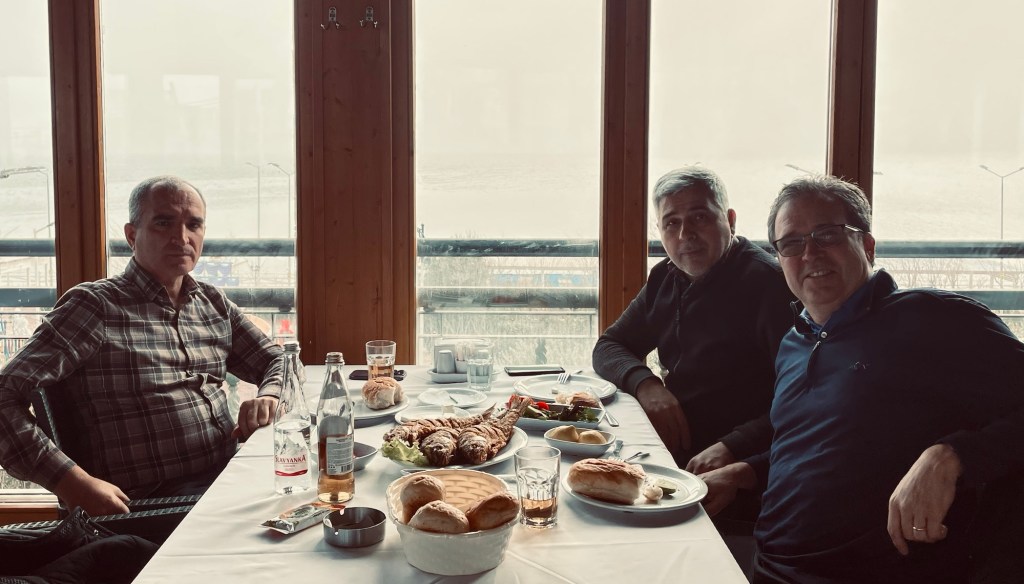
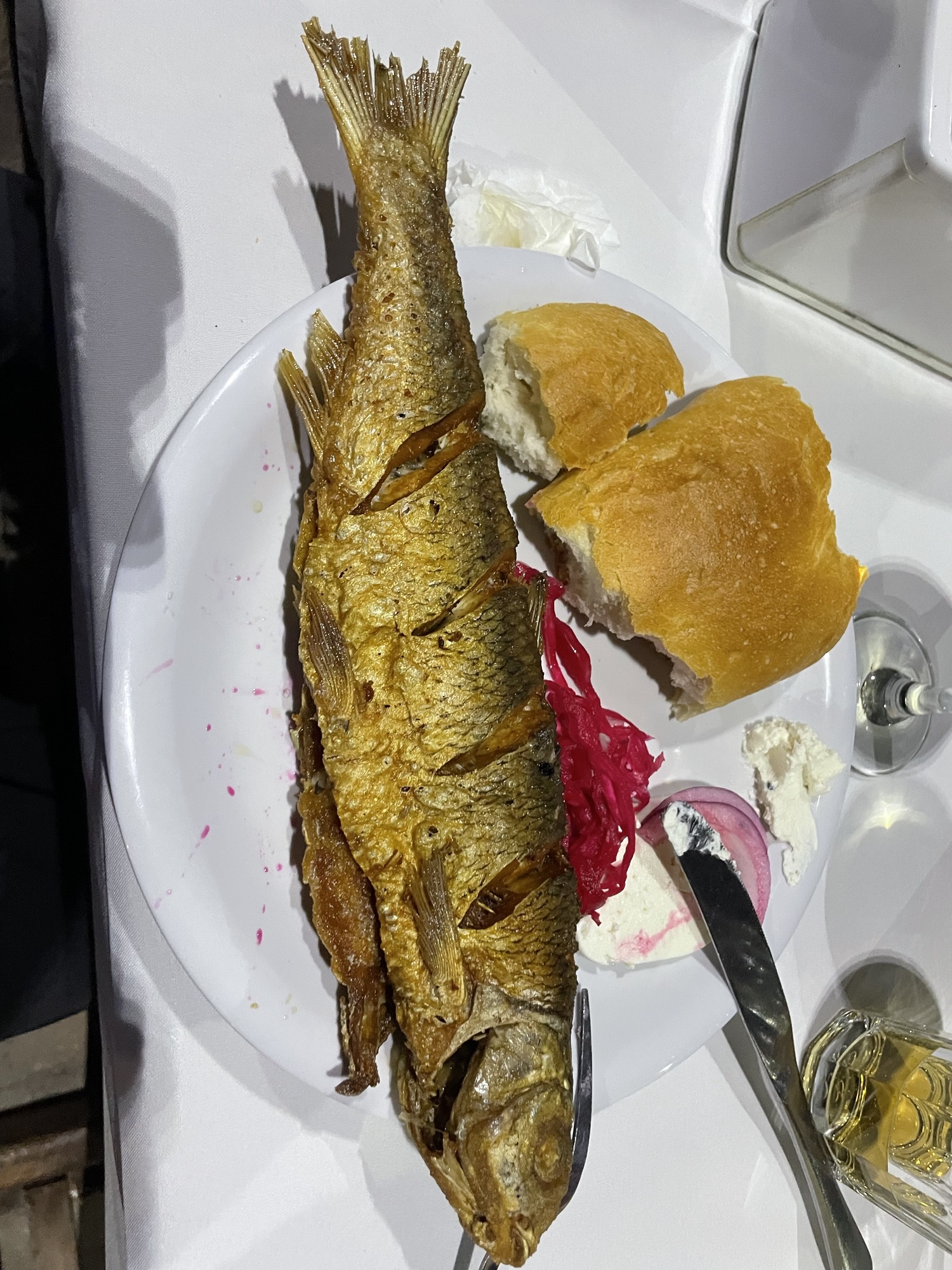
We lived in trendy neighborhood and this lovely breakfast was just down the block. Below, Nazim brought me to many nice restaurants. This is a fish restaurant overlooking the Caspian sea with our friend Bagush.
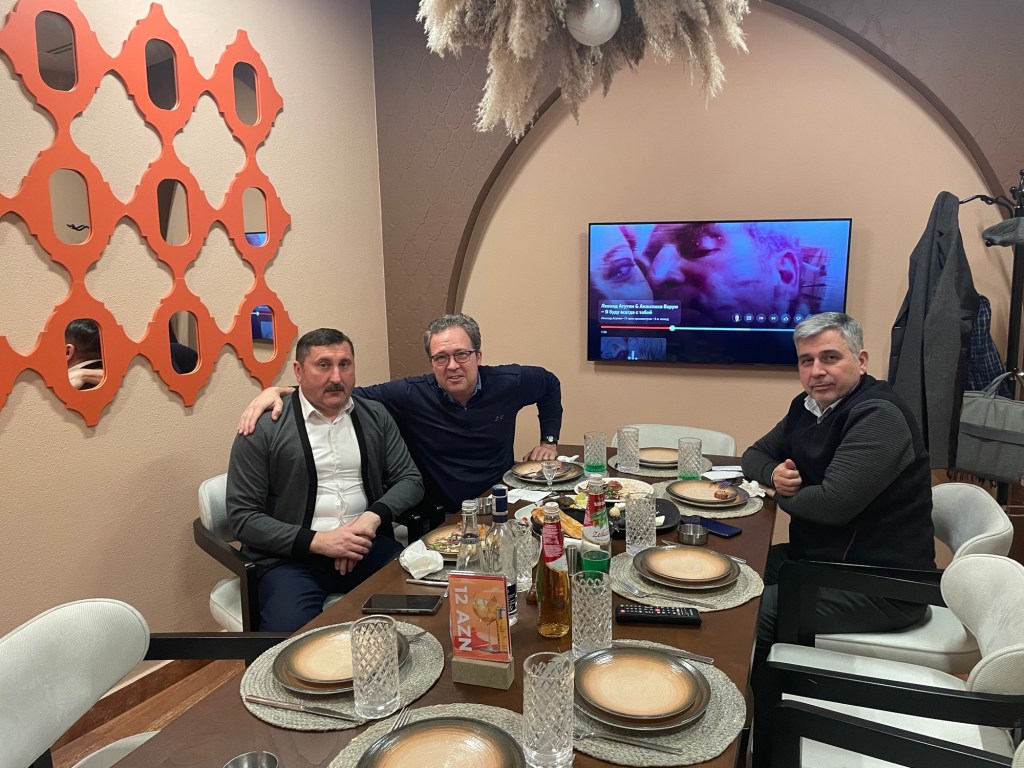
Many or most restaurants in Azerbaijan feature small dining rooms for private parties. Here we are celebrating Ibrahim’s birthday. Below, we are at a great outdoor restaurant.
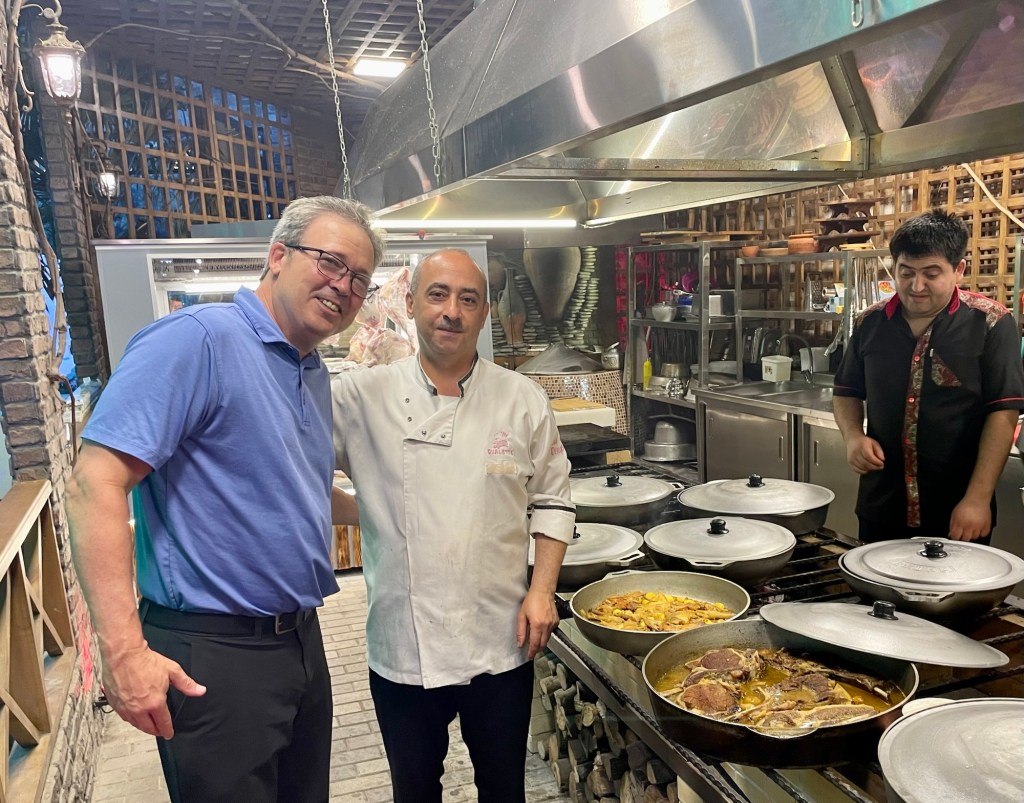
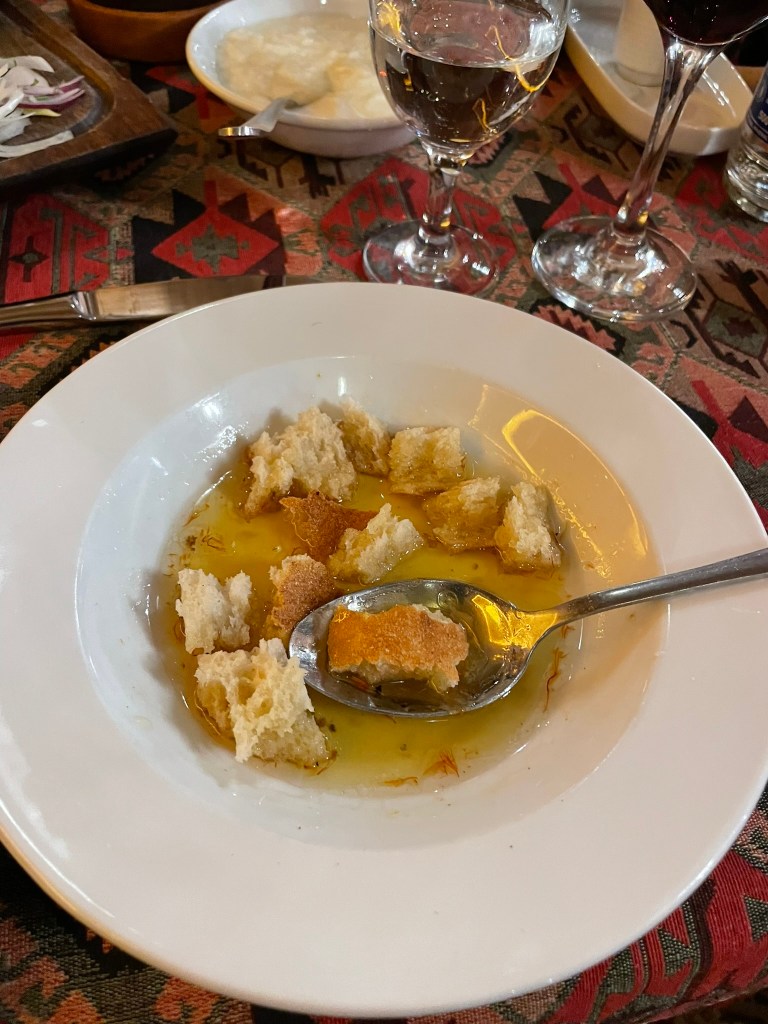
Above, we enjoyed an exceptional lamb feast. Nice to see how the kitchen works. Below is the traditional dish Piti. You start by pouring the top layer of broth over the bread and then empty the rest of the lamb stew into your bowl.
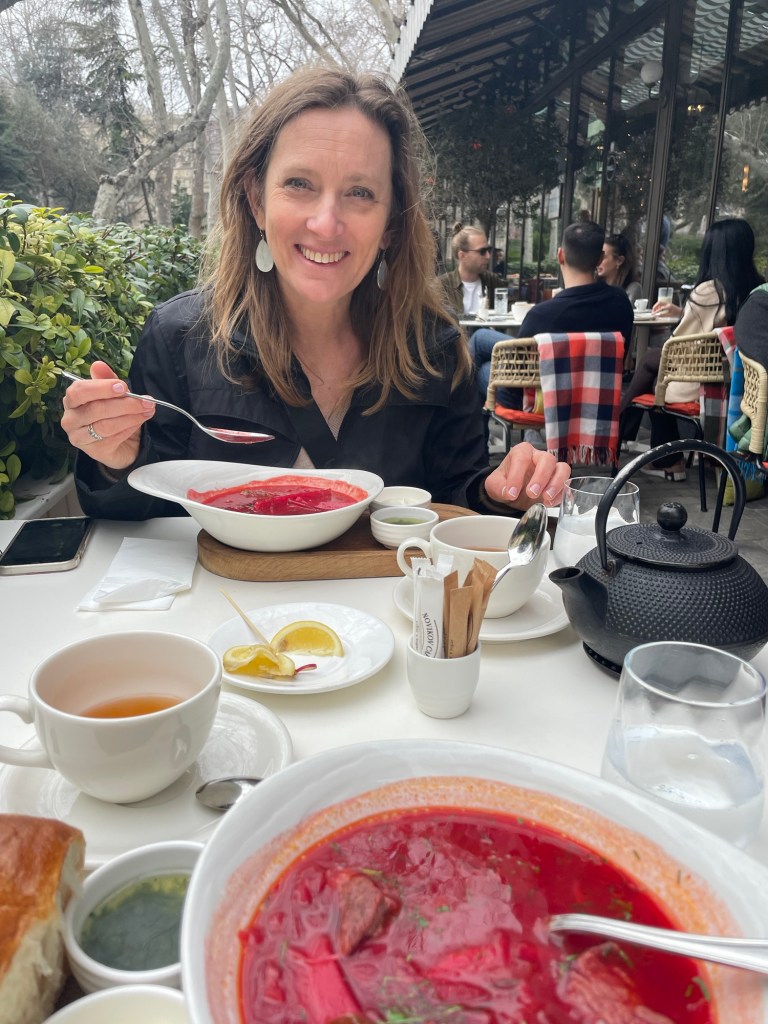
There are Persian, Turkish, and Russian influences on the food, which was really nice. Below, Michelle and I are having delicious borscht.
We found our Macedonian friends living in Baku and had a great traditional Macedonian meal with Blazhe and Jasmina. We will visit with them in Macedonia on our way home.
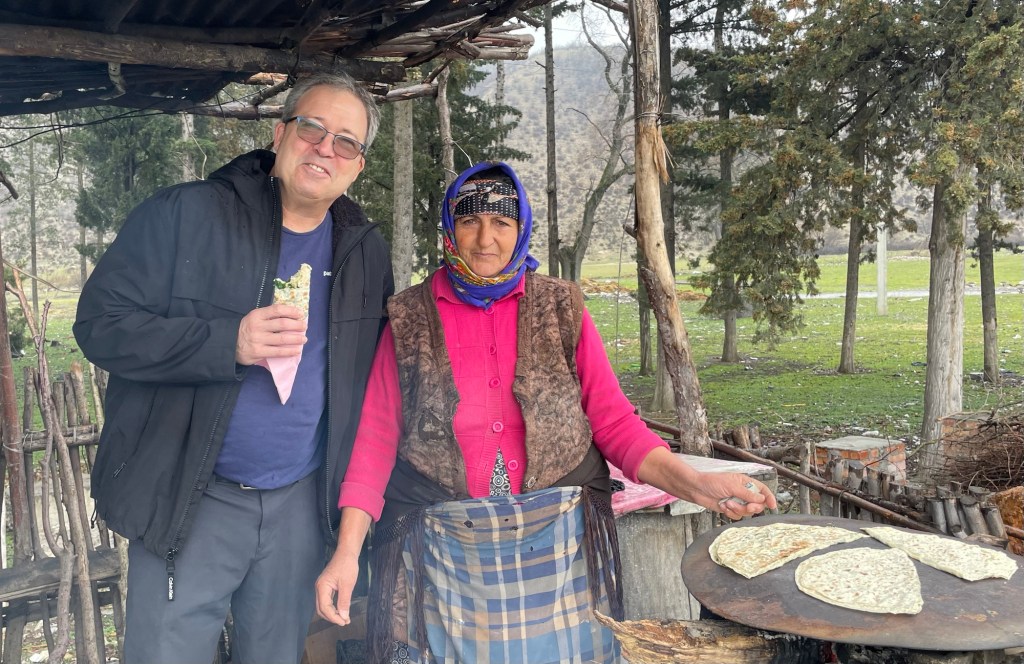
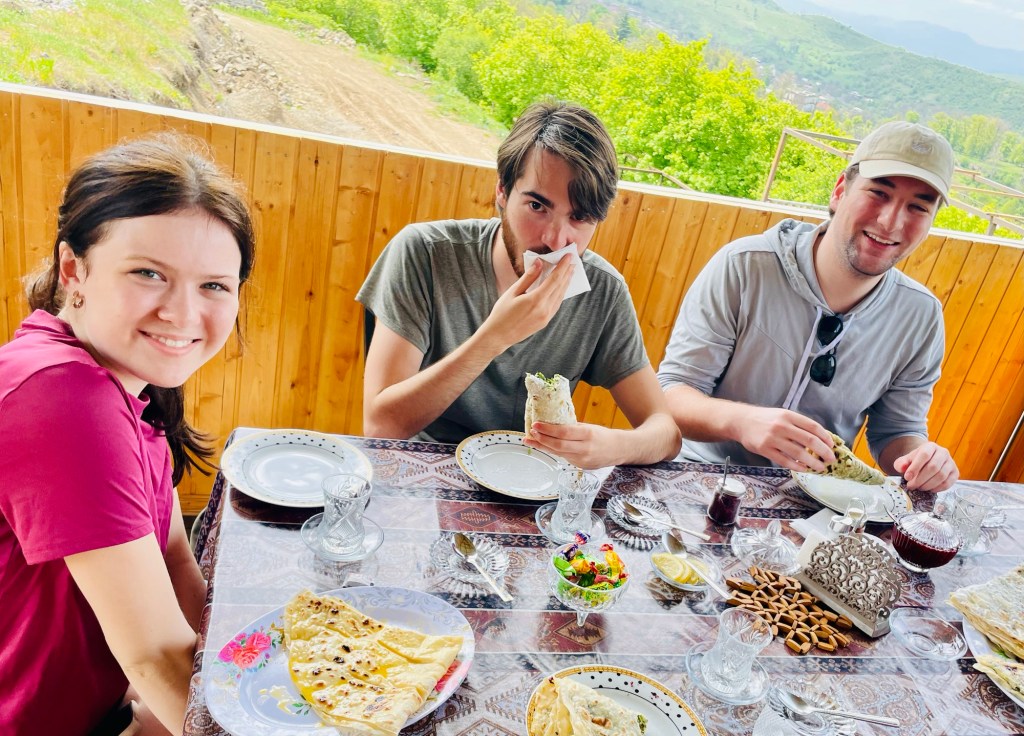
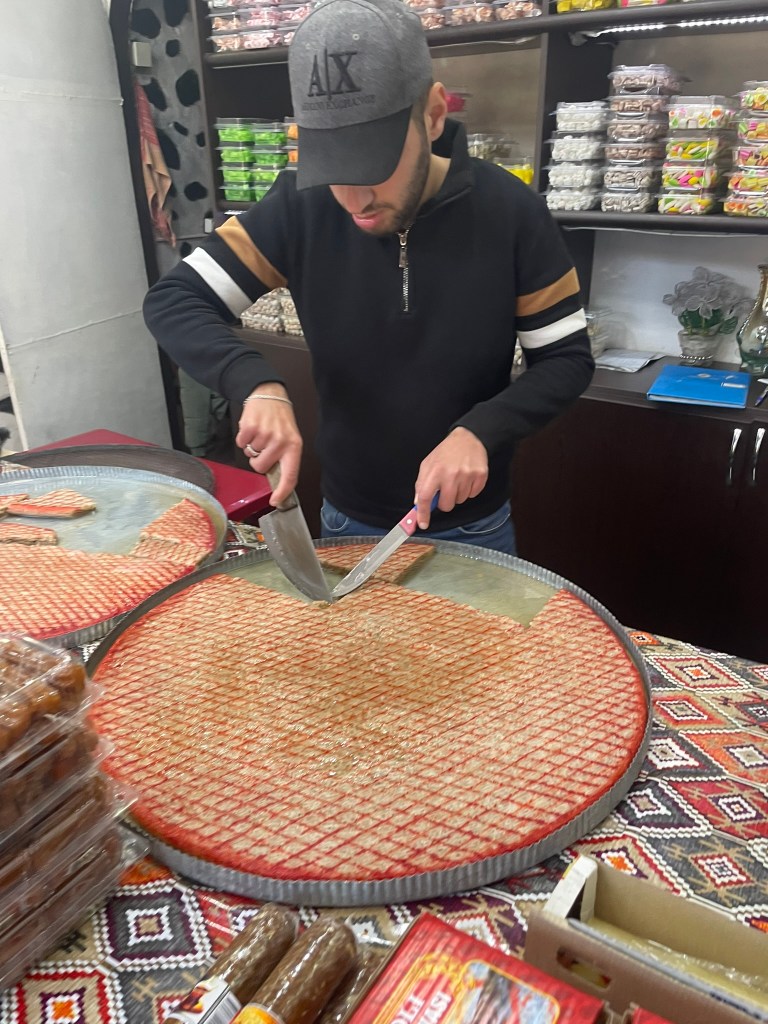
Fast food – I guess I ate all my doners before I could take a picture. Its amazing that I did not get a picture, considering how many doners I ate, but the great majority were eaten standing up. But, I really liked the Gutab which is like a quesadilla in concept but different in texture and taste.
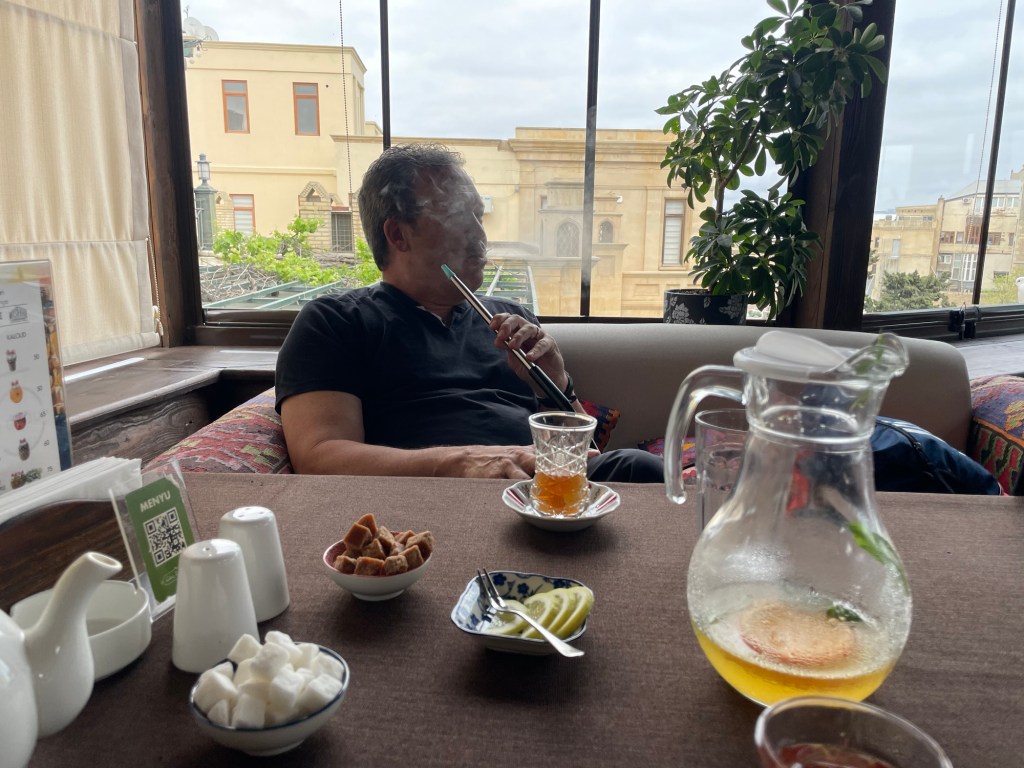
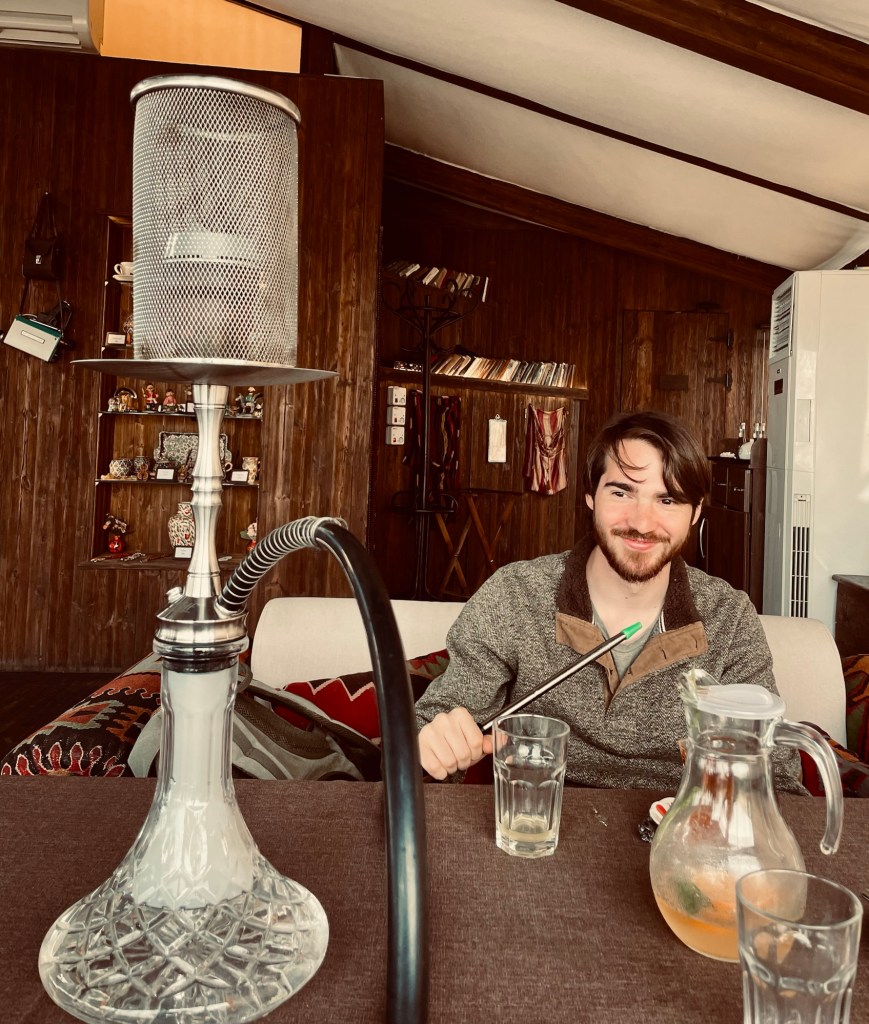
Above, we are eating Gutab roadside- on our trip to Sheki and here with Andrew and Nick in Ganja. Below, Nick and I taking advantage of the cafe culture in Baku and trying the traditional shisha.
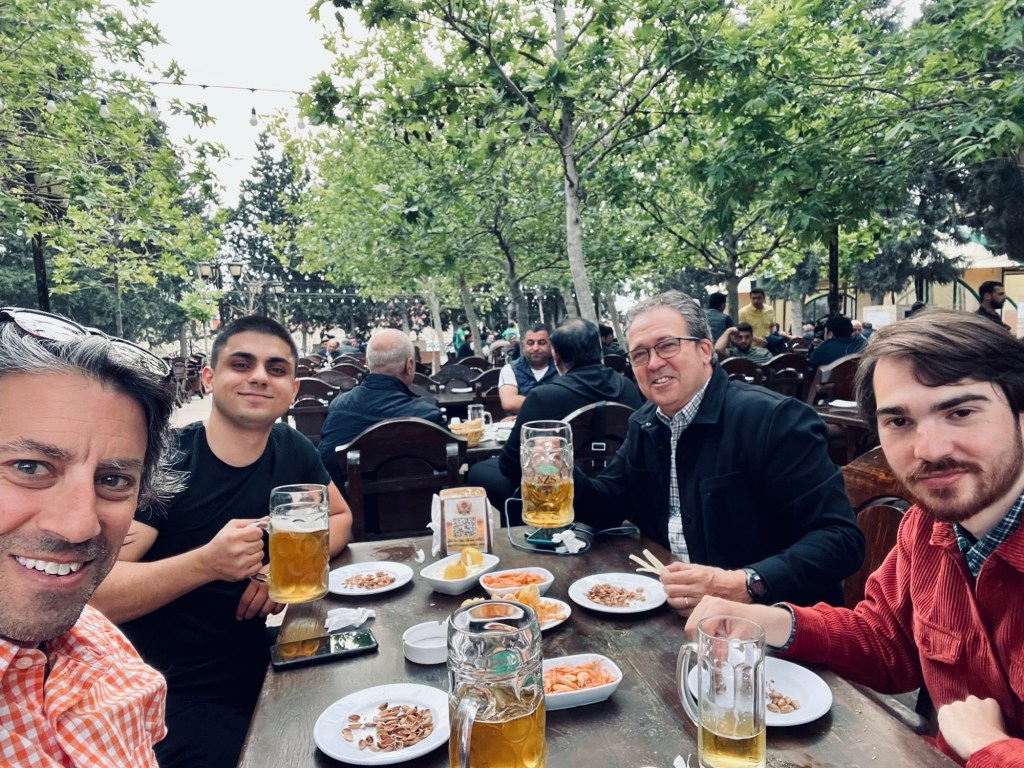
I ate alone quite a bit, so when I had friends to eat and drink with I made the most of it. Curt, Nurlan, me, and Nick at NZS a local brewery since 1997. There must have been 400 people there enjoying the beer, all men.
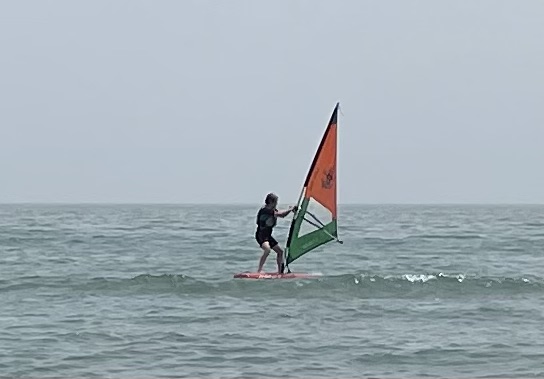
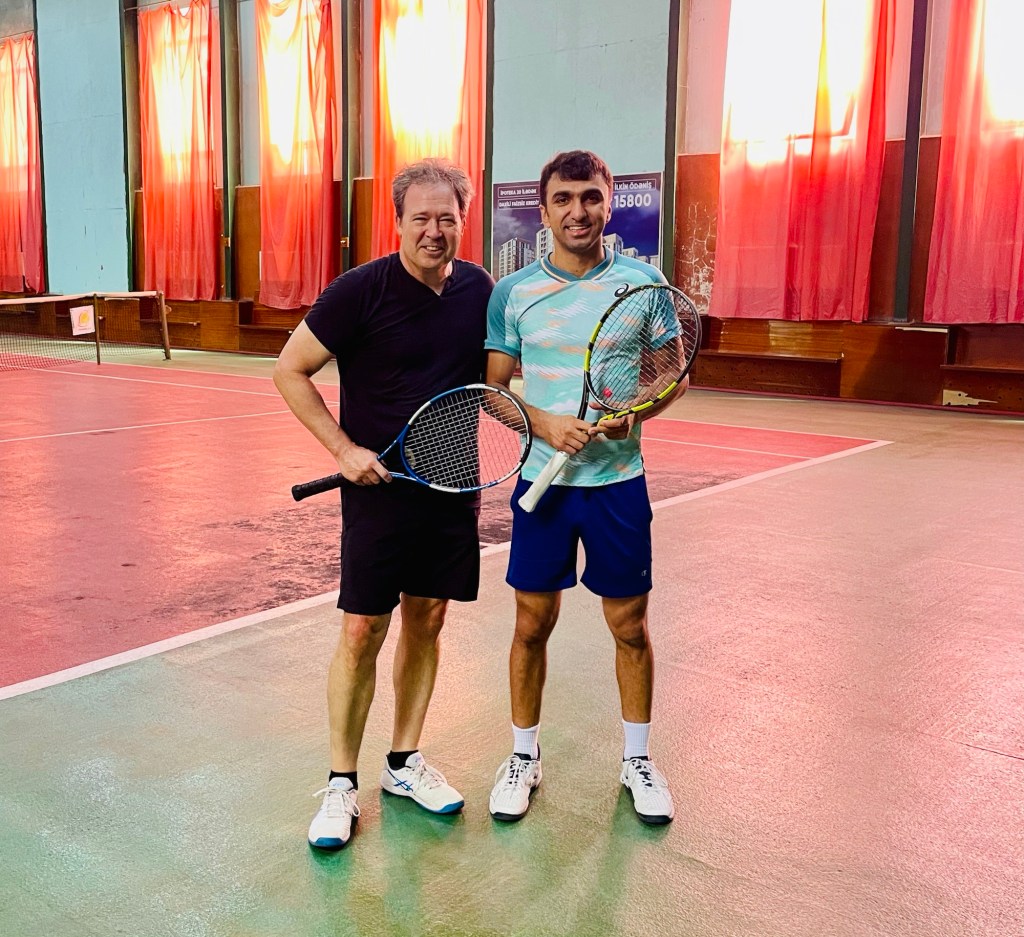
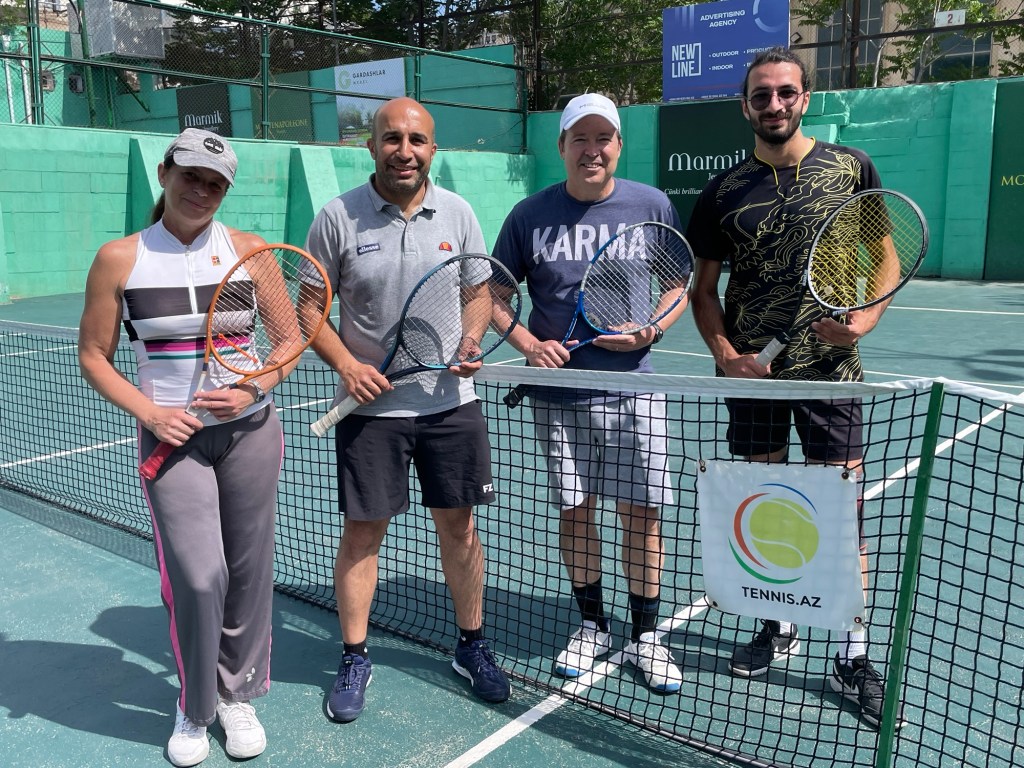
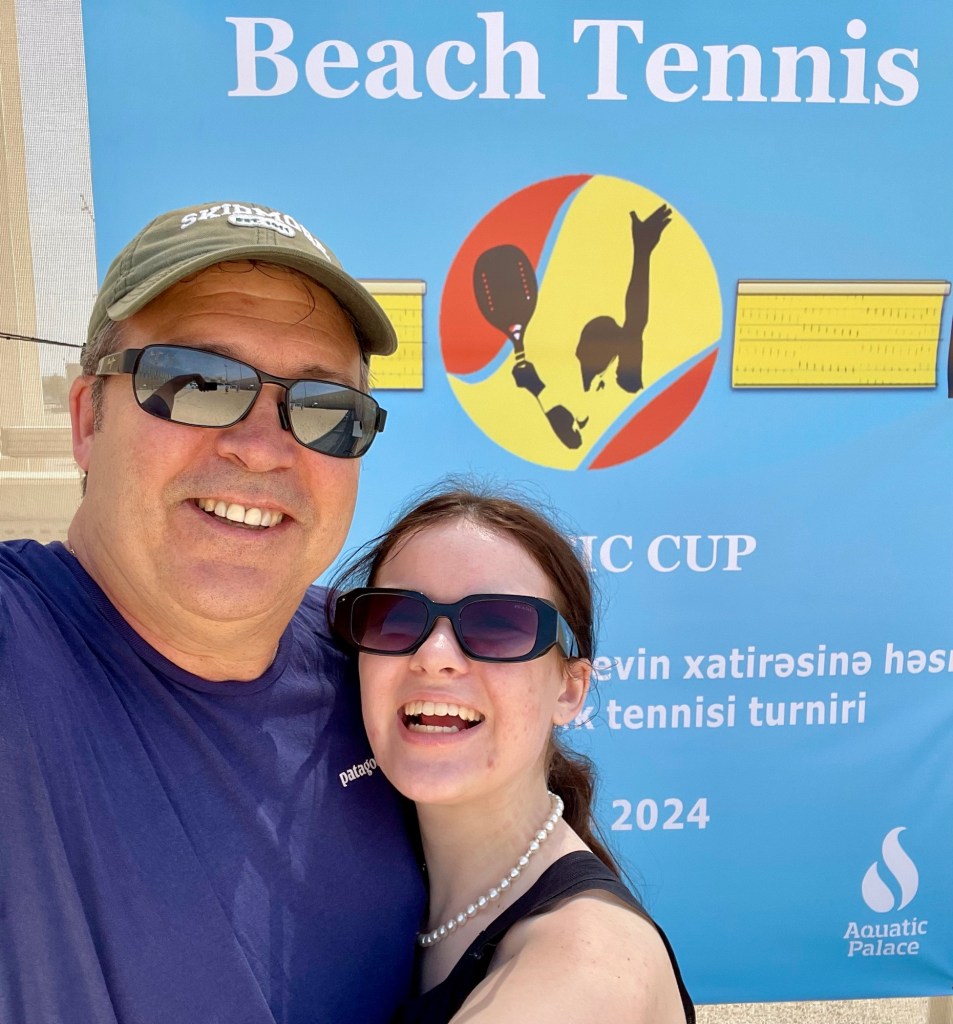
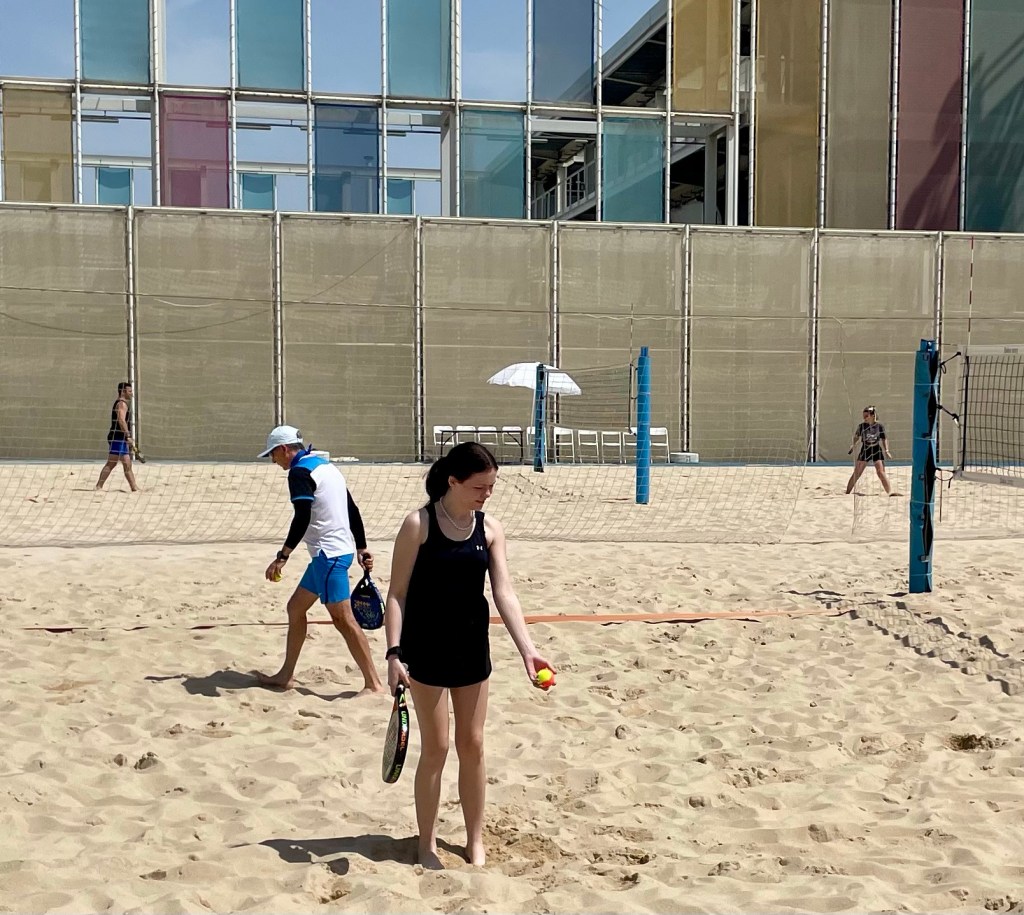
We had a few good times doing some interesting activities in Azerbaijan. Above is our friend Nick who organized some lessons on a windsurfer for me and Curt Gervich. A great way to spend some time in the Caspian. I was not talented enough to take a selfie as I gracefully skimmed the shimmering ripples. Below, I finally got in some tennis in my last couple months in Baku. They have a very friendly tennis community and I should have started playing sooner because tennis is really a great way to meet nice people.
Beach tennis was a lot of fun. Our tennis friends organized a doubles tournament on the tennis courts one weekend and a beach tennis tournament on a different weekend. So nice to be included.
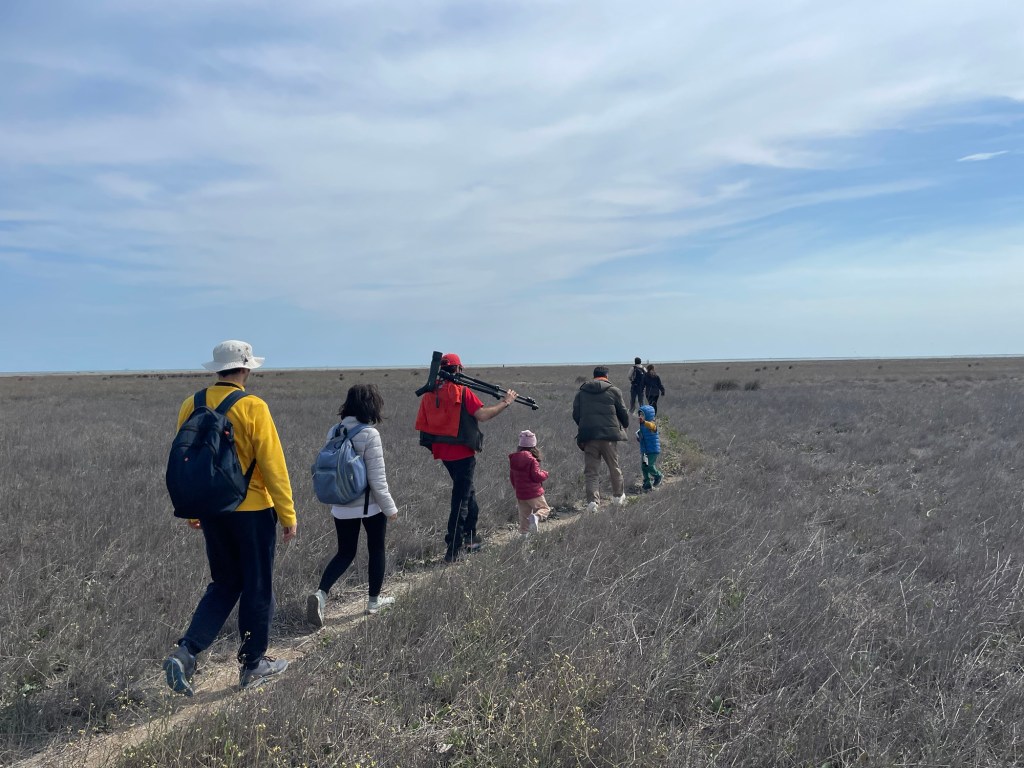
Michelle and I went on a birding trip that was excellent and I wrote about in a different post.
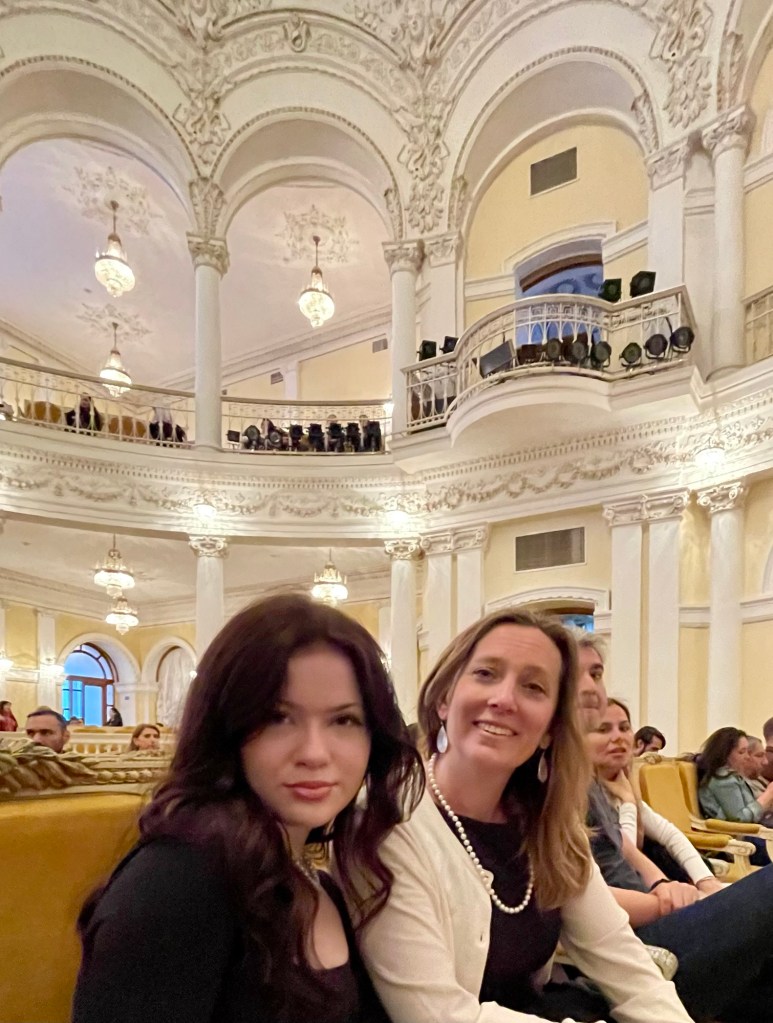
We attended a concert conducted by an Azerbaijani-American. Not something we normally get to do, but living in a capital city provides cultural opportunities.
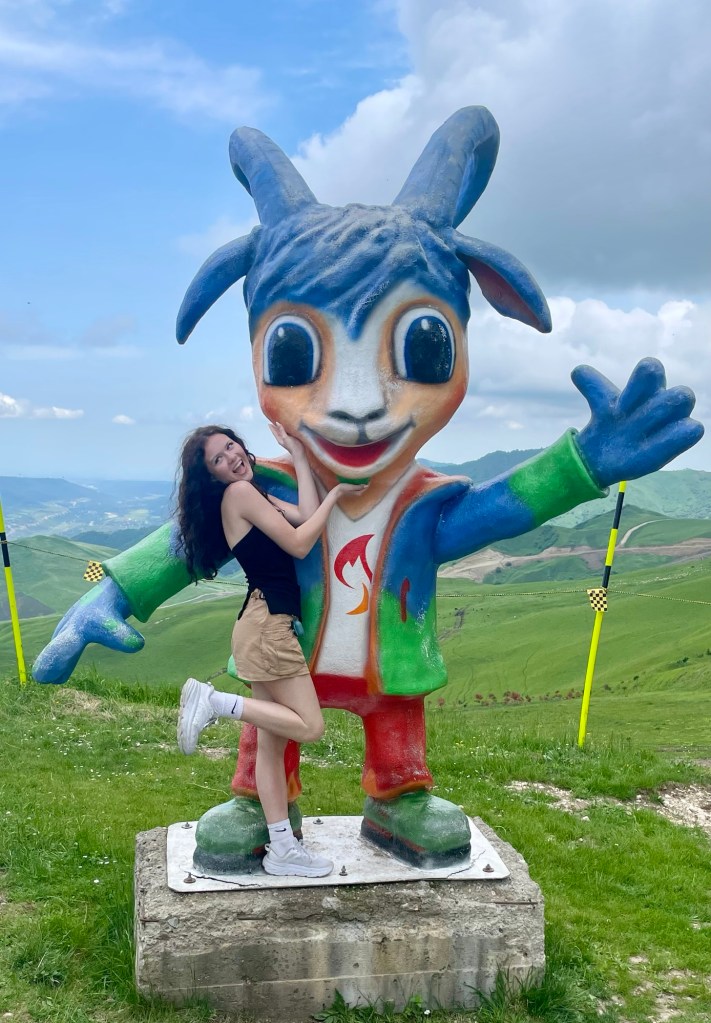
As tourists, we partake in all kinds of “corny” activities. This picture is after riding the mountain roller coaster. Again no selfie as I didn’t want to lose my phone.
Non-activity activities. We saw some more developed but lots of undeveloped beach areas on the Caspian.
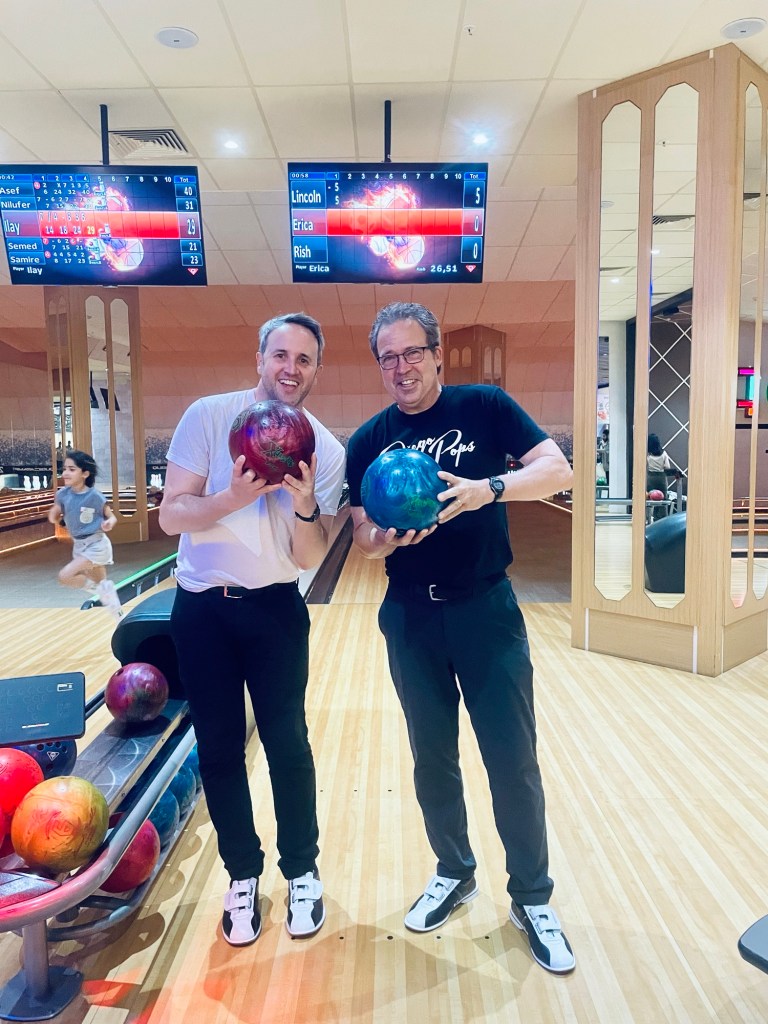
Bowling with my Fulbright friend Lincoln. I maintained my lifetime average of 104.
Really enjoyed Baku’s modern art museum.
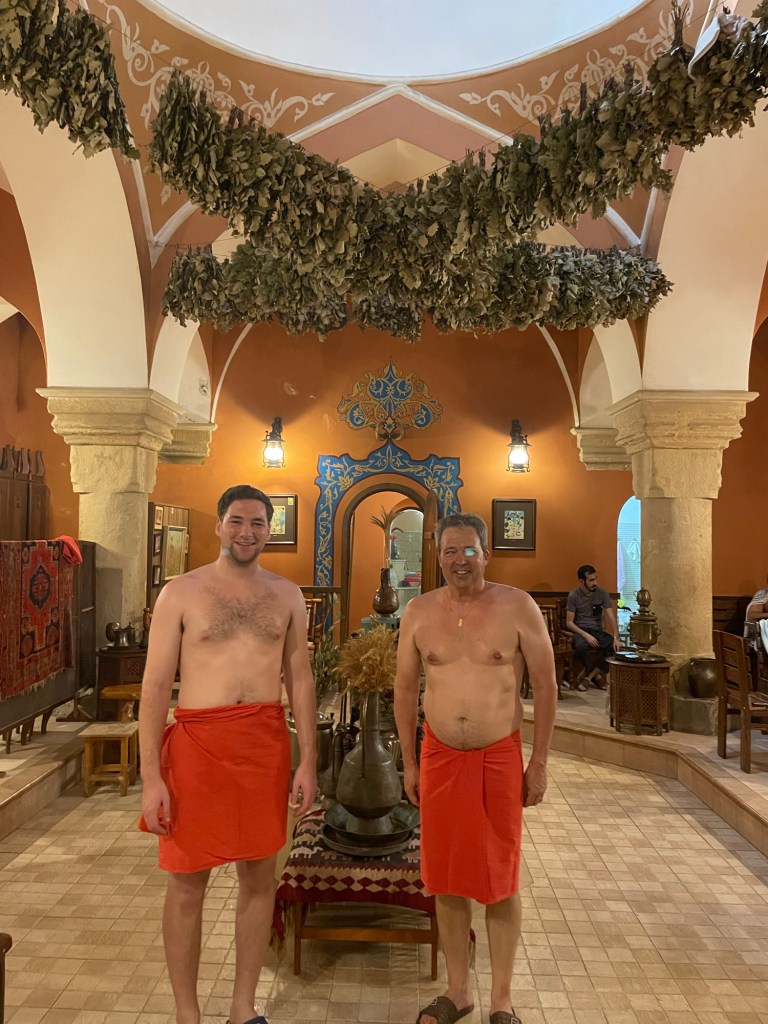
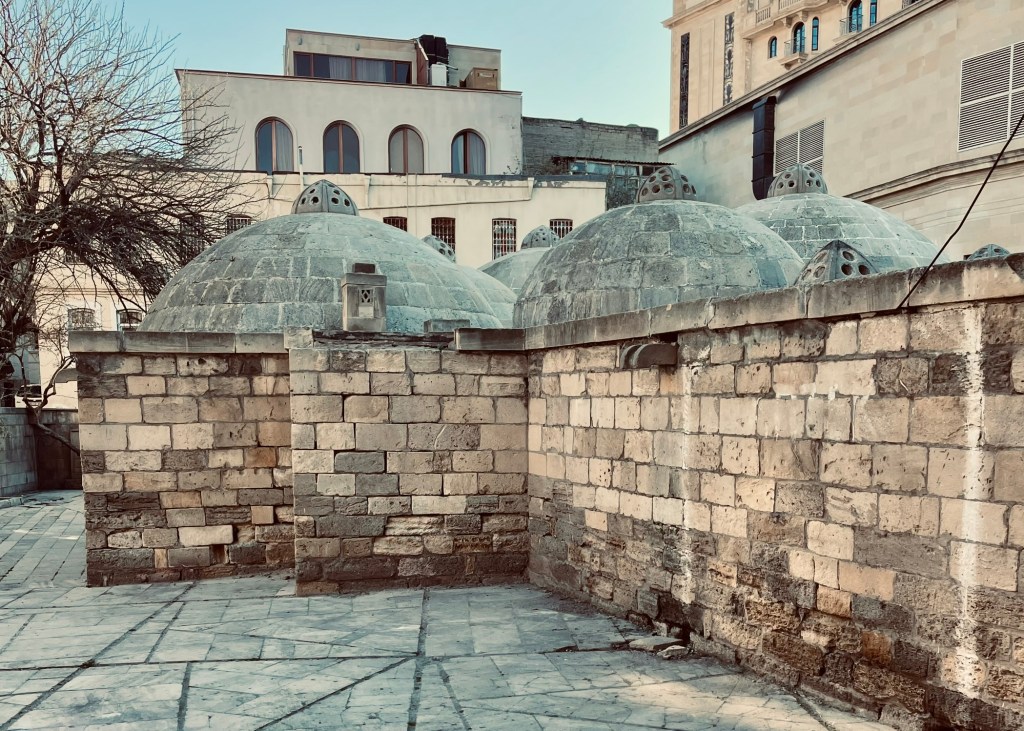
I could cross the street by my apartment and ride a scooter through the beautiful seaside park. This little mini-outing was a simple pleasure on many occasions. I would tell myself I was going to go for a walk and then I would wizz around the cobblestones for 15-20 minutes. I thought I was going to skip the famous bath houses of Baku as I was running out of time. But, for Andrew’s last day in Azerbaijan we went to a Hammam that has been in operation for over 300 years in the old, walled city. There is another old hammam that is now a hammam museum.
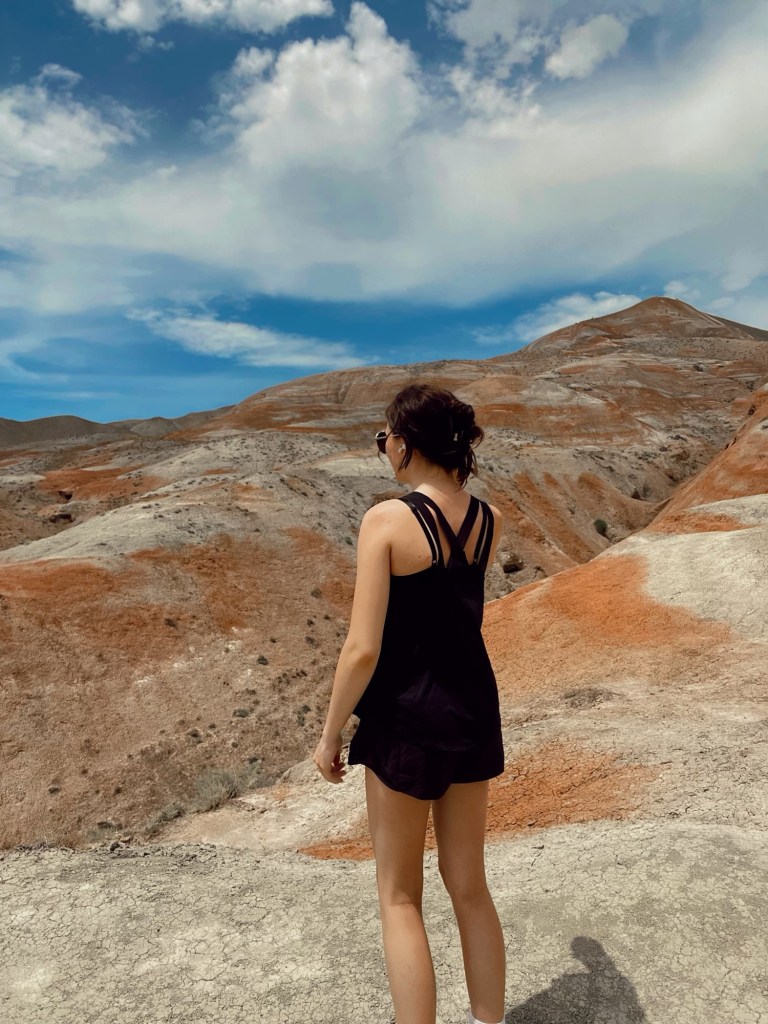
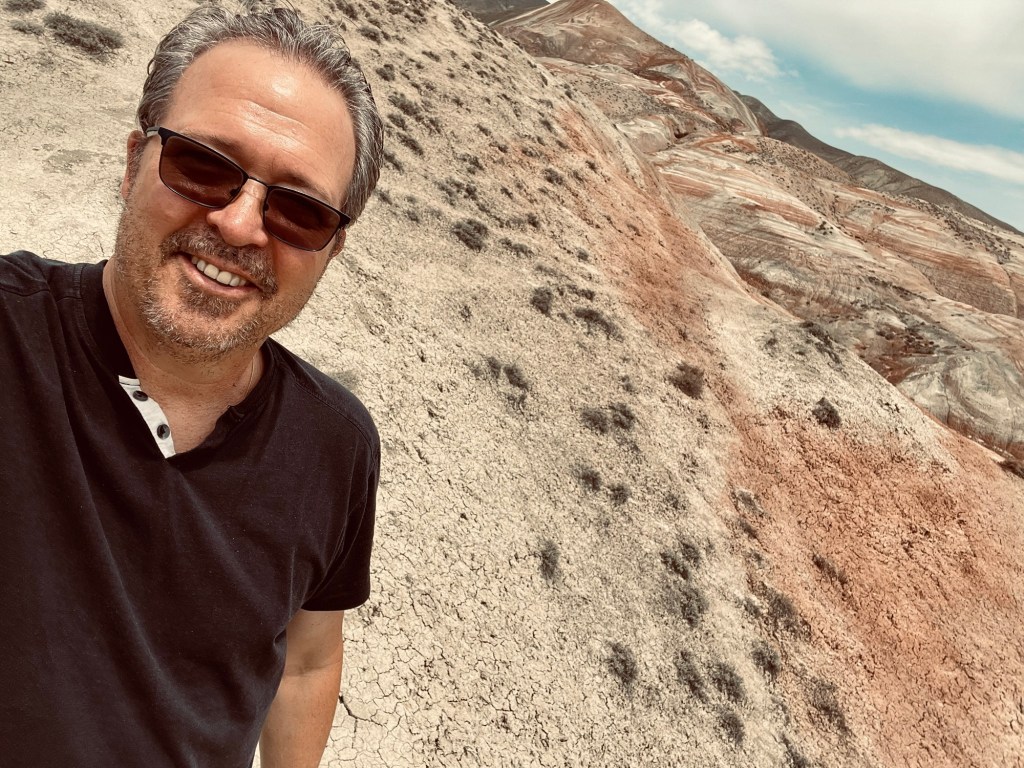
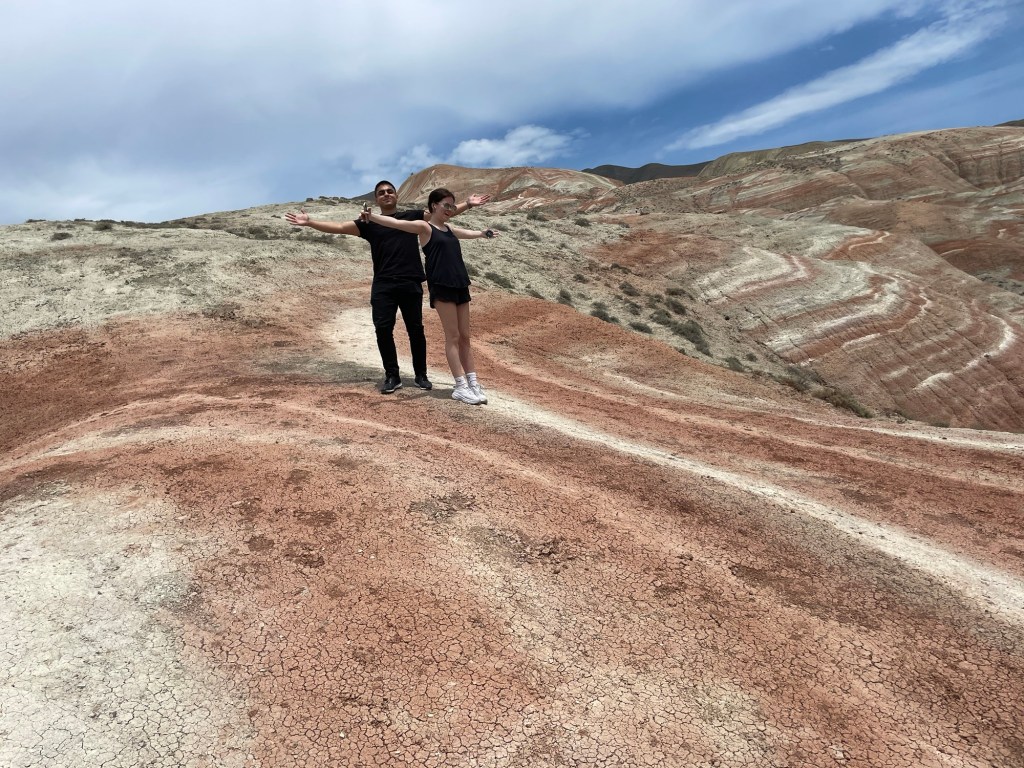
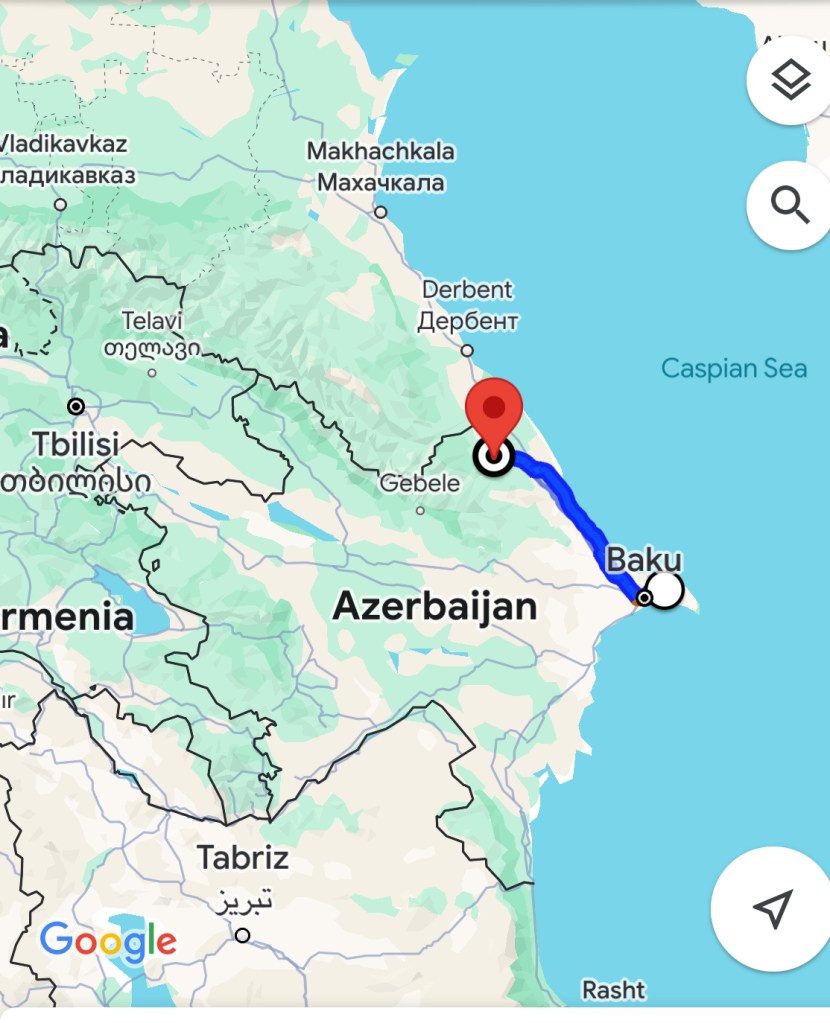
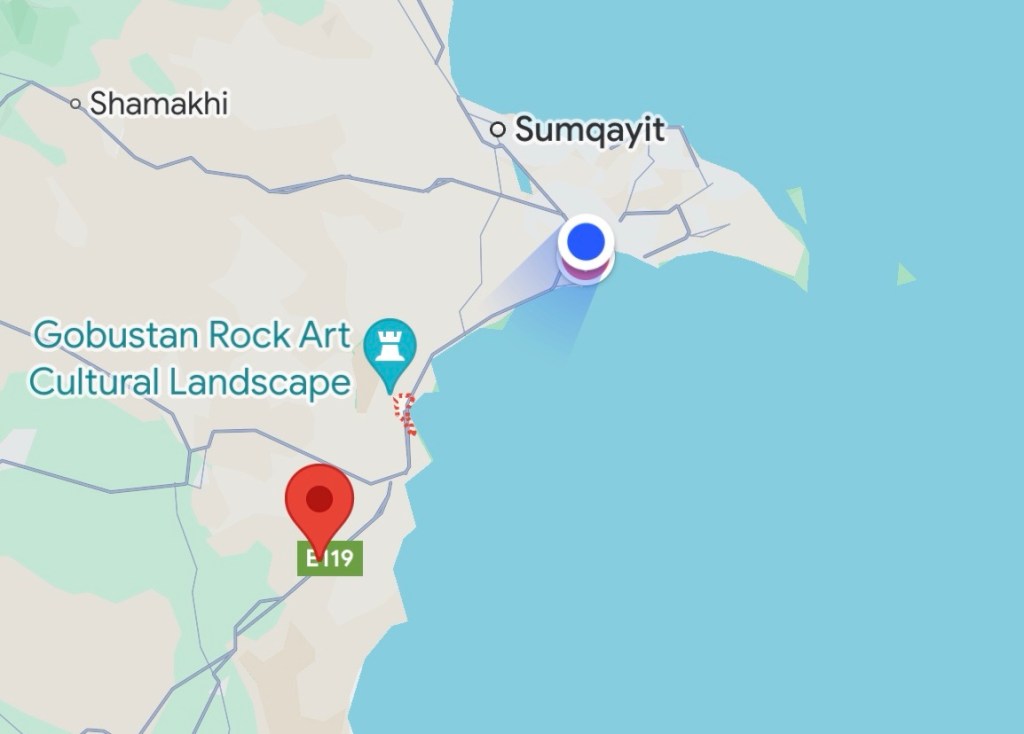
Our last excursion, we headed North and saw a different part of the country. For a small country , Azerbaijan offers a lot of variety. We stopped briefly at the Candy Cane mountain.
Nurlan joined us, which is always nice. He helps me and Evie appreciate the Azerbaijani culture and history. Unfortunately, we did not have any Fulbright friends to meet in this part of the country.
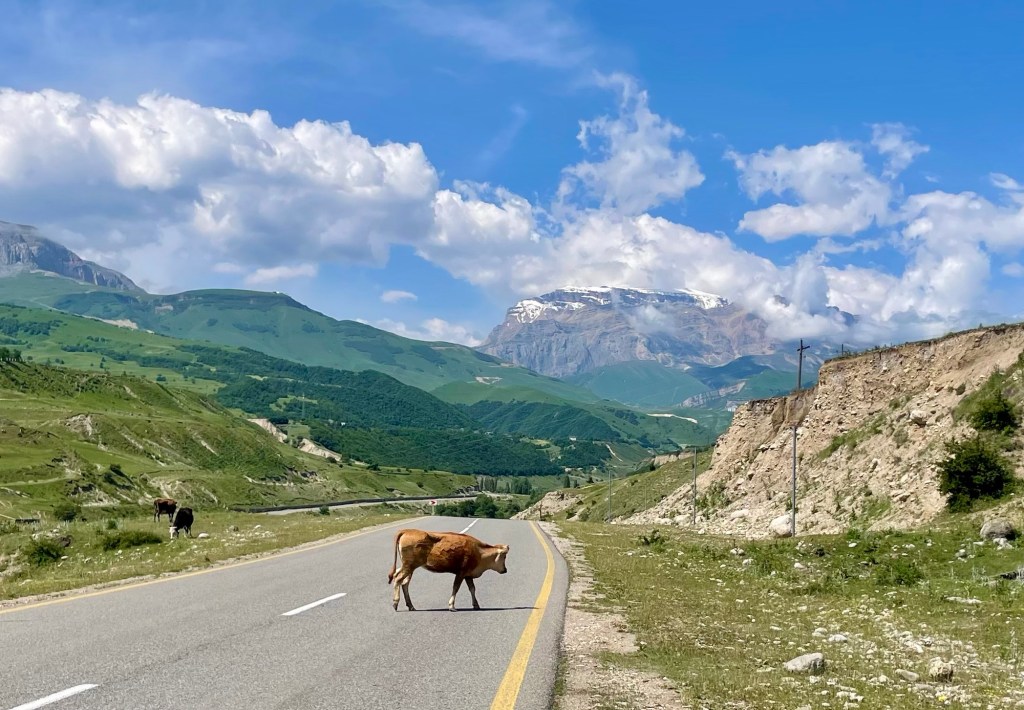
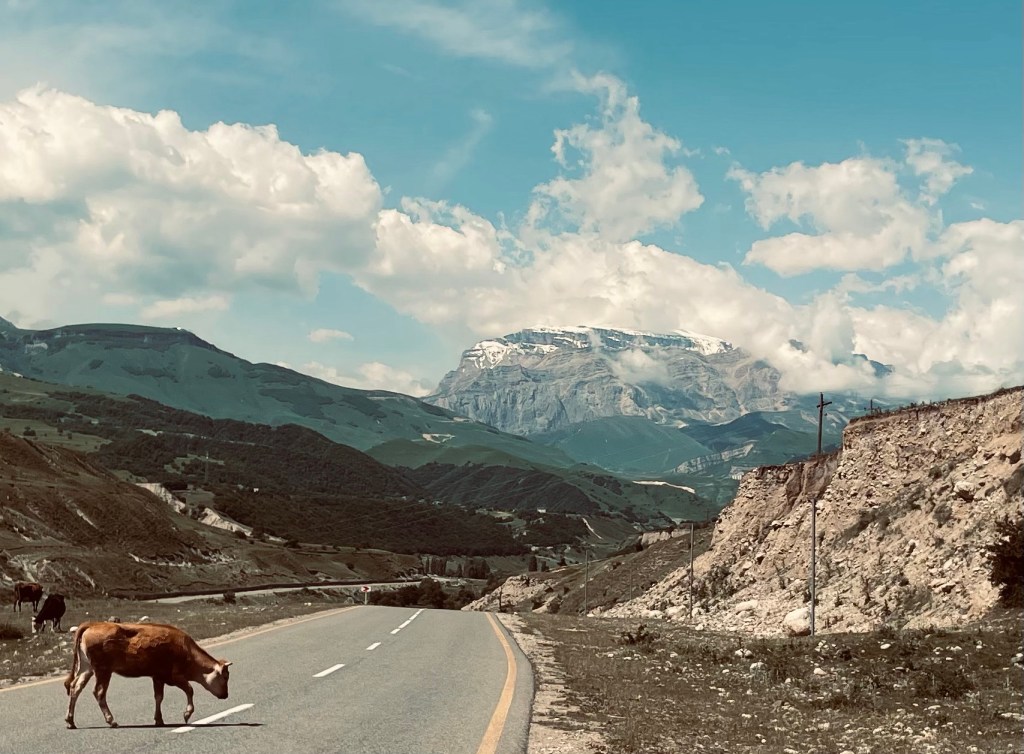
Our first destination was Shahdagh mountain. From Wikipedia, Mount Shahdagh (Azerbaijani: Şahdağ; Lezgian: Кас сув) is a mountain peak of the Greater Caucasus range, located in the Qusar District of Azerbaijan, close to the border with Russia. The elevation of the peak is 4,243 metres (13,921 ft) above sea level.[1] Pretty picturesque with cooperative livestock. I took 20 pictures of the exact same image.
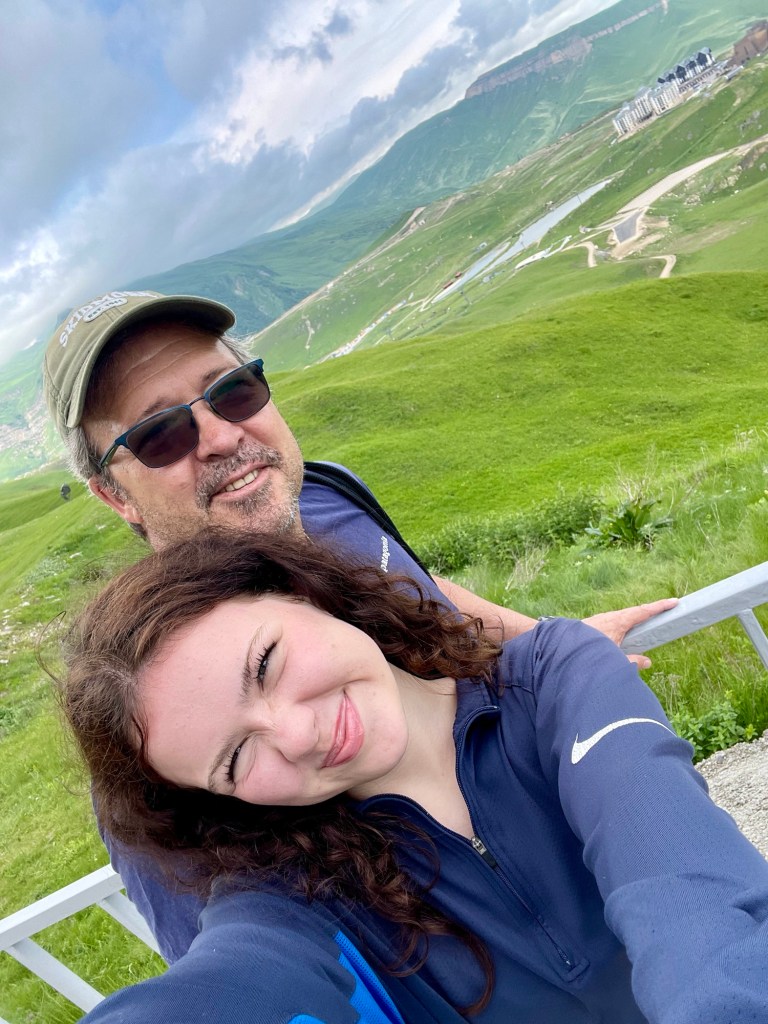
We rode up a ski lift and also rode a mountain roller coaster up and down the slopes. The weather was perfect and it was nice and green, with few tourists to compete with. Unfortunately, clouds covered the high peaks pictured above before we got to the ski area.
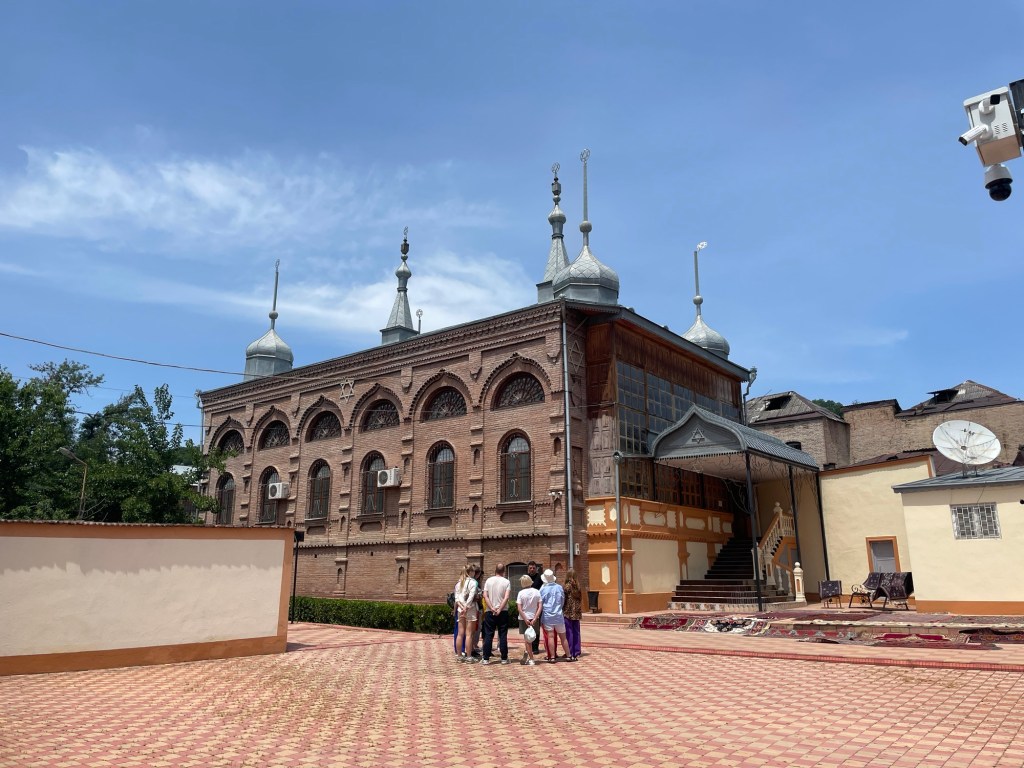
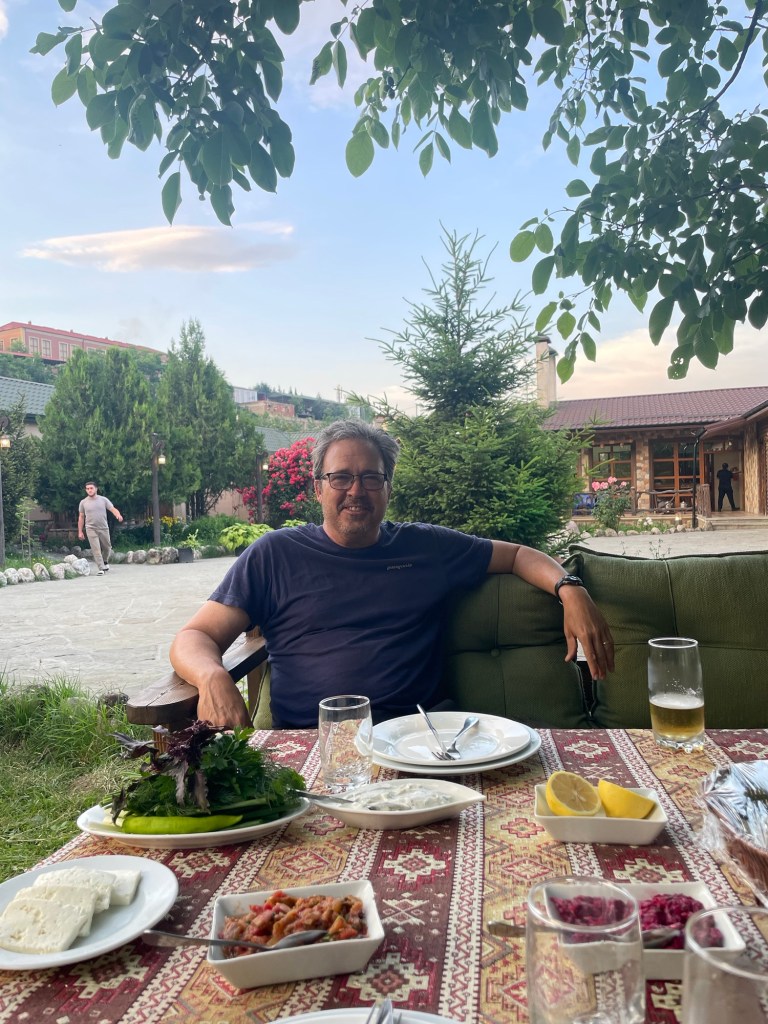
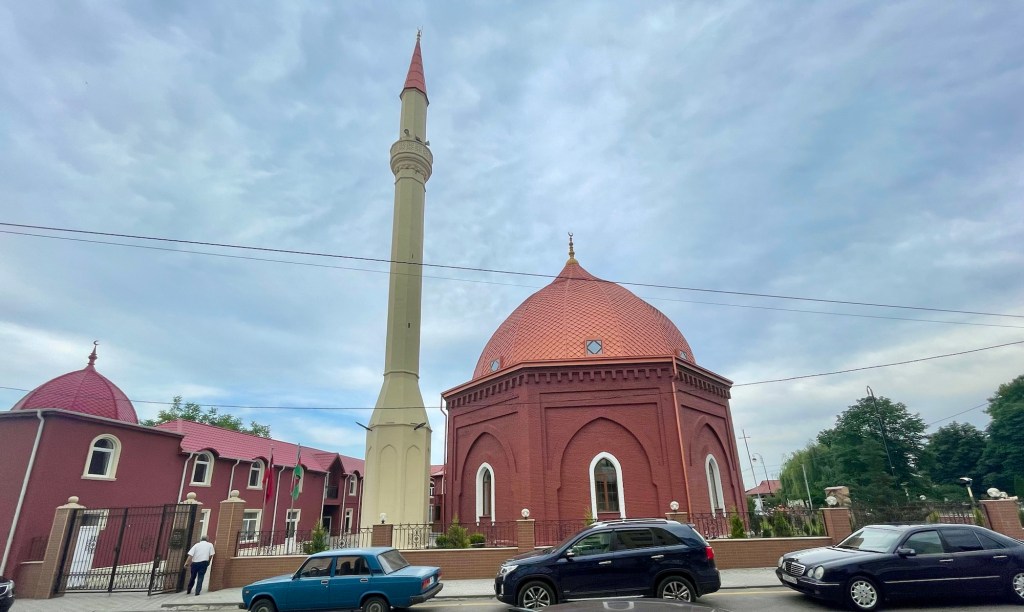
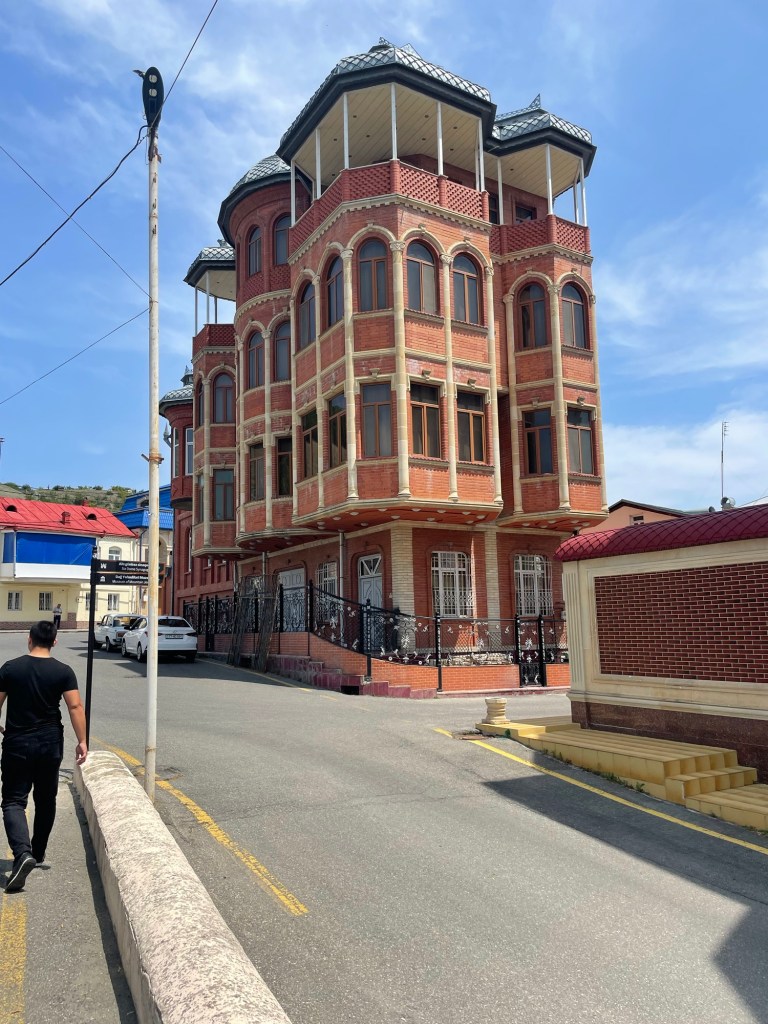
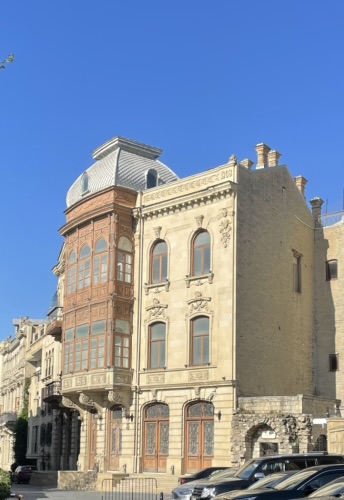
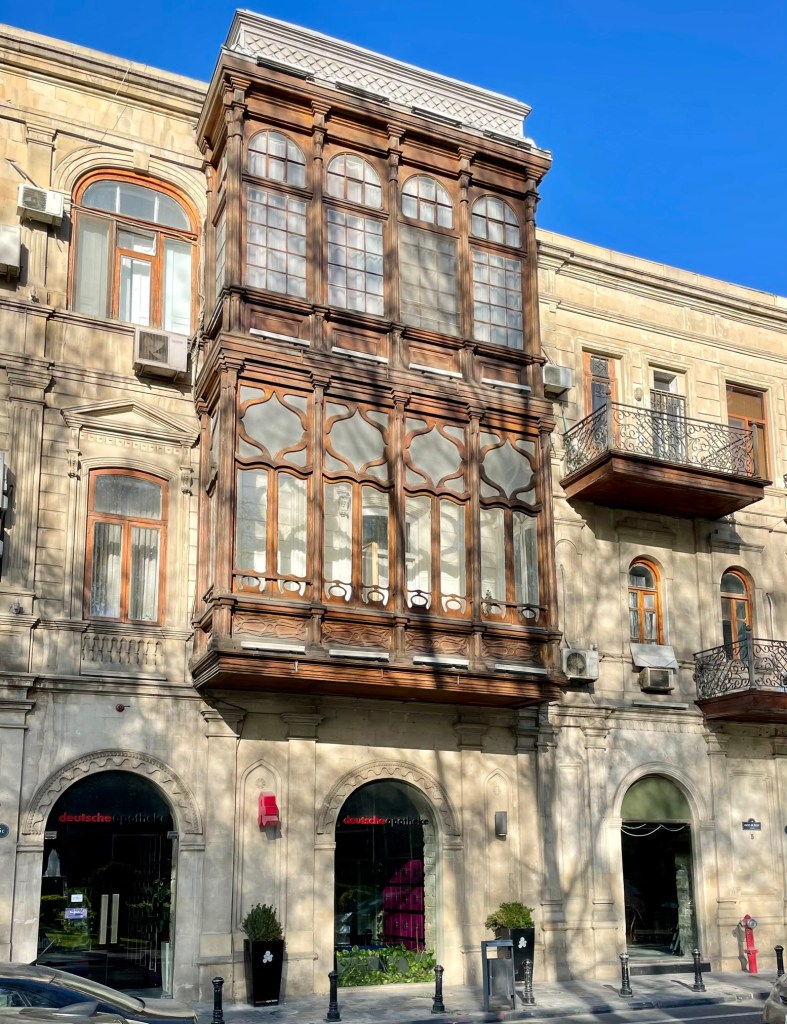
The meals on our excursions are traditional Azerbaijani salads and grilled meats. Below, some interesting buildings. I am amazed by the interesting buildings all over Azerbaijan.
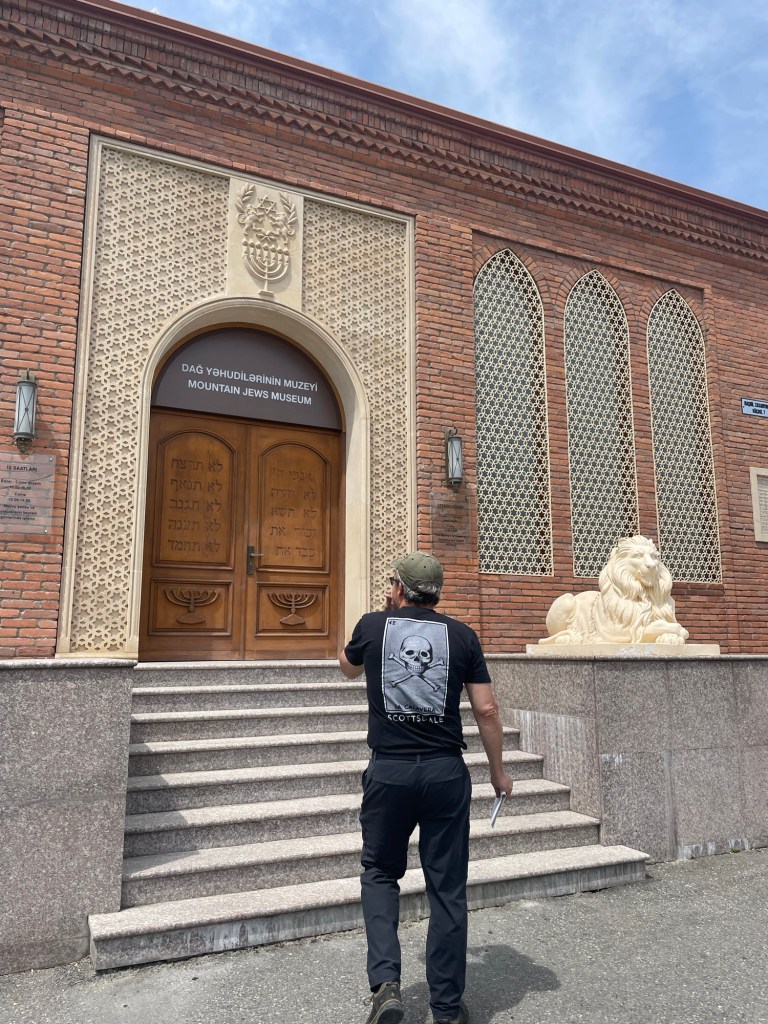
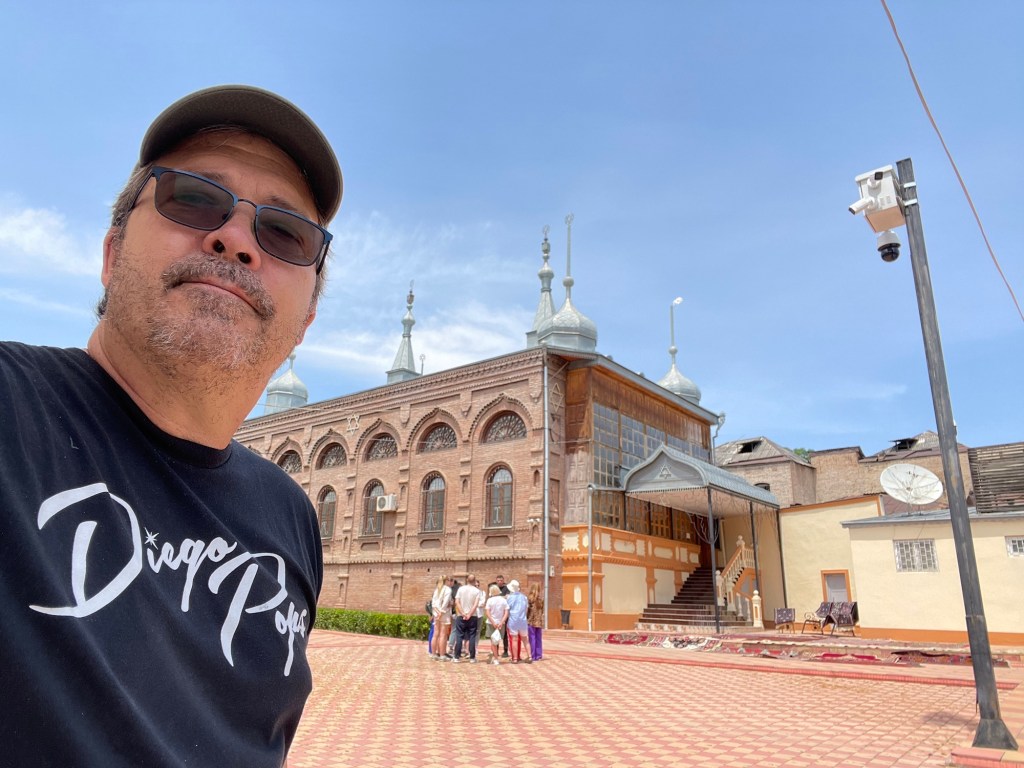
Heading in to the Jewish history museum below. I did not plan on wearing that shirt to a series of religious buildings.
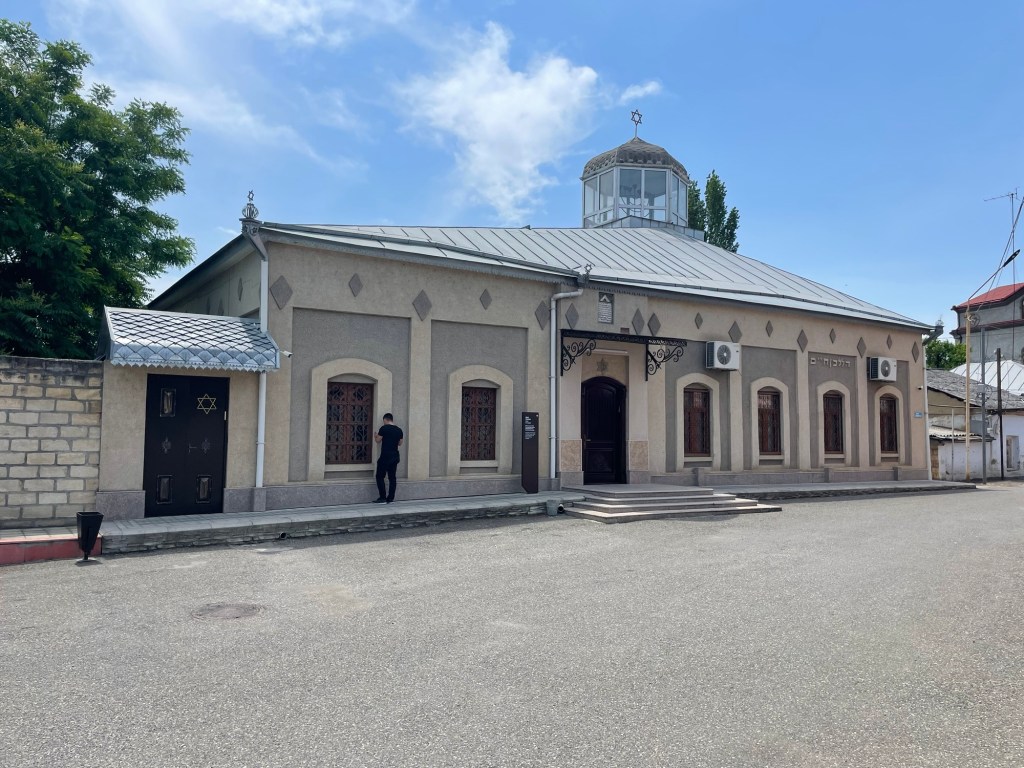
This is the smaller synagogue. So glad we were able to visit another part of Azerbaijan.
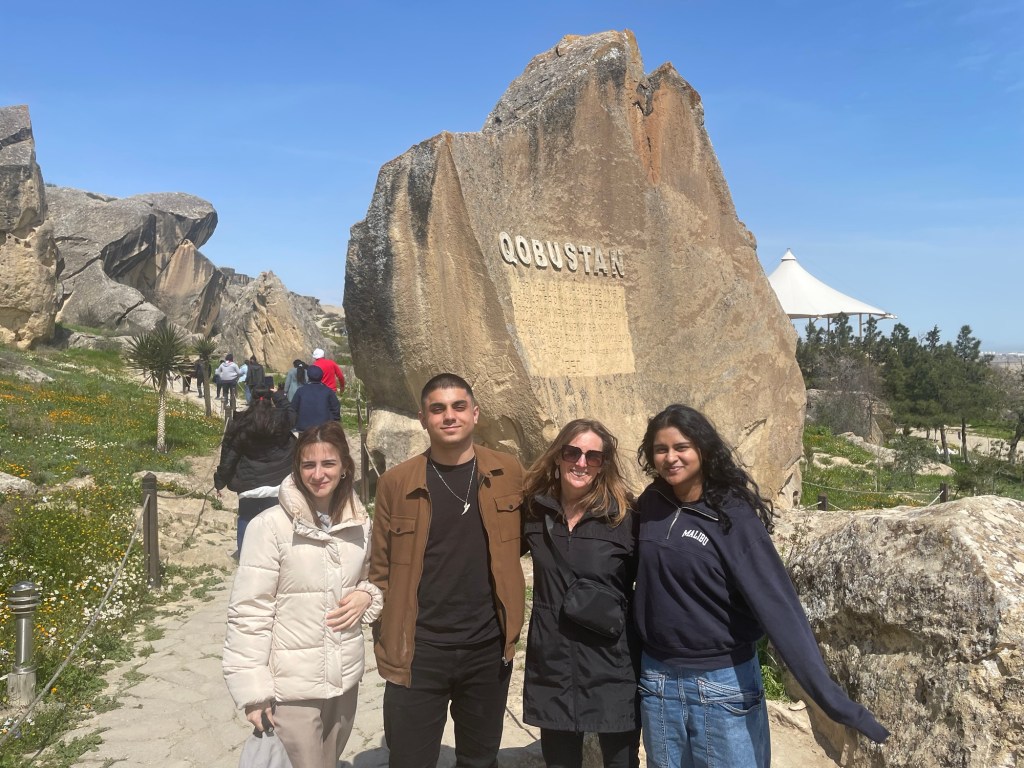
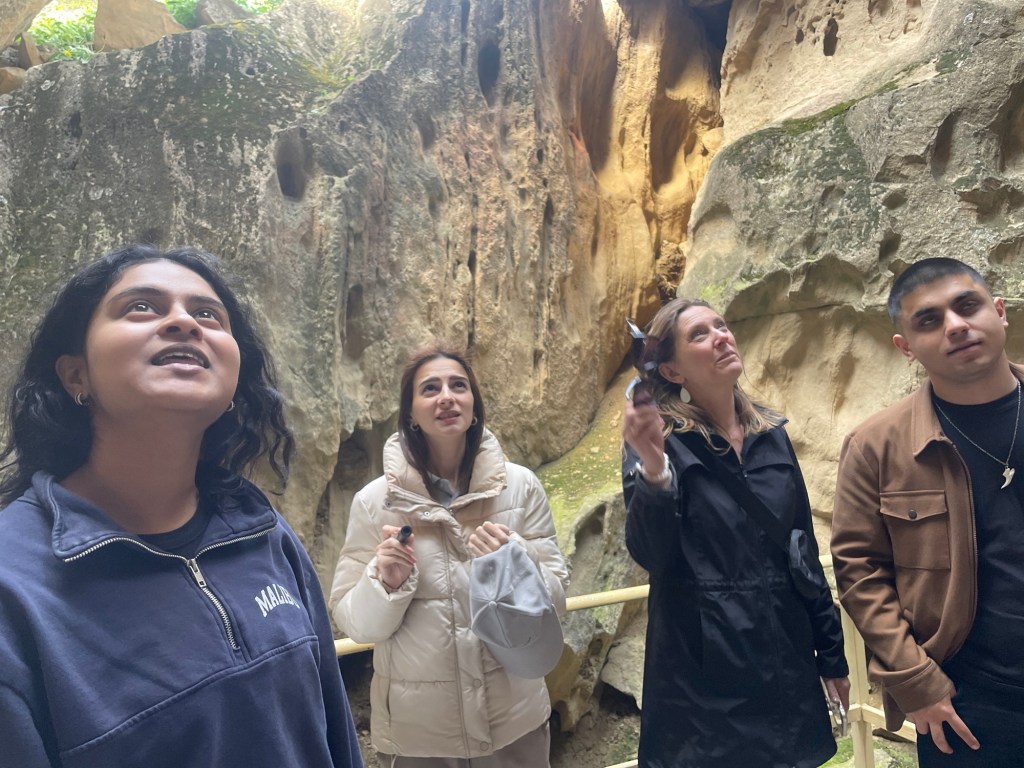
We have organized a few trips out of the city of Baku. Azerbaijan has a varied geography with Caspian sea coast, dessert plains, and the Caucasus mountain range. We visited Gobustan when Michelle was here with Nurlan our Azerbaijani friend and Sohini our Fulbright ETA freind who we travelled with in Sheki. Gobustan is about an hour’s drive from Baku.
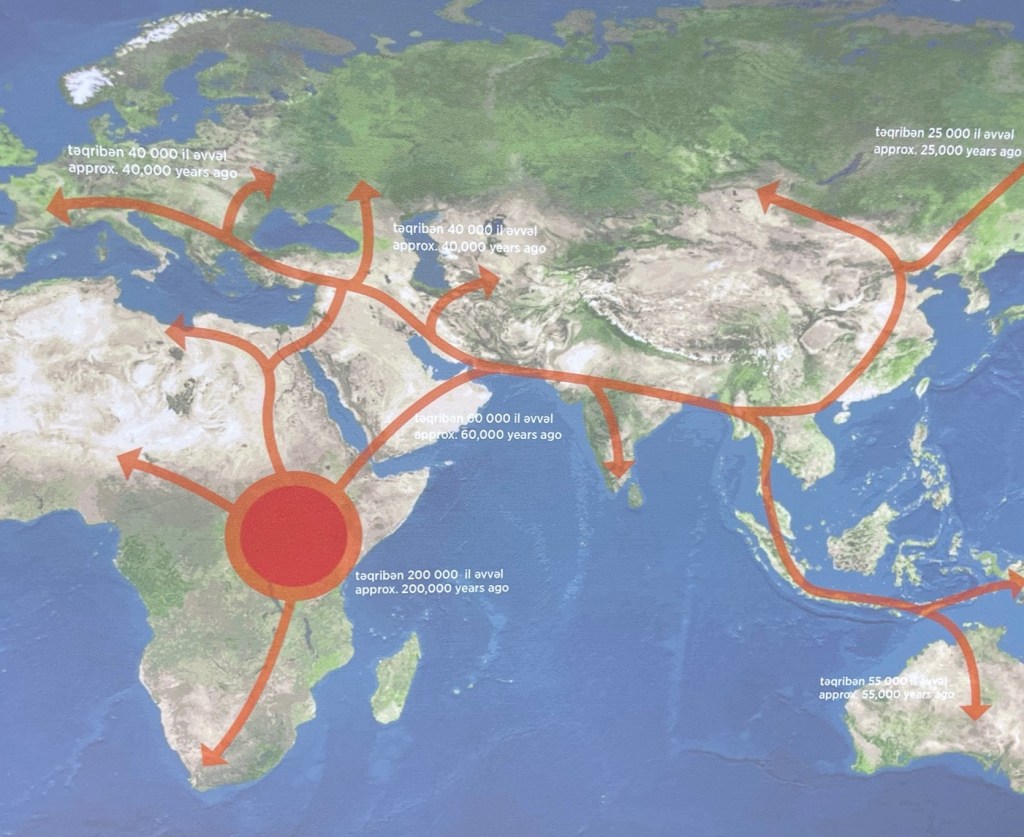
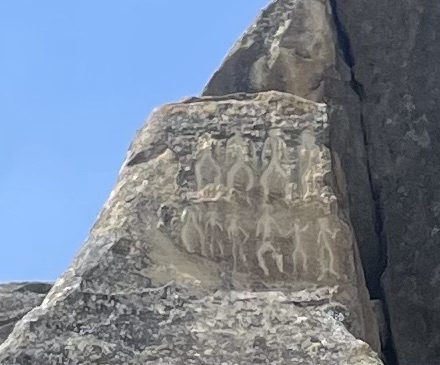
Azerbaijan has a really long history with so many different influences. The site at Gobustan has artifacts and petroglyphs that are 20,000 years old. The evidence suggests that Azerbaijan was among the earliest places humans lived. The museum was modern and our guide was great (pictured on the left). It was a nice day-trip.
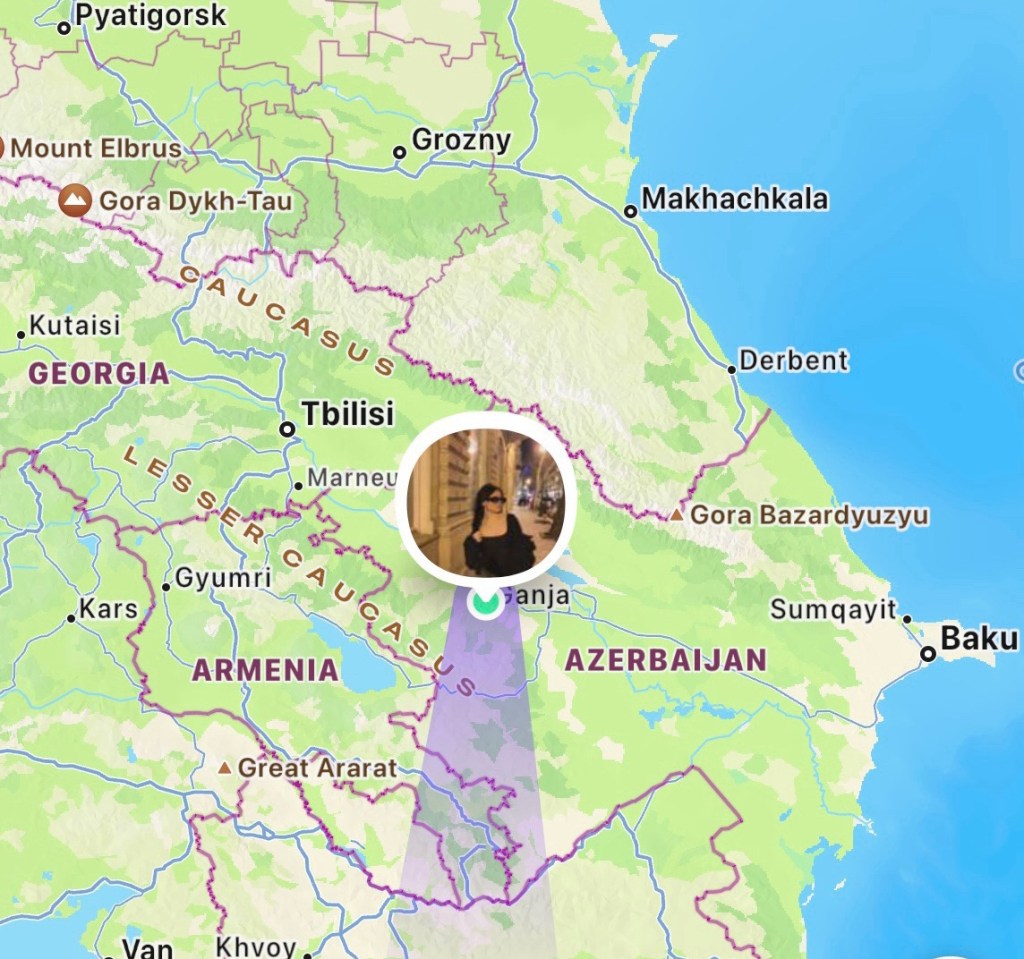
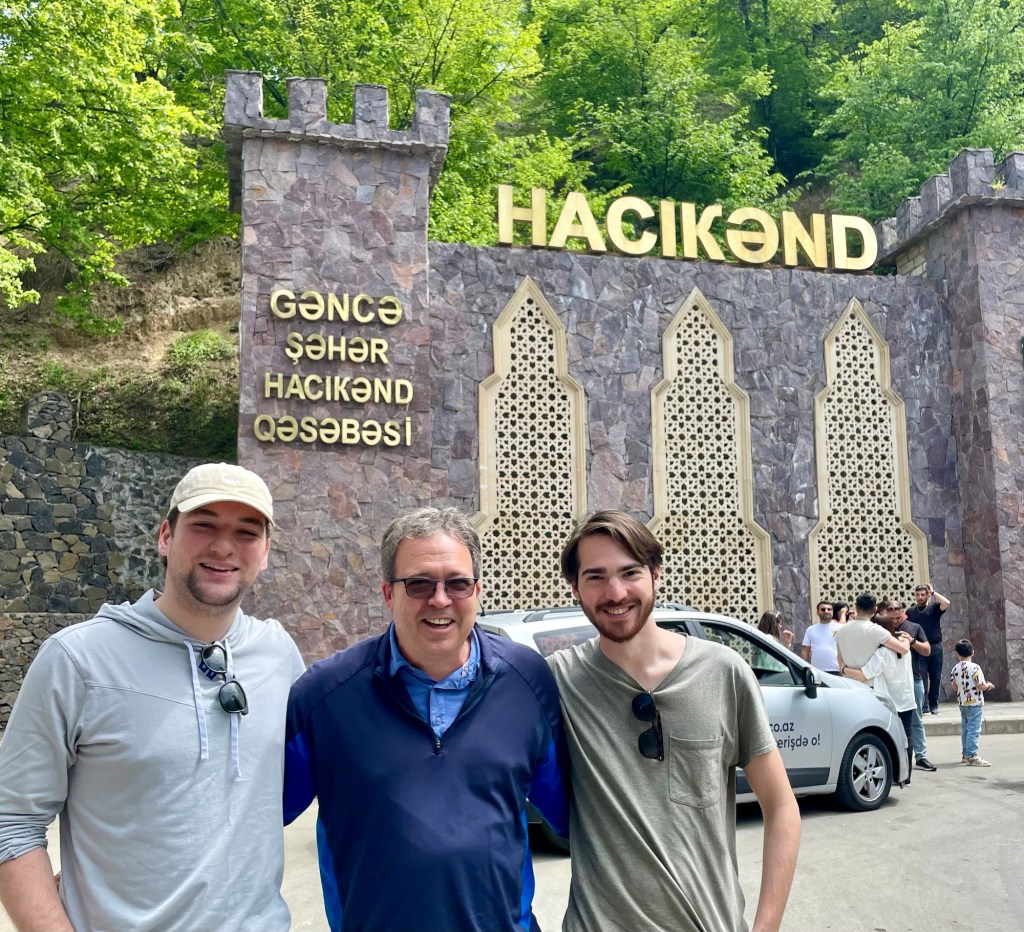
We travelled to Ganja, Azerbaijan’s second largest city and were hosted by Andrew , a Fulbright English Teaching Assistant. Andrew’s parents were born in Azerbaijan and left as refugees after the breakup of the Soviet Union and the following unrest. Andrew speaks Russian and planned a really great two day visit. I include a lot of maps, because it helps me appreciate Azerbaijan more when I see its proximity to Russia, Iran, Armenia, and Georgia.
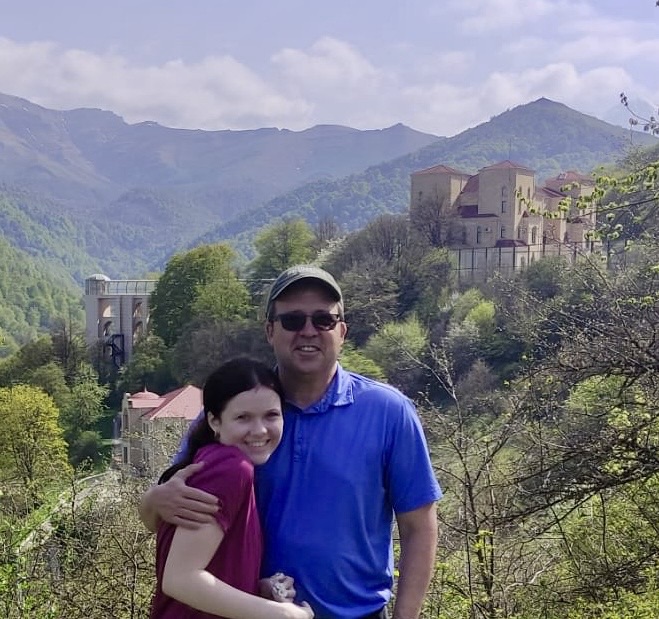
We were joined on this trip by Nick (on the right) who is also a Fultbright ETA working in Baku. Nick also speaks fluent Russian as his parents came to the US from Russian and Ukraine. We started our trip in the mountains around Ganja. We hired a car and driver and visited a couple lakes. The highest mountains of Caucasus were a great backdrop. Below is former presidential residence that is now a hotel on the Blue Lake.
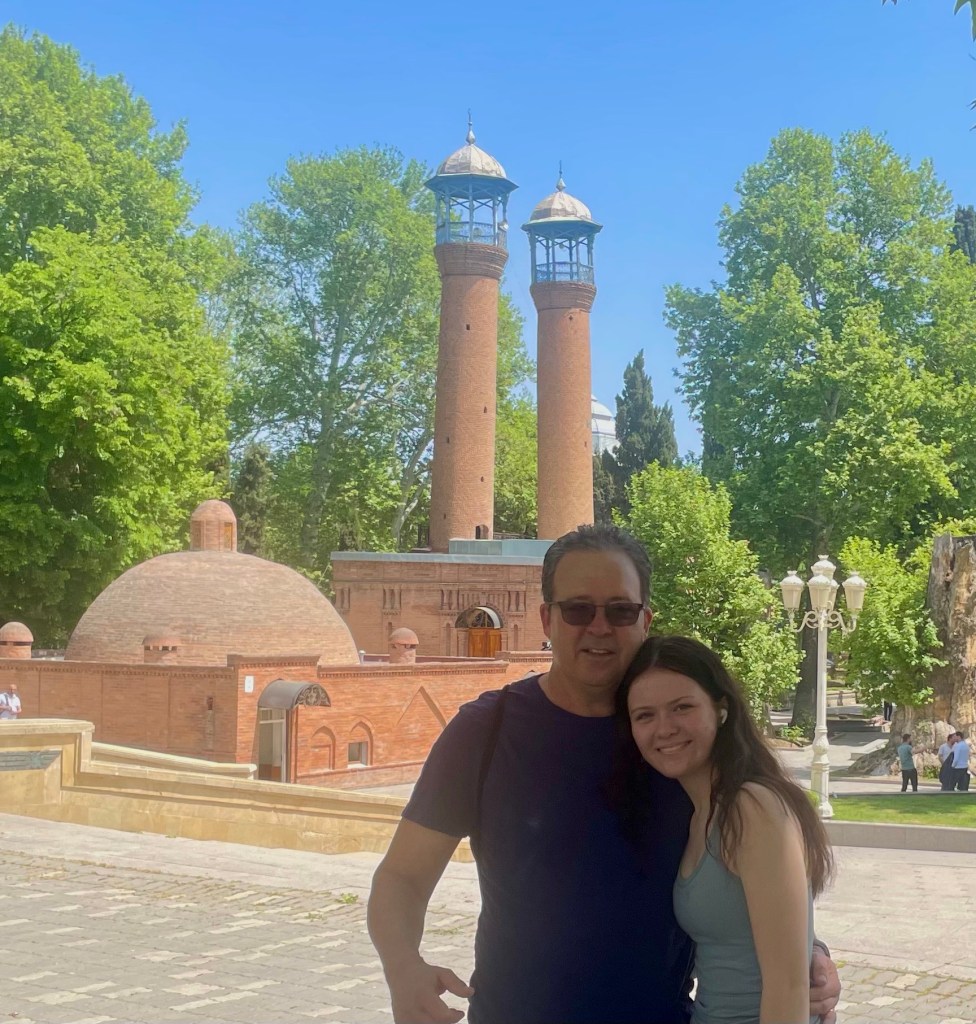
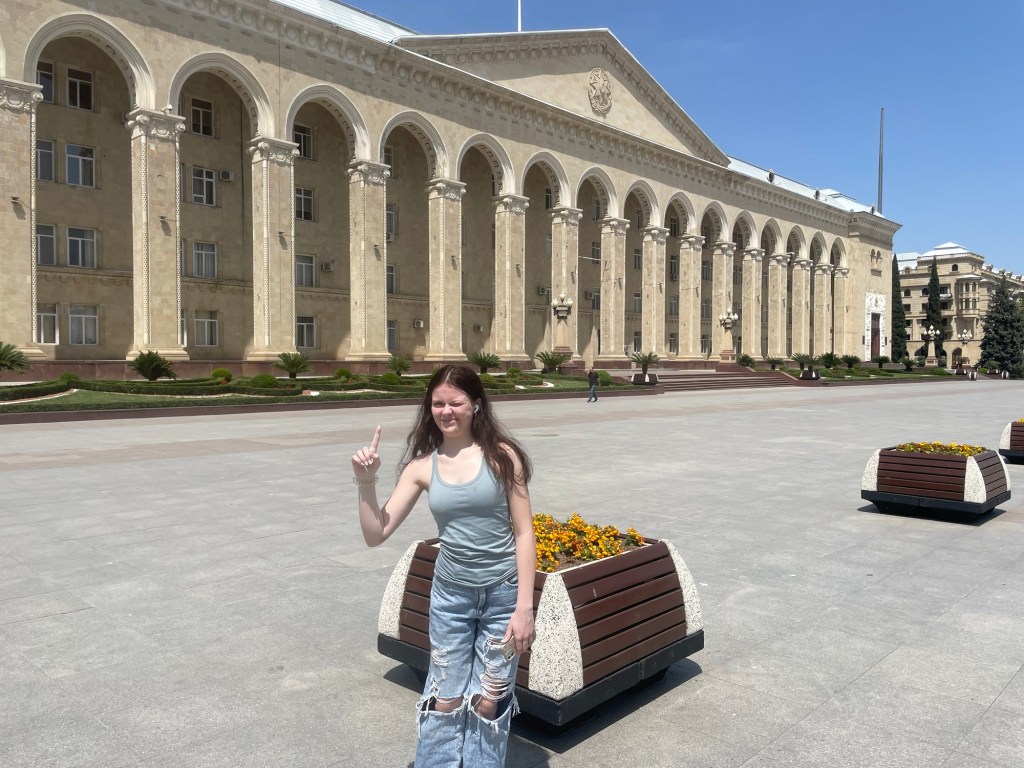
Right in the center of the city was this really beautiful 15th century mosque facility with surrounding baths. I would have like to look more, but wasn’t sure what was appropriate at that time. The government building below left was in an impressive square. On the right is an interesting building built out of glass bottles as a memorial for a brother who was killed in a war.
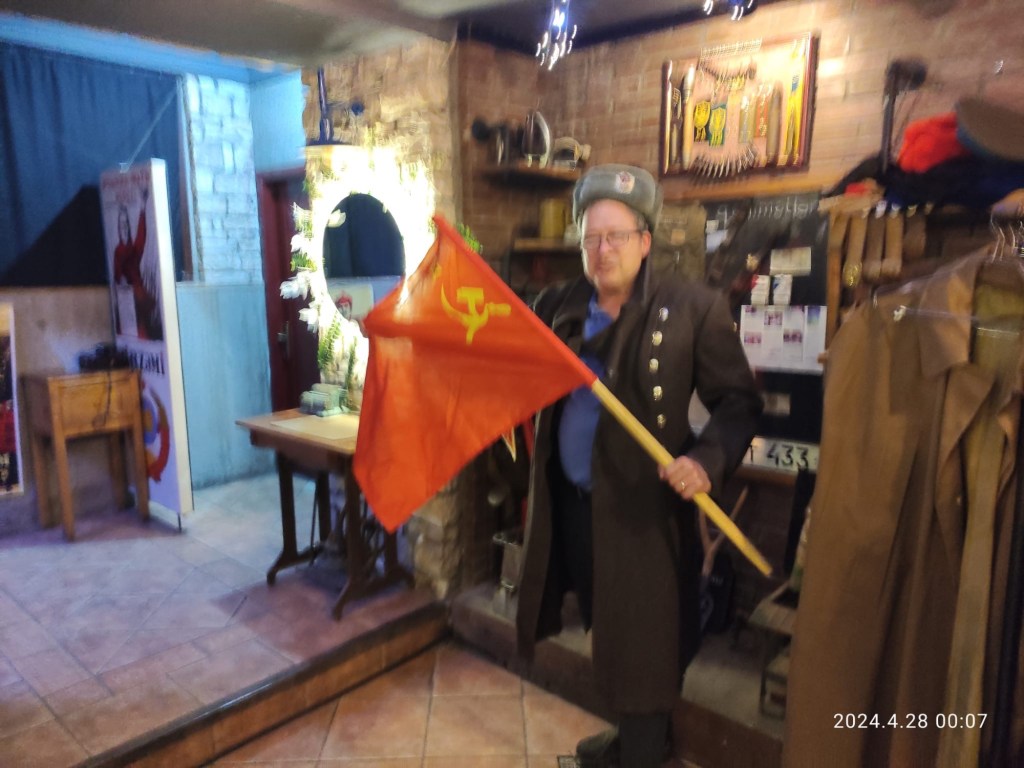
Here is a Russian Orthodox Church and below a blurry picture from a Russian themed restaurant.
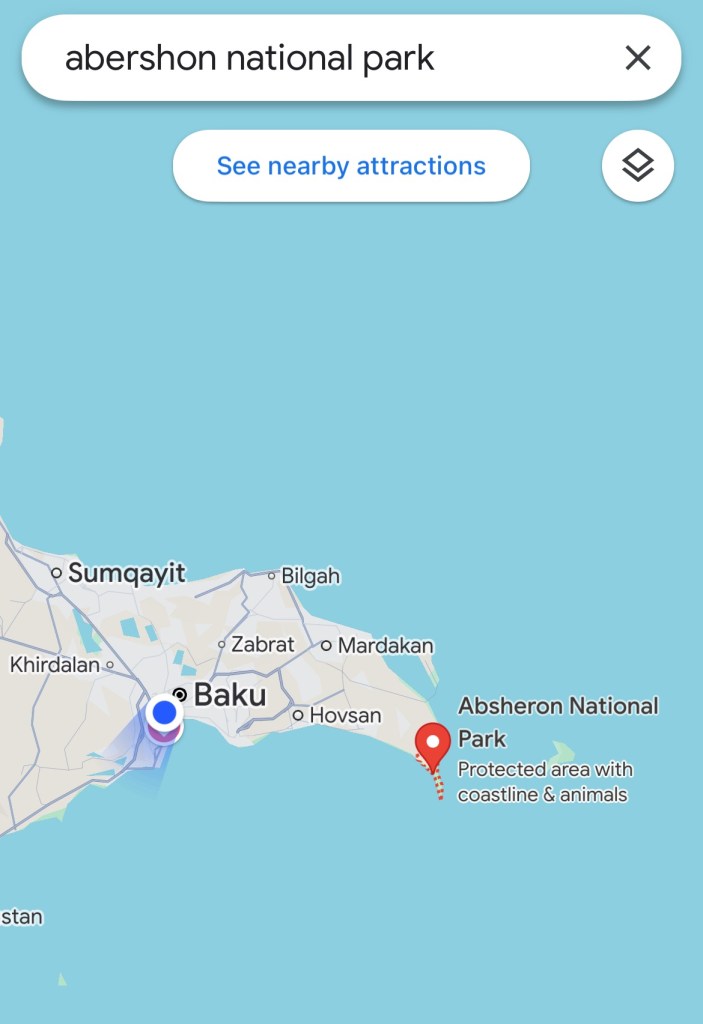
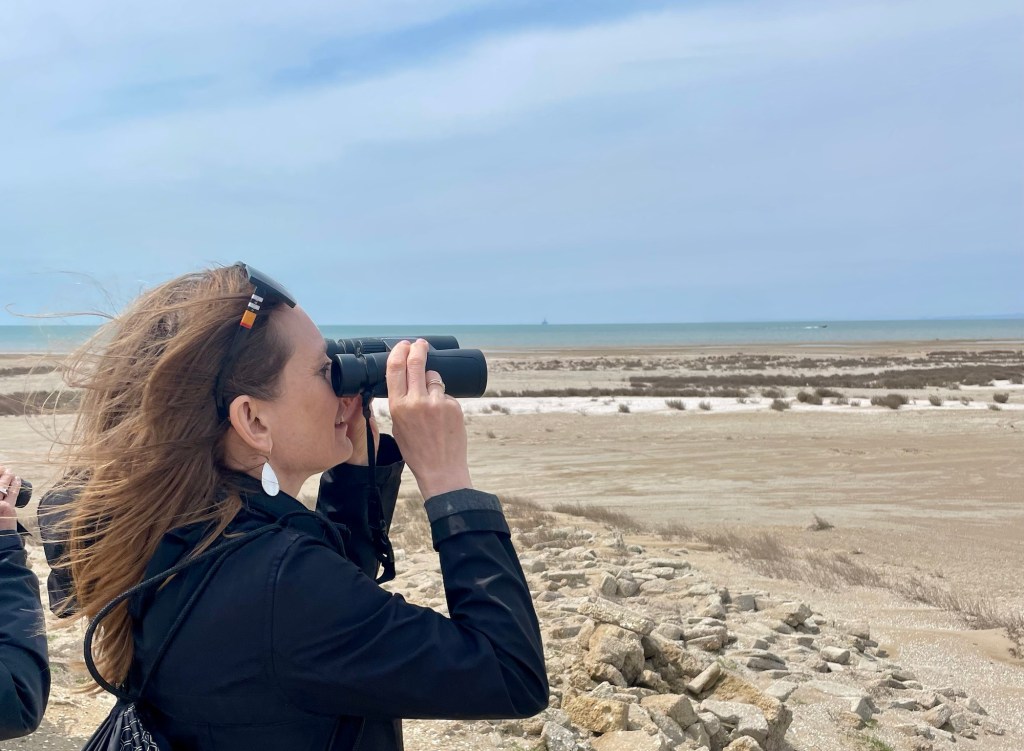
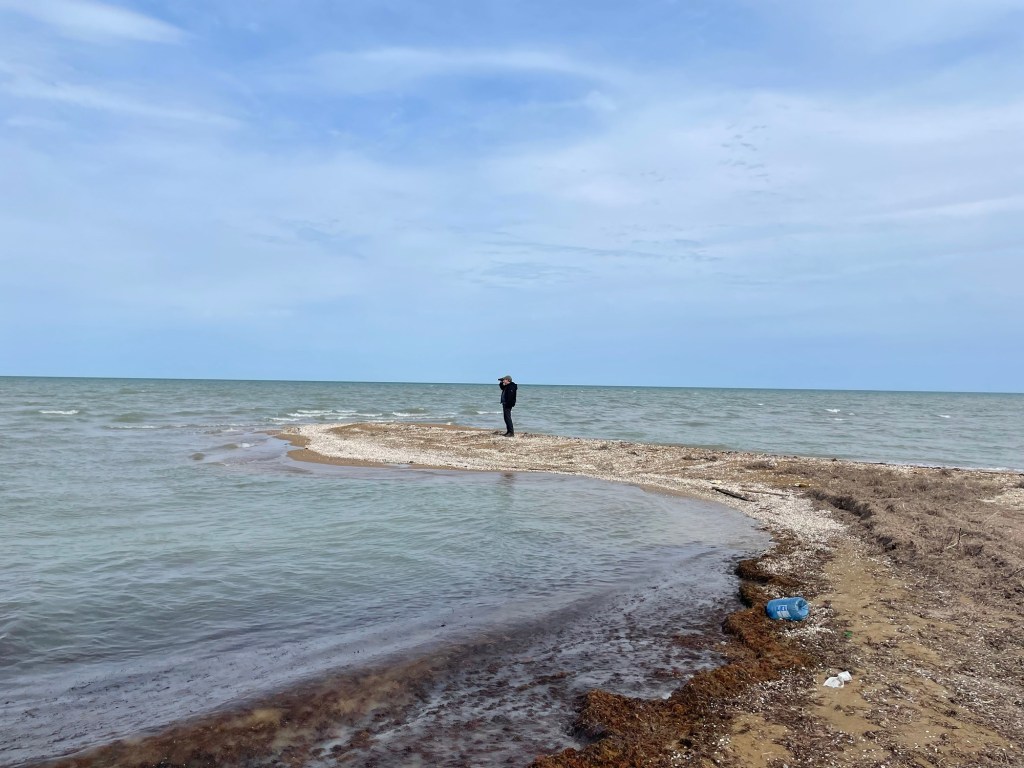
Michelle and I have never been birding before and it would not have been possible without a great guide service. A highlight was seeing Flamingos, more than 10 other types of birds, and a couple snakes. Just walking out to the tip of the peninsula in the middle of the Caspian sea was cool.
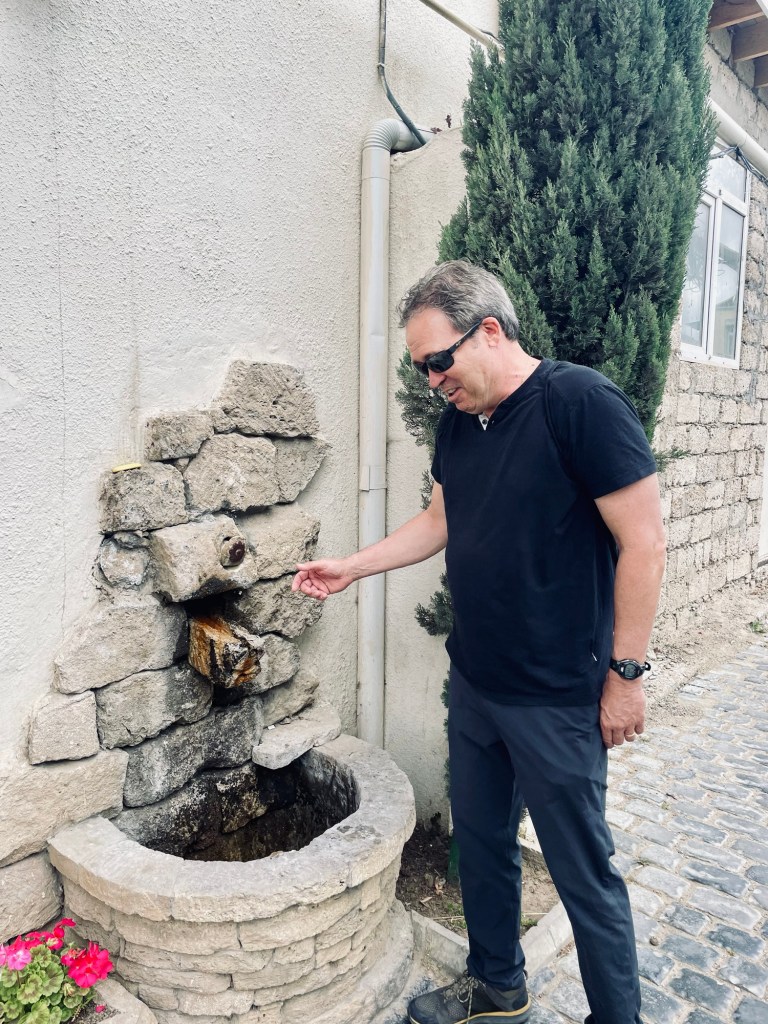
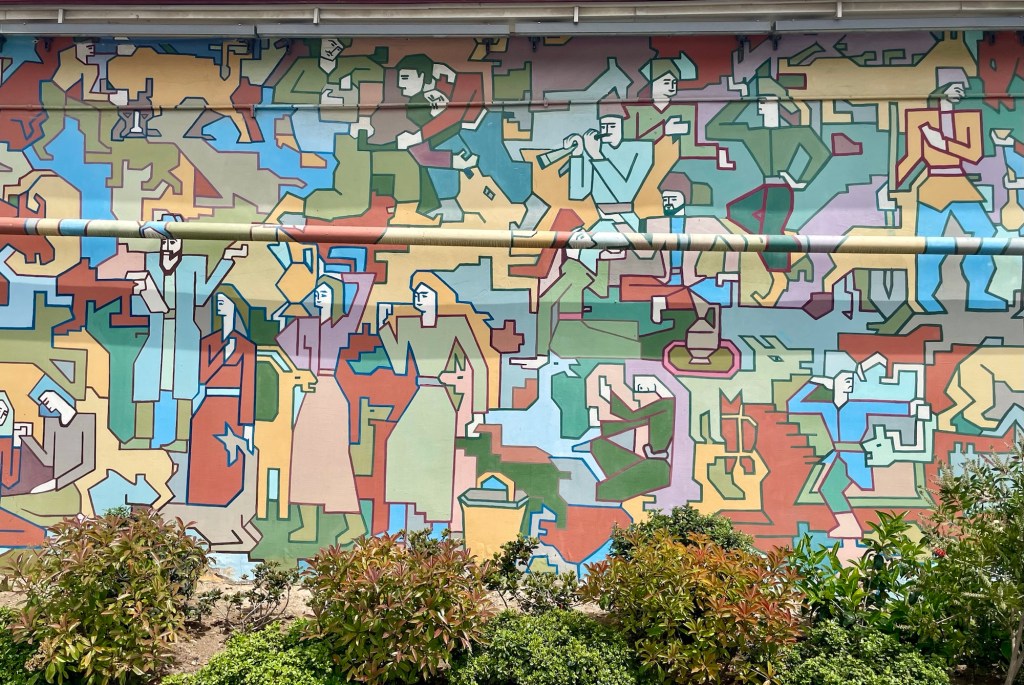
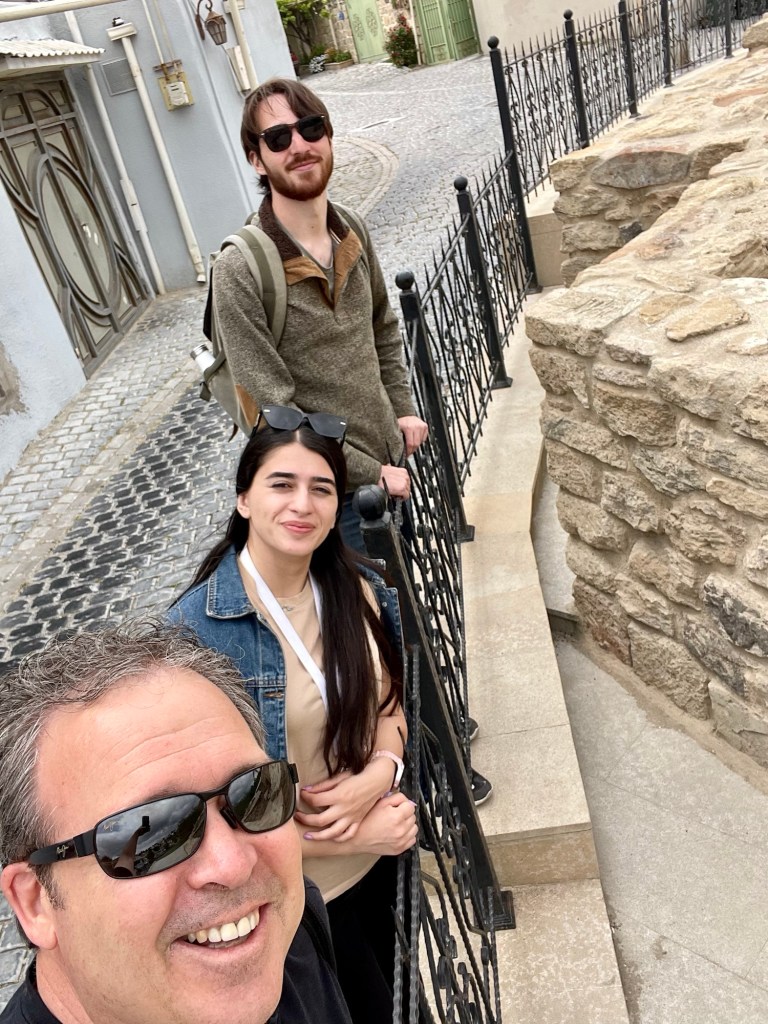
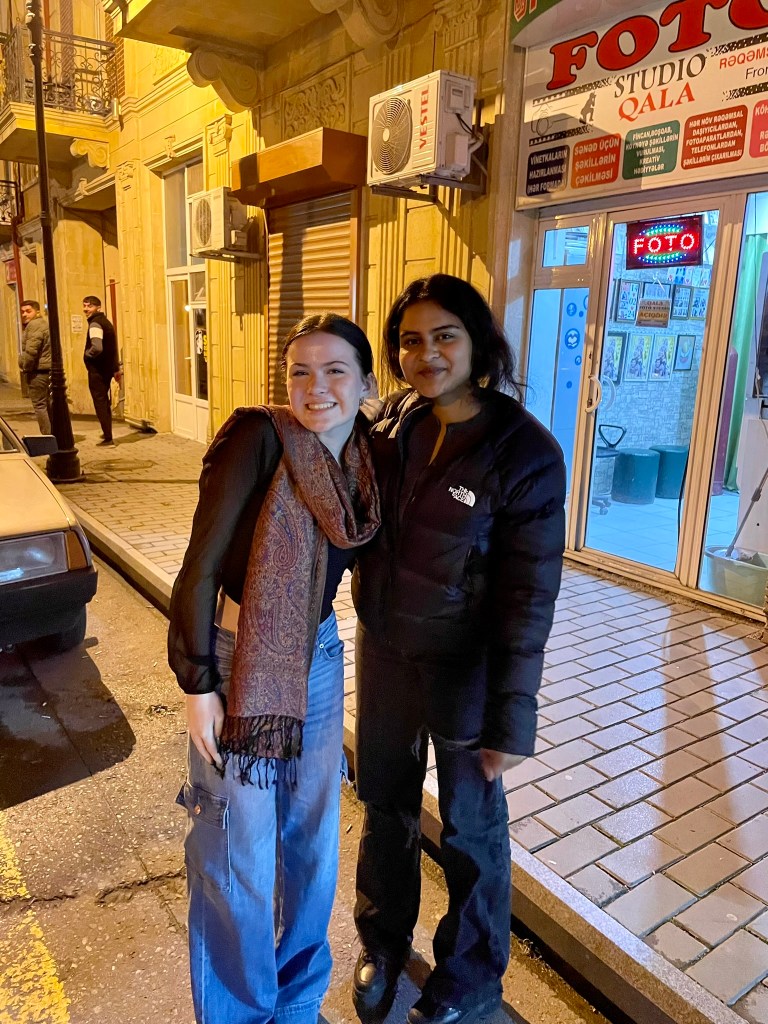
Finally, a quick little trip to a little suburb of Baku and just a walk through the streets with a nice guide, Eva, and Nick.
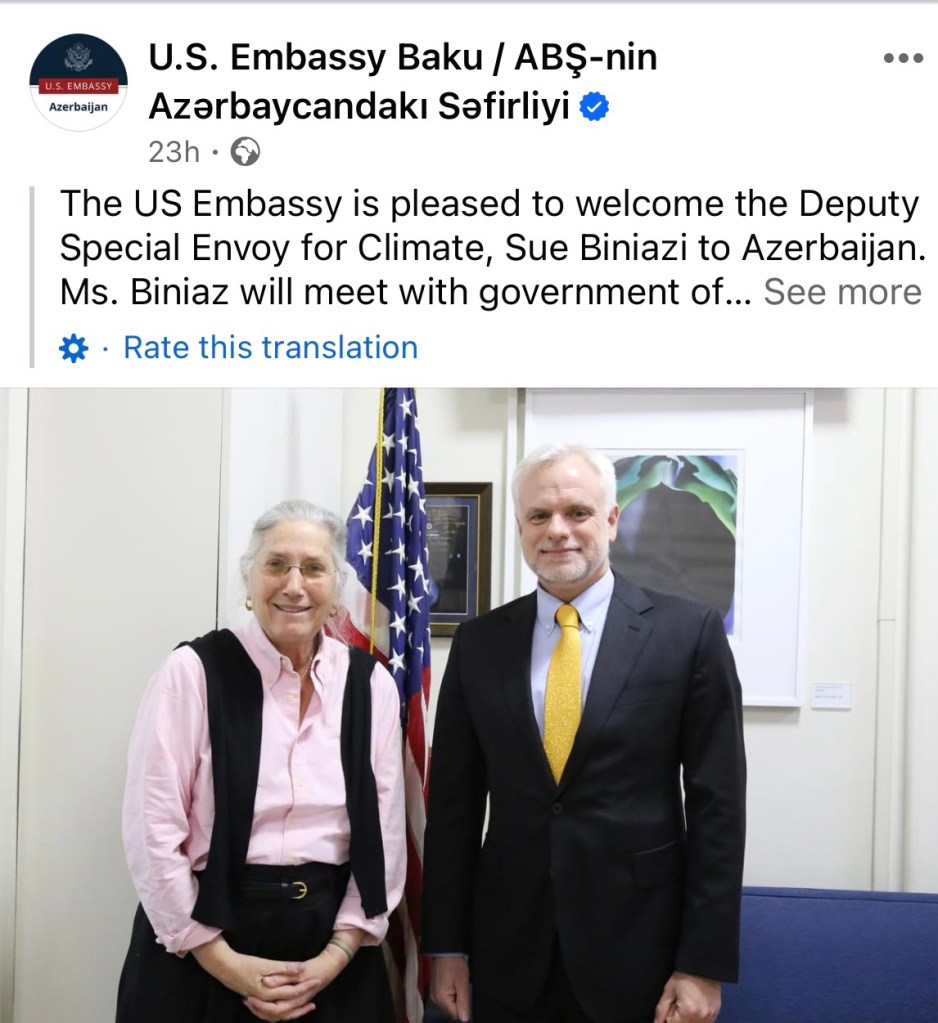
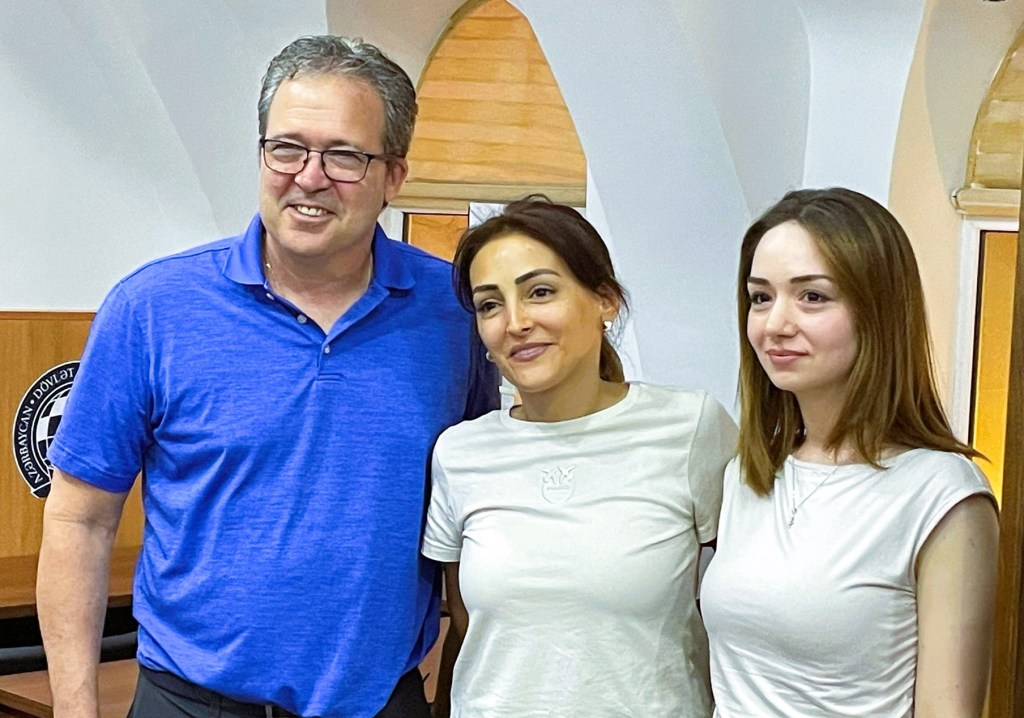
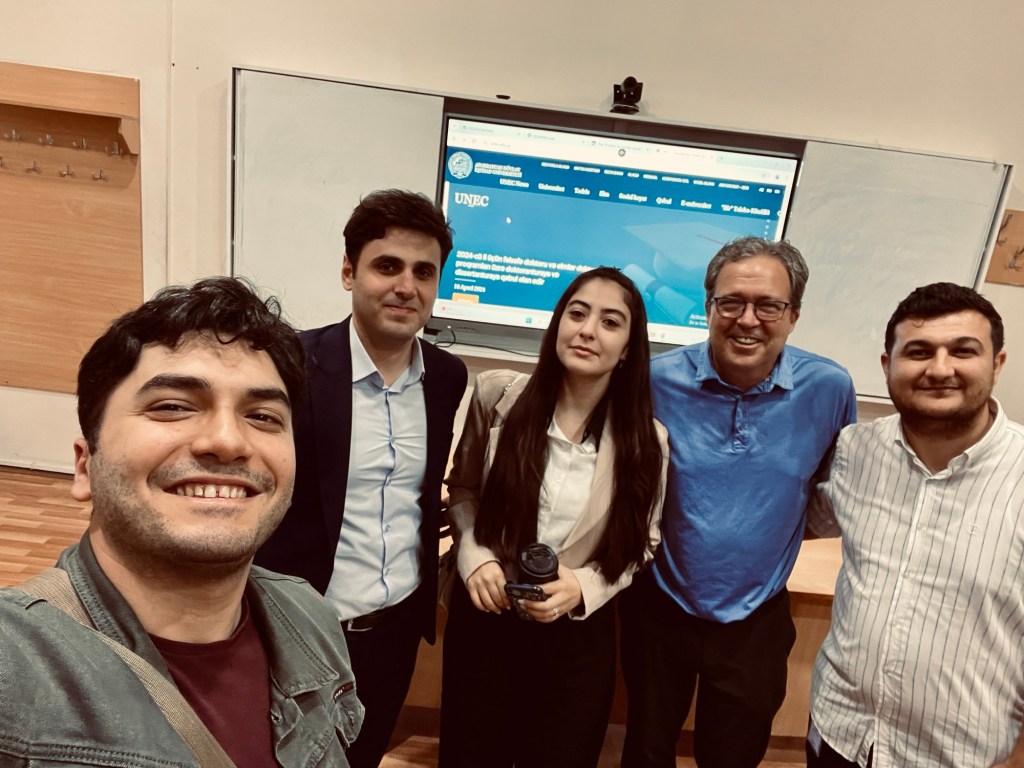
Lucky to have Dr. Curt Gervich, my friend and colleague, visit me in Baku and at UNEC. Curt met with UNEC Dean and friend, Dr. Nazim Hajiyev, sat in on my class, and went out for dinner with other faculty members. Both Curt and I are very interested in the UN Climate Change conference (COPP29) that will be held in Baku this November. It is interesting to see how the US is working to support Azerbaijan in this important work. Earlier this year, I had a great time at the presentation of Sue Biniazi, who explained the history and the goals of the COPP meetings. The US ambassador to Azerbaijan, Mark Libbey, is shown here with Ms. Biniazi.
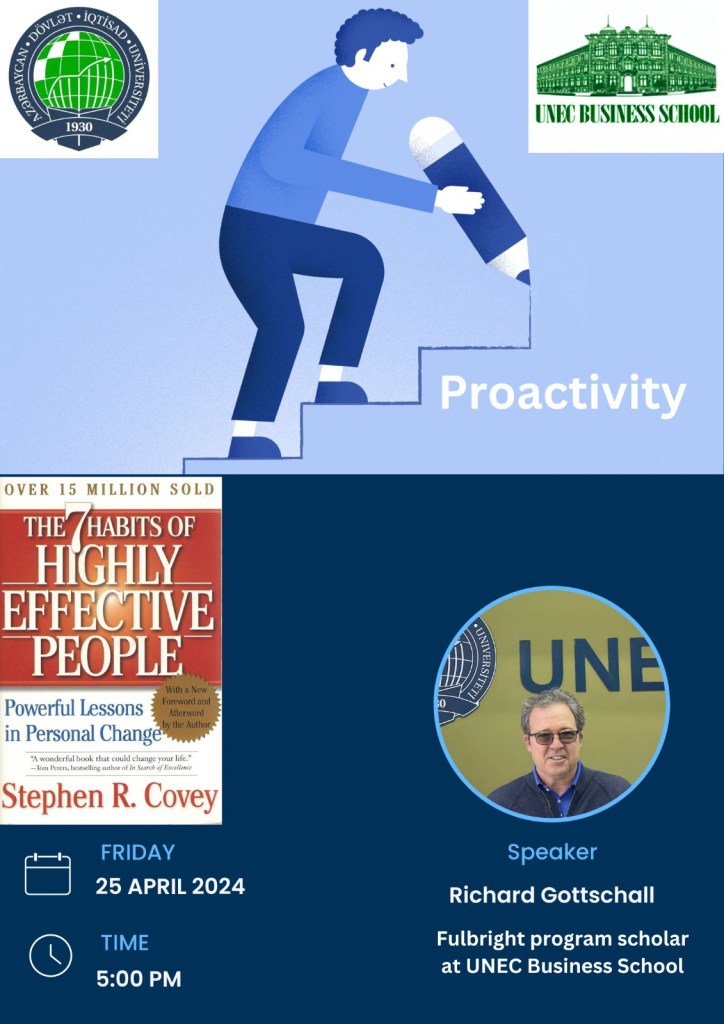
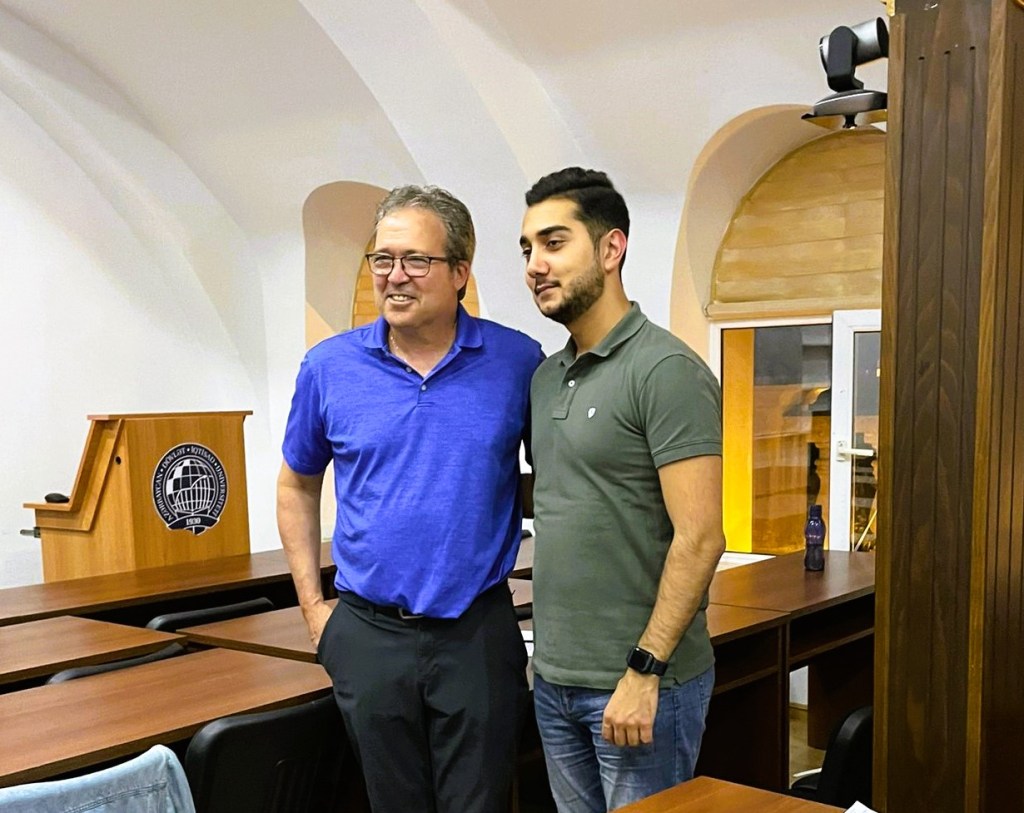
I can talk about The 7 Habits anytime and anywhere. We had a very nice talk with about 15 colleagues participating. Below, I visited an undergraduate Marketing class for some of their presentations. I was impressed with the students and their hard work.
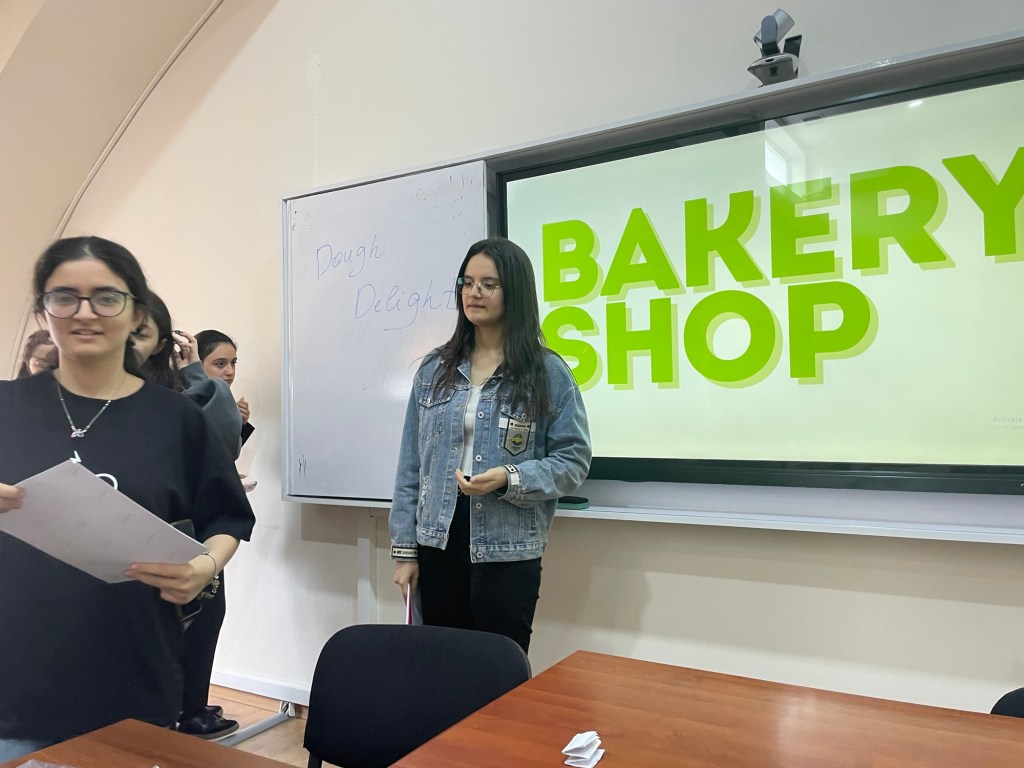
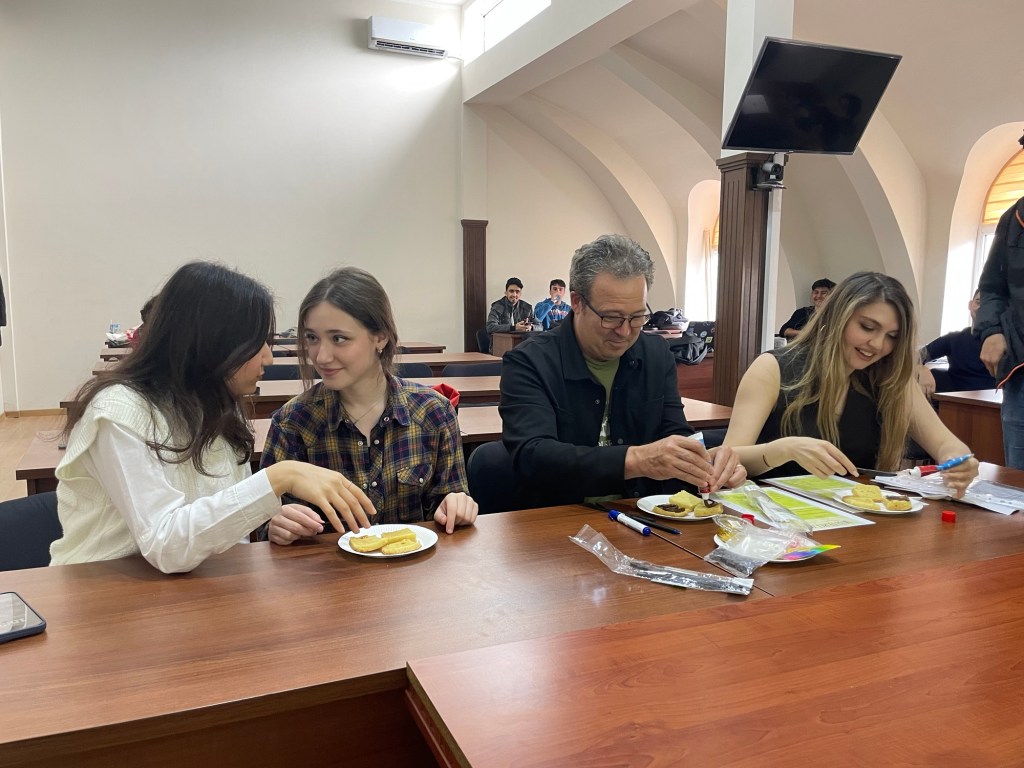
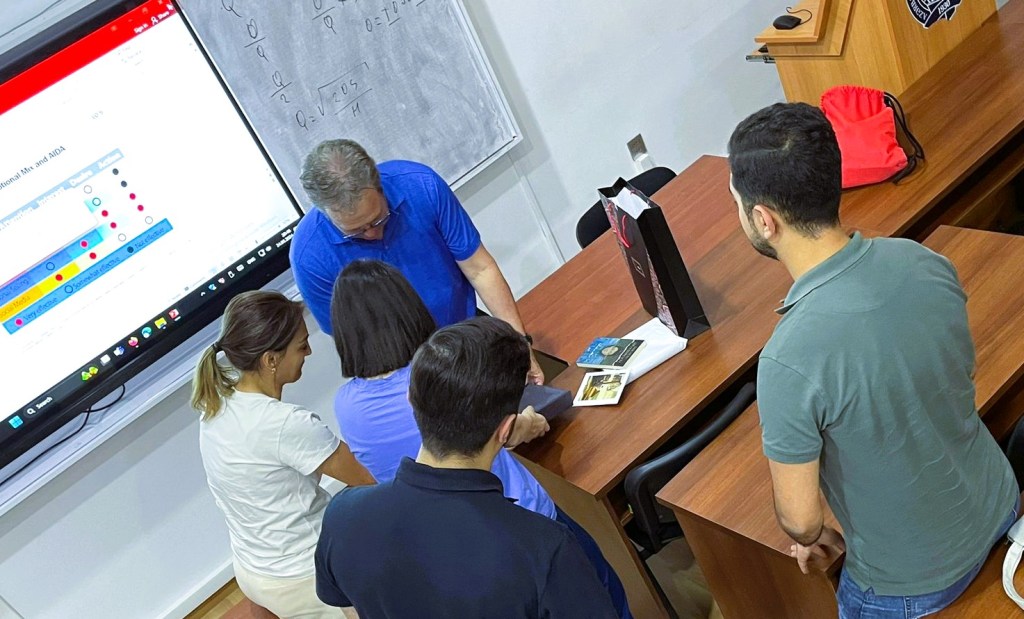
The above picture supports the idea that two heads are better than one. The Bakery presentation included a hand-on exercise and the pair on the left helped me feel poorly about my cake making. ability.
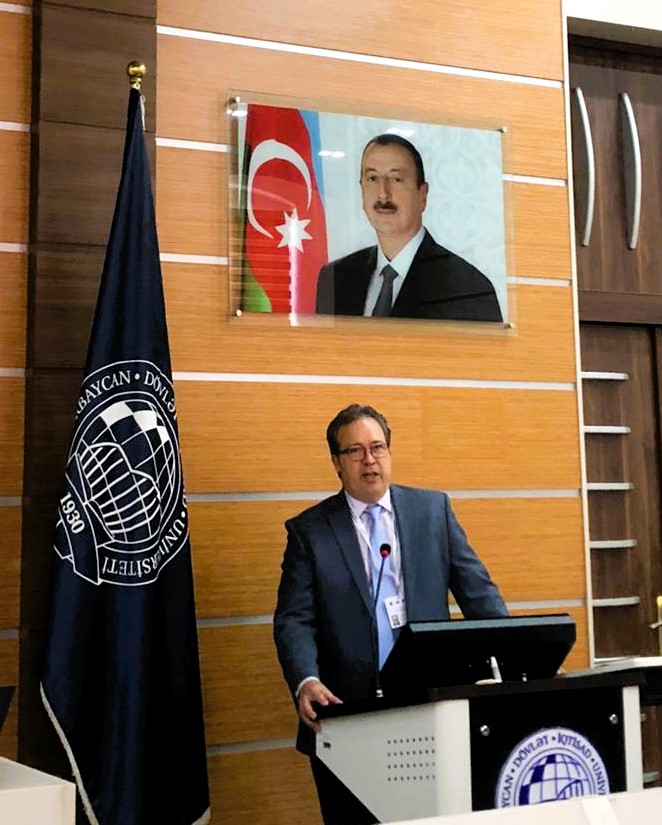
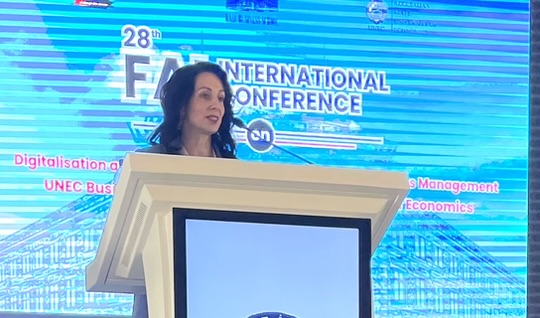
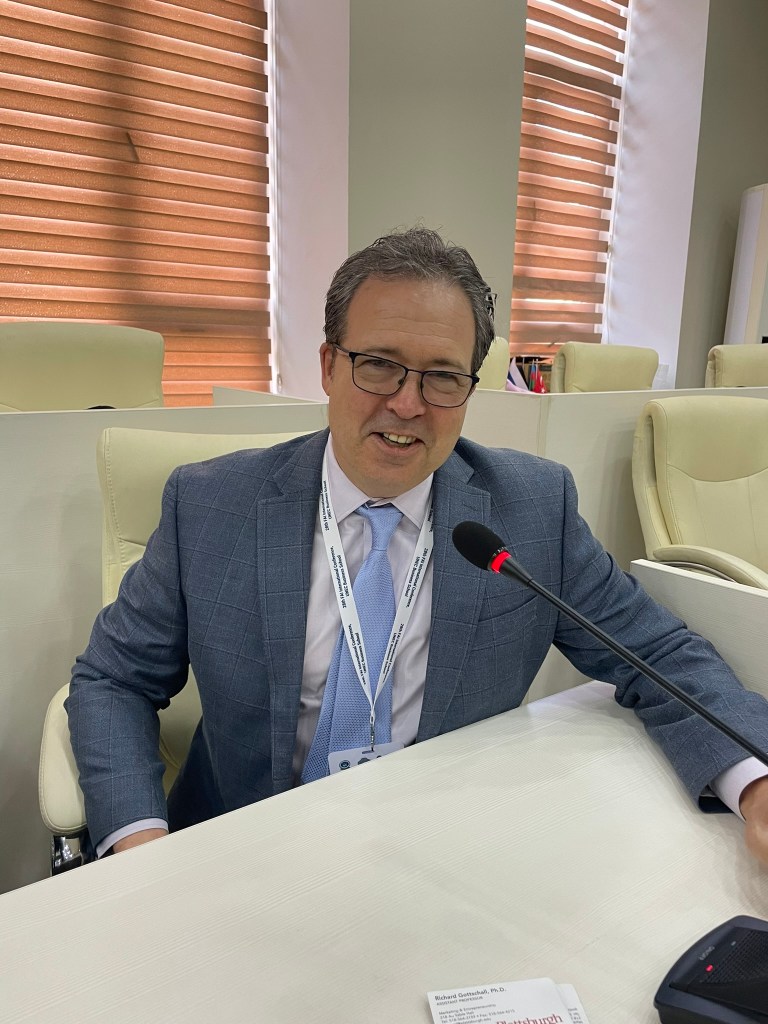
At the 28th FAI global conference on Digitalization and AI, I presented Nazim’s and my exploratory research on Azerbaijani culture and its influence on entrepreneurship. I met nice people from India, Ukraine, Georgia, and more colleagues from Azerbaijan. The picture above me is President Ilham Aliyev, the second President of Azerbaijan following its independence from the Soviet Union. More conference pictures below.
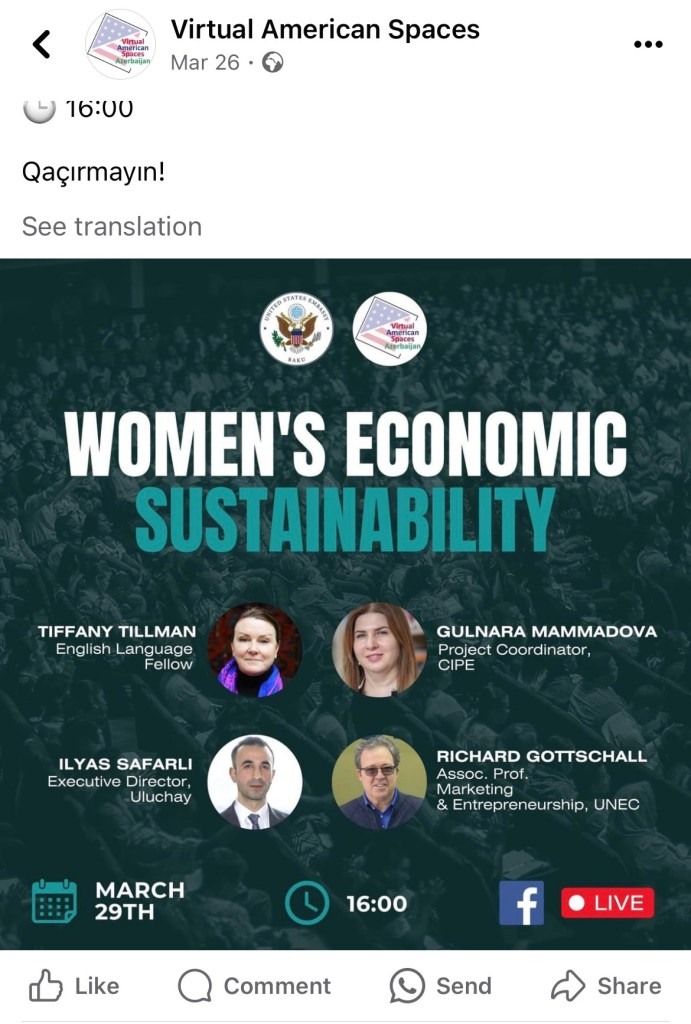
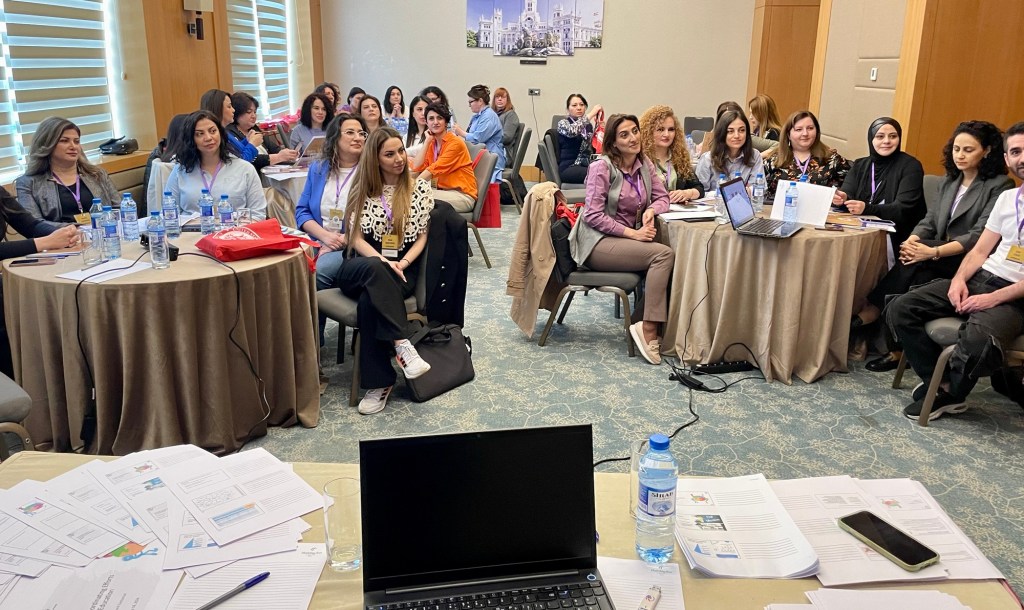
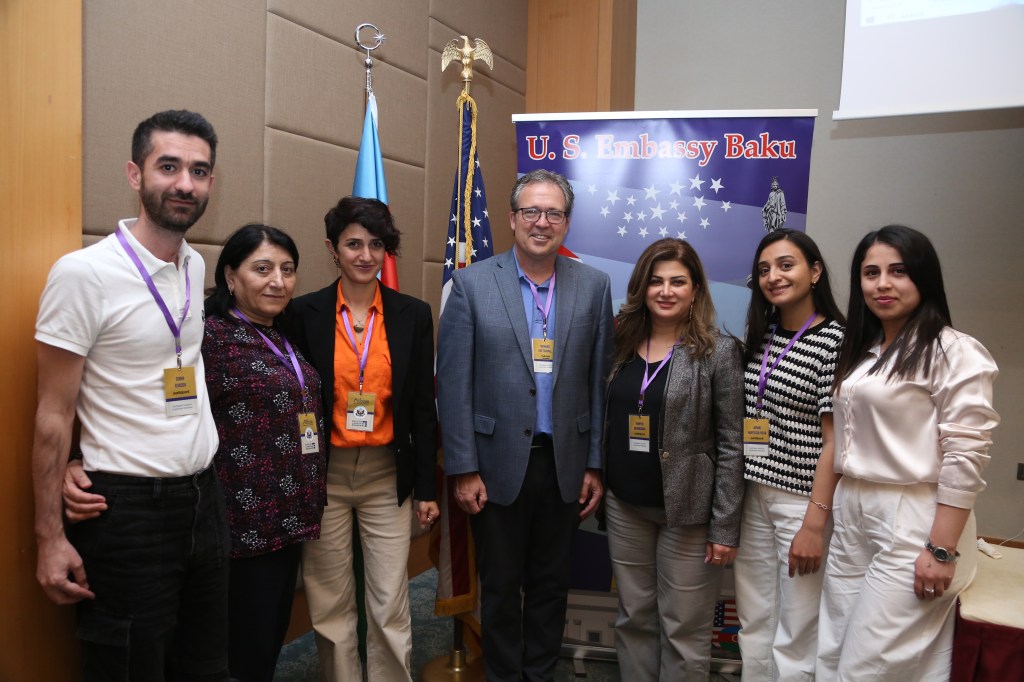
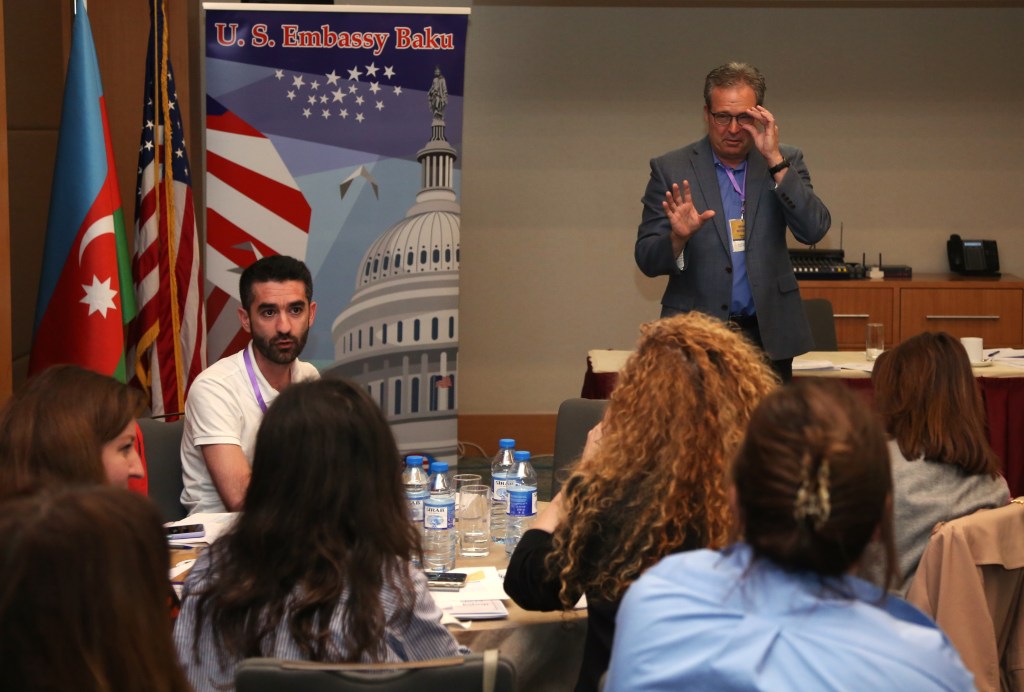
Above, I participated in an excellent panel discussion and got to hear from Azerbaijani experts about their work to support entrepreneurial women. Below, I co-facilitated a two-day leadership conference for Azerbaijani English teacher organizations. It was a pleasure to work with the teachers and two former US Peace Corps training staff.
Perhaps my main activity in Azerbaijan was teaching two MBA courses at UNEC, Marketing Management and Entrepreneurial Manager. It was a new experience teaching MBA courses and an extra challenge of teaching in a different educational system. I think it went well and I will have fond memories of these hard working Azerbaijani people.
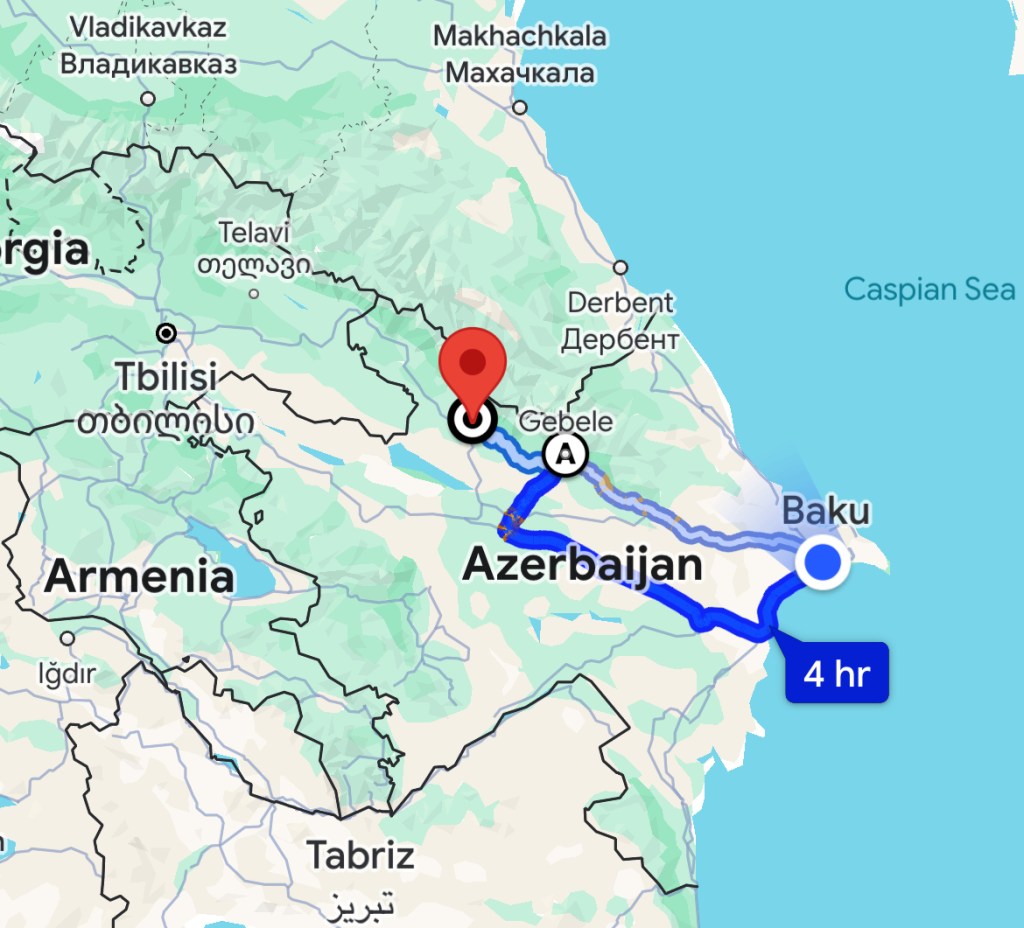
I wanted to go to Sheki and visit an American Fulbright English Teaching Associate. Getting around Azerbaijan was a little hard to figure out at first. I called a hotel to make reservations and the receptionist did not speak any English. It has been a little difficult to make sense of the train and bus schedules. So, I called my Azerbaijani friend, Nurlan, and asked him to join us, and then rented a car for the long weekend. Driving in Azerbaijan is pretty good. Sheki is a historic former center on the ancient Silk road and is nestled right up against the Caucasus mountains. The drive took me closer to 6 hours to get to our first stop.
Stopped along the way for some fast food. Gutab is a a staple in Azerbaijan, it is thinner than a typical tortilla and is filled with meat, cheese, or a mixture of fresh green herbs. I aksed to take this picture and a friends of hers from across the road yelled “I’m telling your husband.” Which thanks to Nurlan’s translating, gave us all a laugh. We made it to our very cool accommodations on day 2.
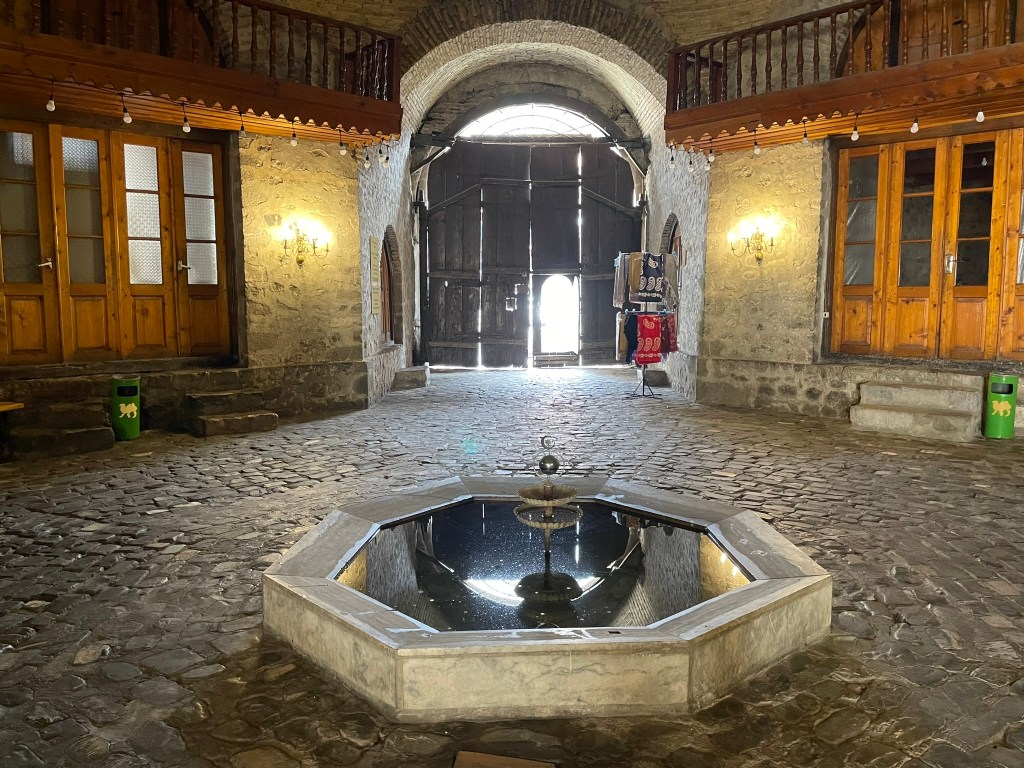
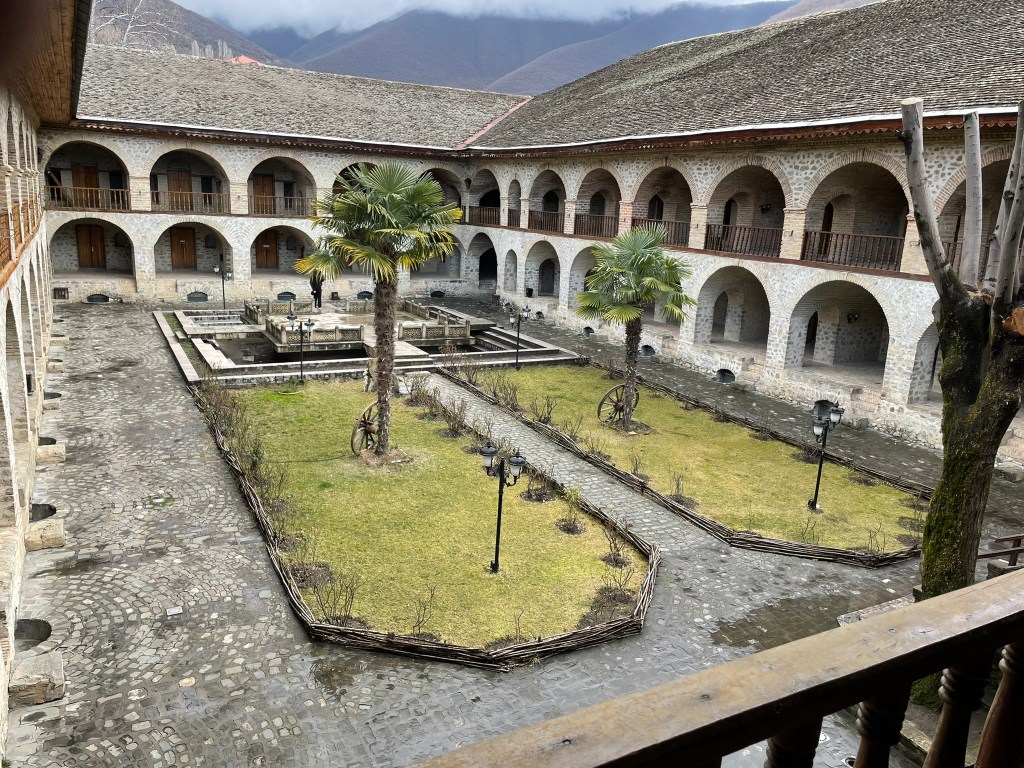
This is the actual door to our Caravan accommodations. Built in the 1700’s it accommodated traders as well as their goods and animals. While a little rustic, we stayed in a historic inn on the silk road. The receptionist told Nurlan that Azerbaijanis don’t stay their much, but foreigners love the place. Below is the entrance on the other side of the door and then the inner courtyard.
Our suite had 3 rooms and felt a little historic. We arrived in this beautiful area in mud season. The snow was gone and yet to be replaced by leaves or flowers. I would really like to see Sheki in a better season.
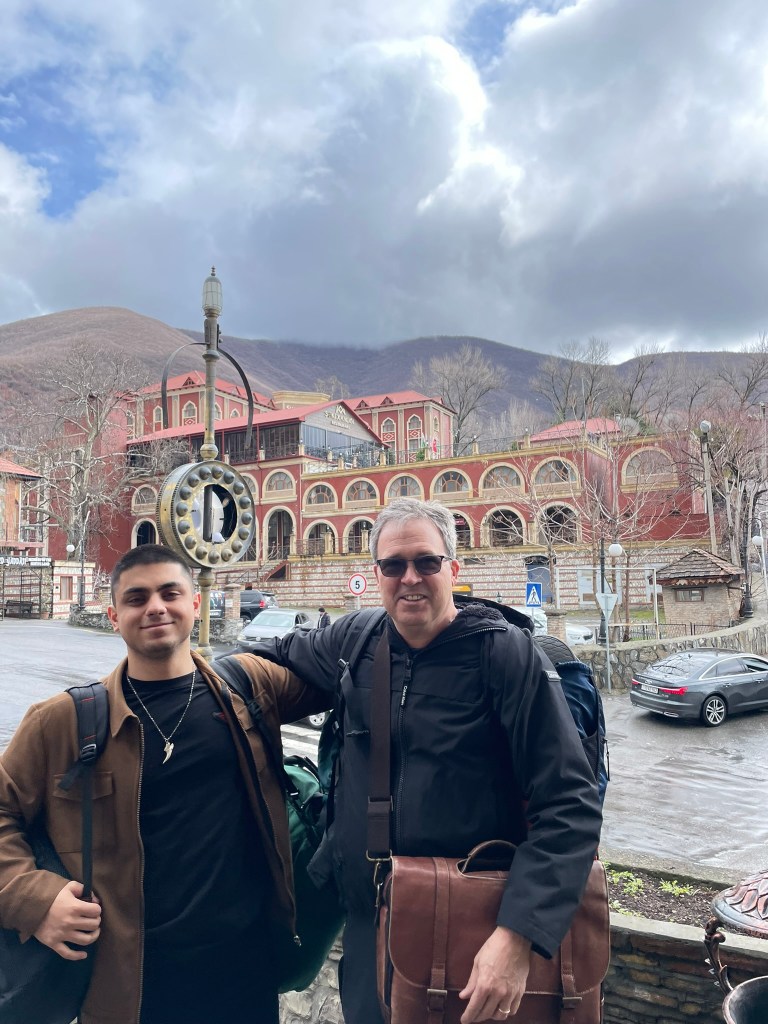
Nurlan is a 19 year old Marketing student at the university where I teach. We met at a local restaurant and struck up a conversation. Nurlan is surprisingly knowledgeable about history and speaks great English from living in Toronto, Canada. This is the view from the Caravansarai’s front door. Below, we are at the Sheki Khan’s Palace.
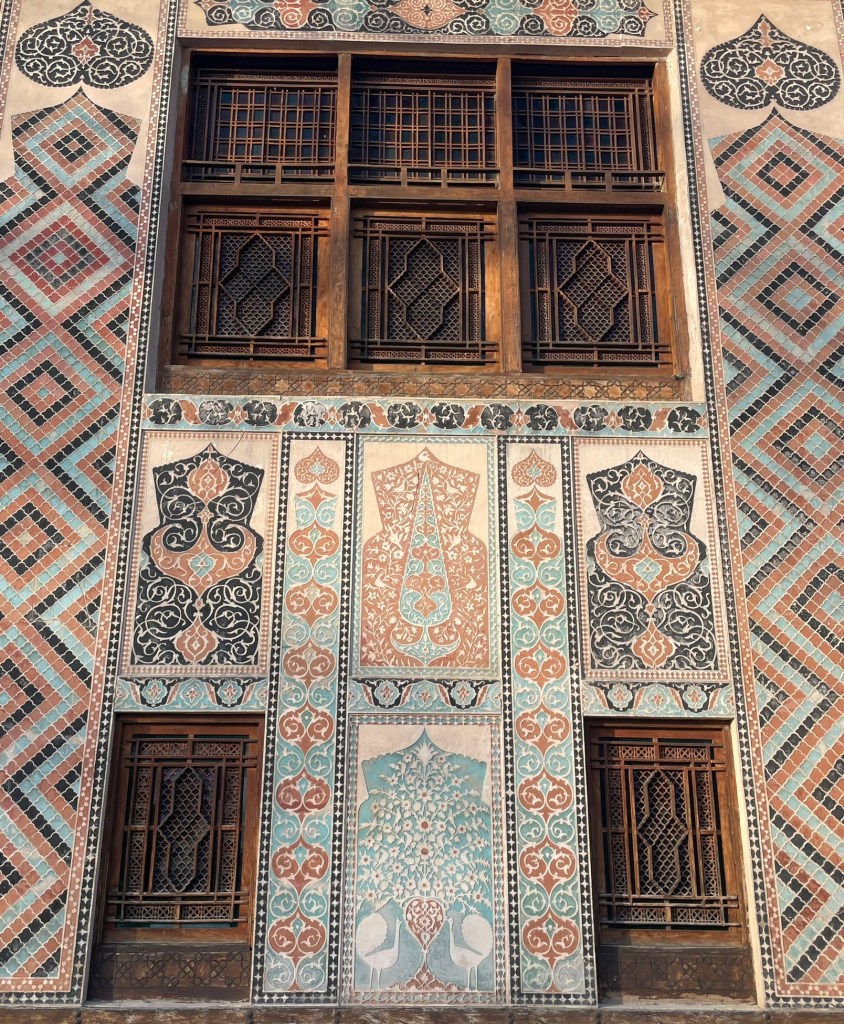
The first picture is part of the compound and directly above is the exterior wall of the palace with (mostly original) great stained glass windows and ornate painting covering every wall inside and out. The palace isn’t big, but was very colorful and ornate.
We met up with Sohini who knows where to eat well in Sheki. Sohini was working teaching English over the weekend, but pointed us in the right directions and met us for two lovely dinners. We travel with Sohini and Nurlan again to Gobustan the next month. Below is a neat dish, Piti, where you start by pouring the rich stew broth over bread before continuing with the lamb stew in the same bowl.
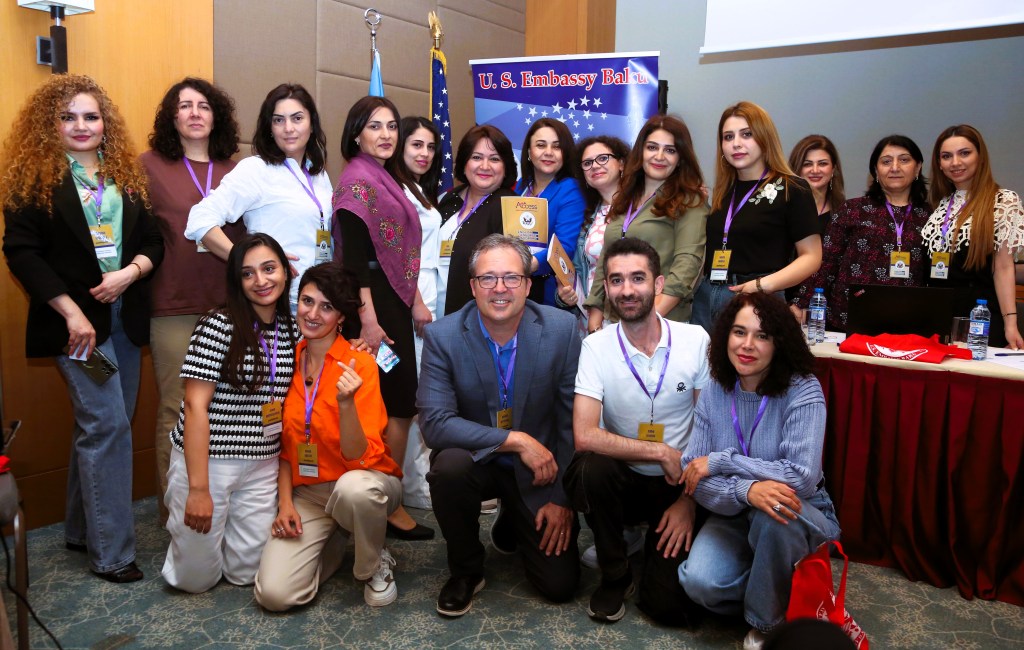
It has been great meeting people doing really interesting work in Azerbaijan. I am really happy that Evie has gotten to meet and interact with these recent college graduates who are out adventuring and participating in cross-cultural exchanges.
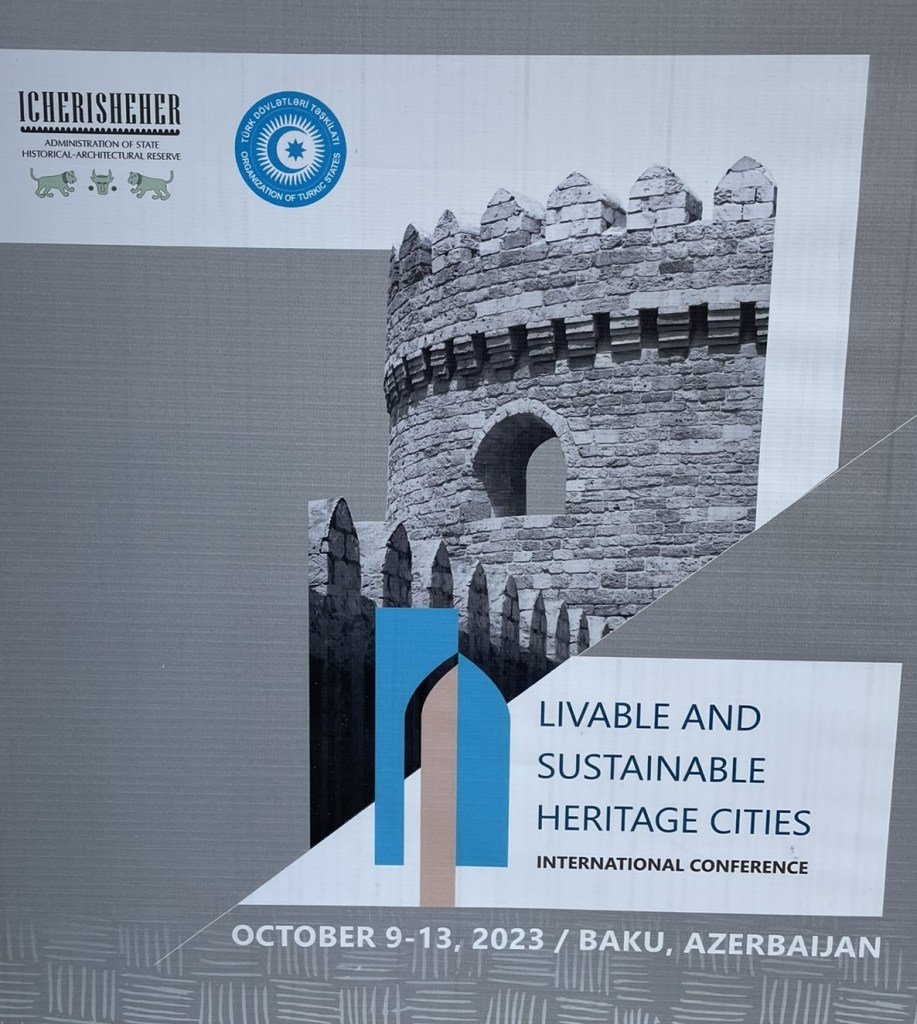
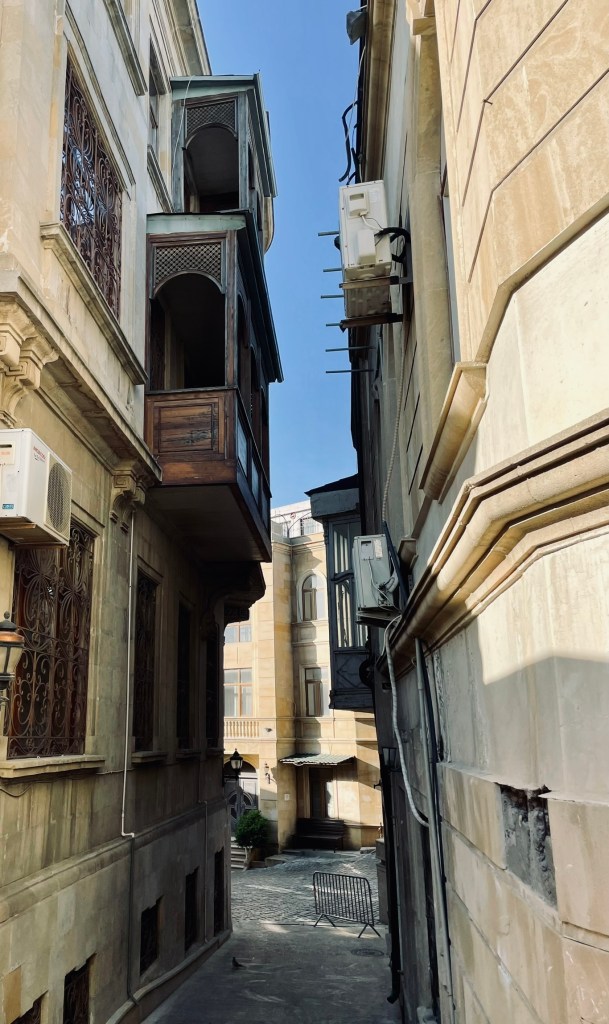
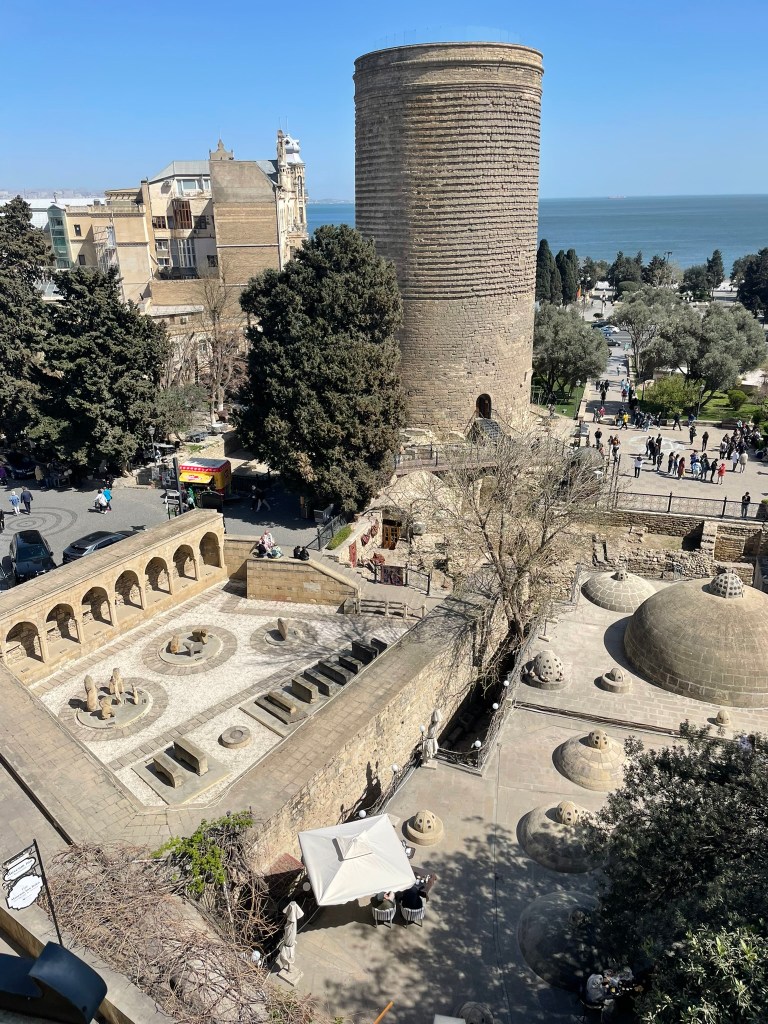
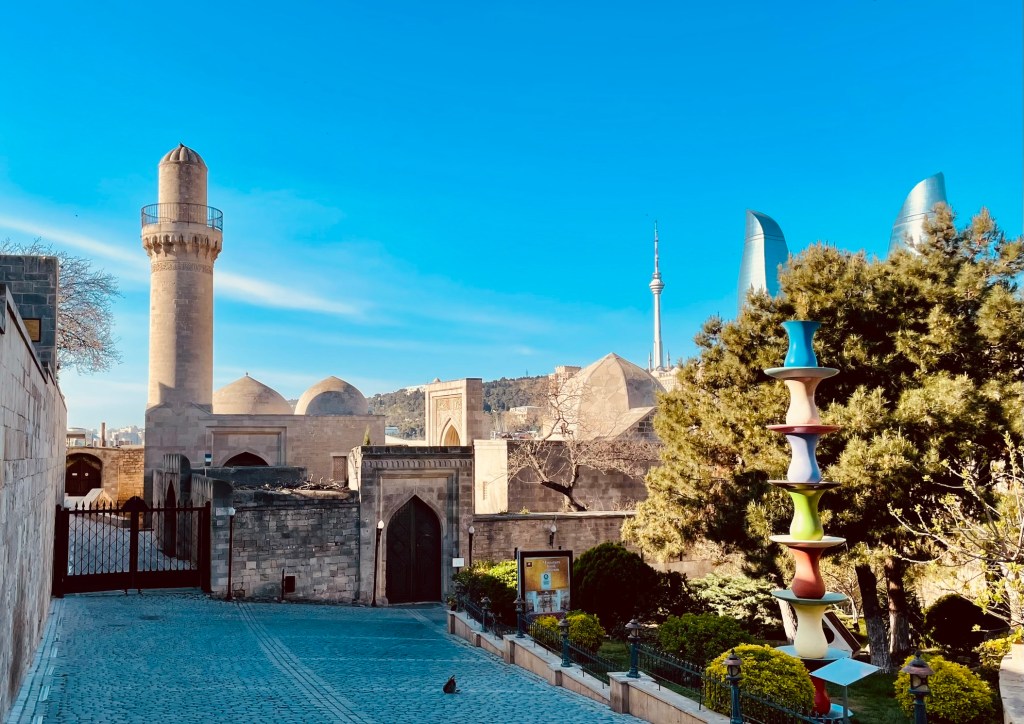
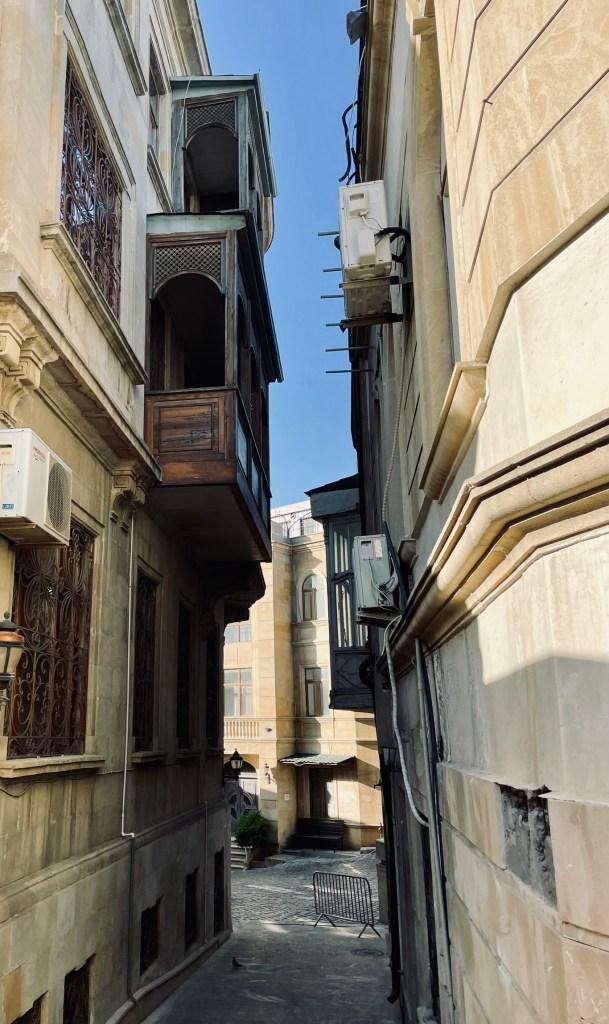
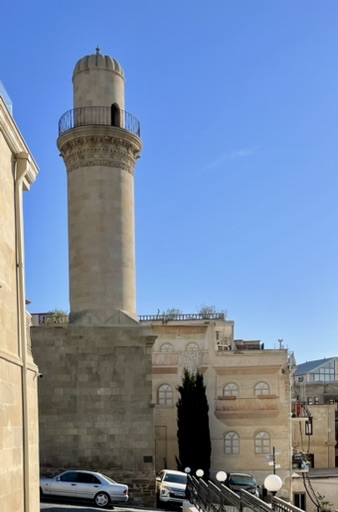
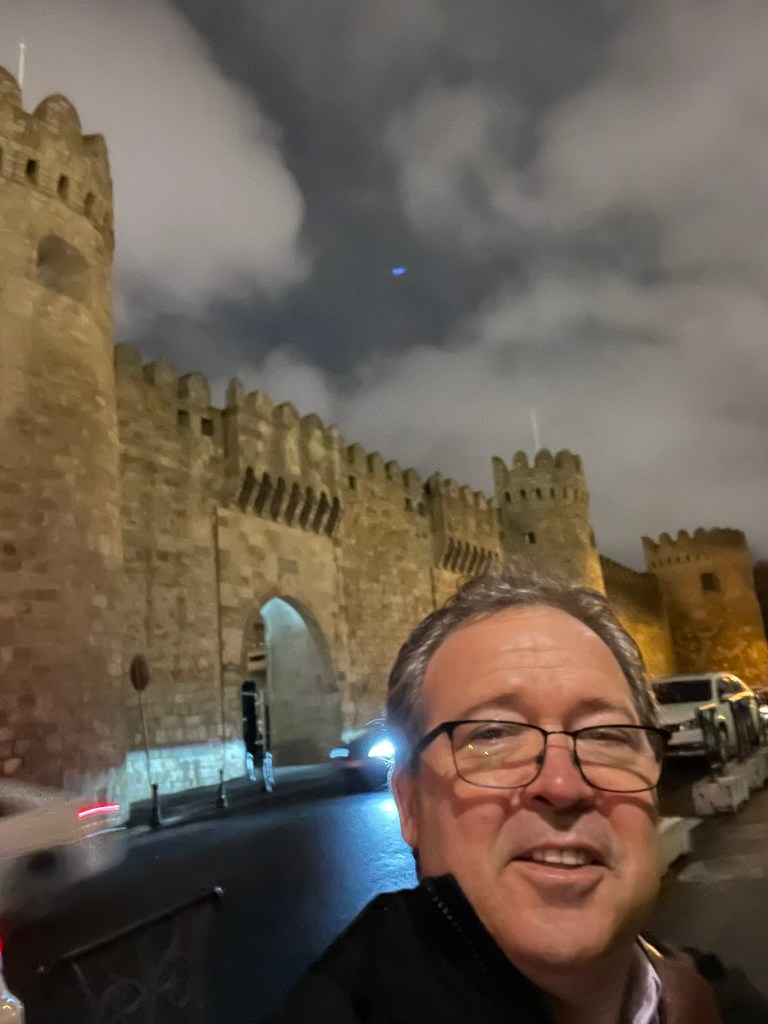
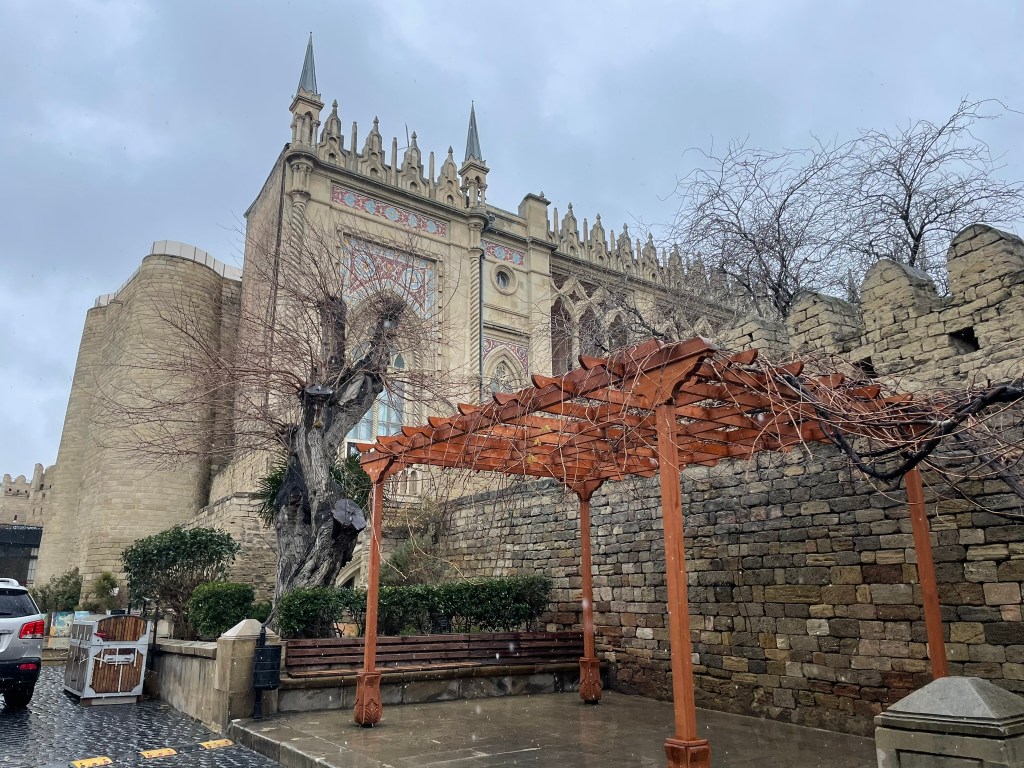
We chose to live right near the Old City that was named a UNESCO World Heritage site in 2007. Wondering around the narrow interior passages, catching glimpses of people hanging their laundry or making their way to work is my favorite. Its easy (not necessarily accurate) to imagine what it was like, and is like, to live in a design of the middle ages. The main features of the old city includes the walls, a few mosques, the Shirvanshahs palace, and the Maiden Tower, but there is more.
At the moment, Baku is not overrun by tourists even in its most relevant sites. It seems to me that tourists are mainly from Russia, Iran, and India, in that order. I am greeted in Russian 95% of the time. English tour guides are readily available at tourist sites and they do a great job for very a very reasonable extra charge.
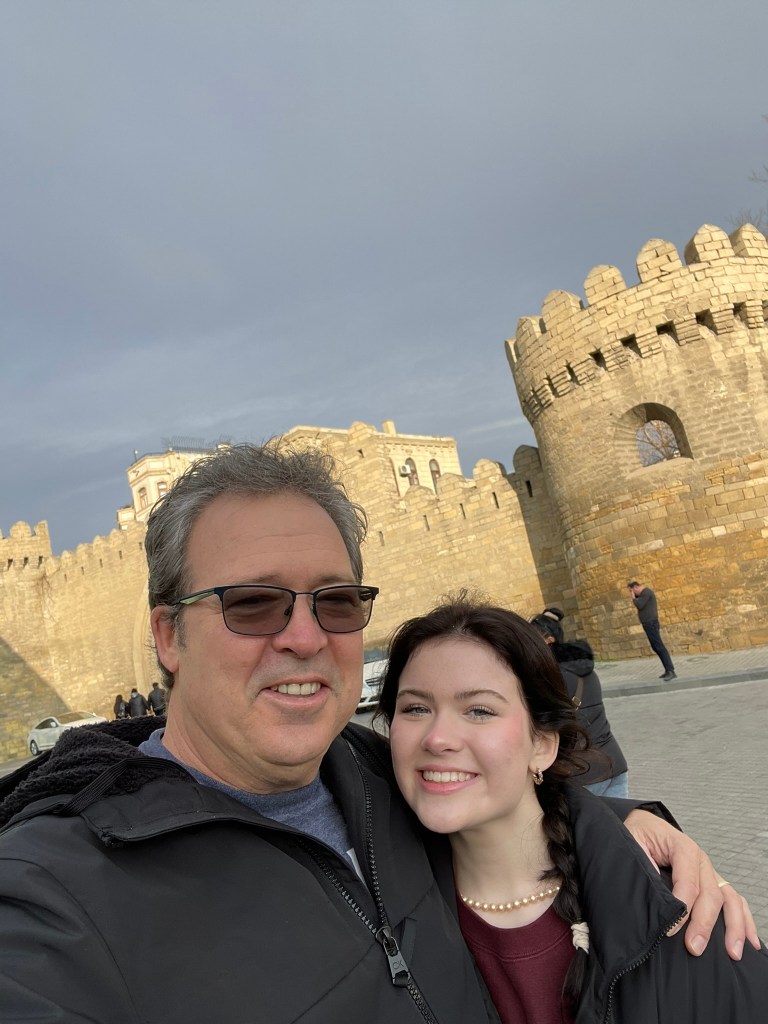
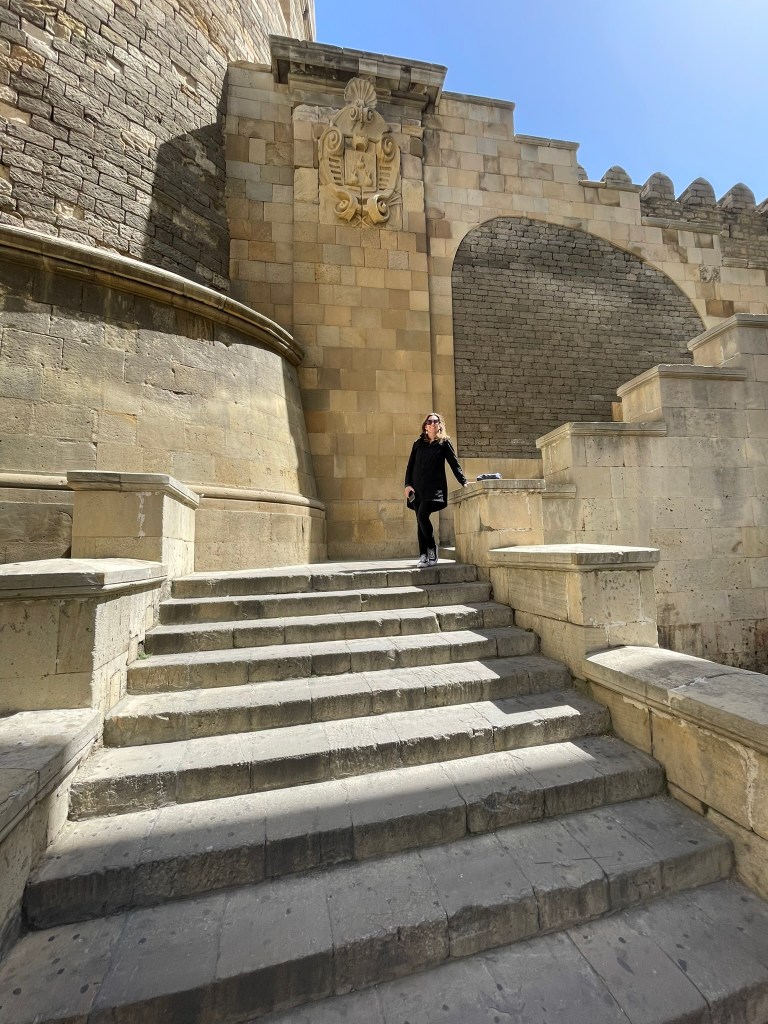
Eva and my first visit to old town and walking through the walls. Michelle on the stairs between my school and the old town.
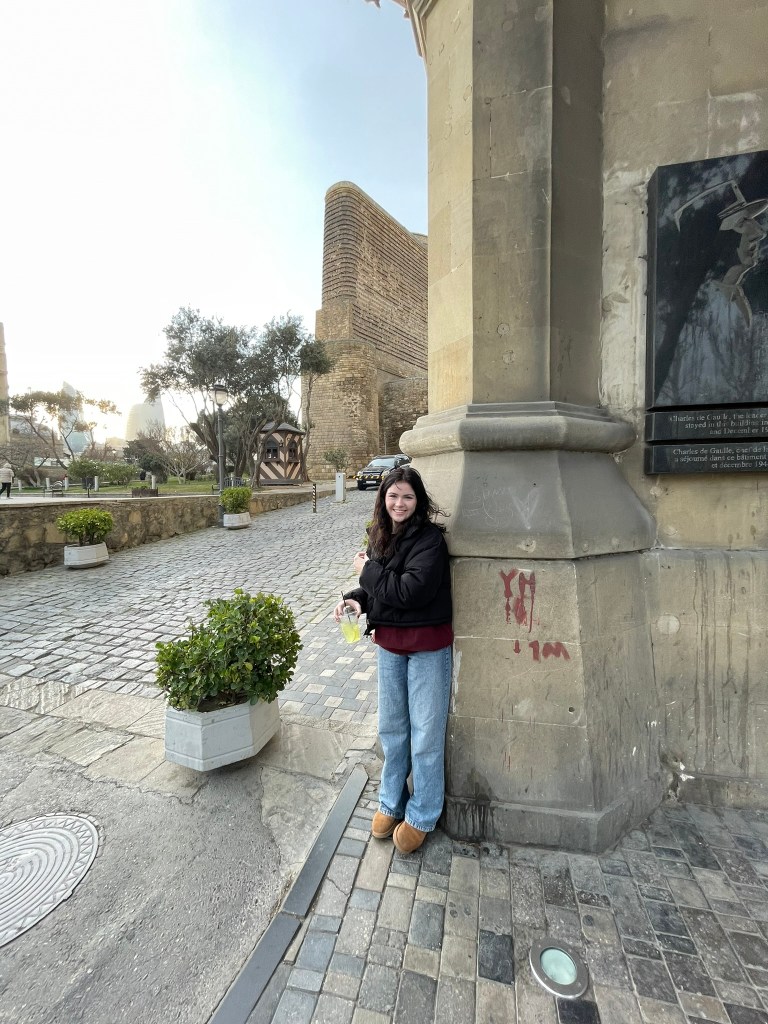
Eva in front of Maiden Tower and a picture of Maiden Tower from a nice rooftop restaurant. Maiden Tower is old, probably 1,400 to 2,000 years old, some of the work done in the twelve hundreds. (There is evidence of human inhabitants in Azerbaijan for 40,000 years) Its an interesting design that may have been a defensive fortification, an observatory, or a religious facility.
Michelle and I went to Maiden Tower and noticed a family speaking English, which is not too common. We had a nice Peace Corps connection, as Rachel served in Azerbaijan (2012ish) and met her future husband Karim. Those kinds of connections are really nice when traveling.
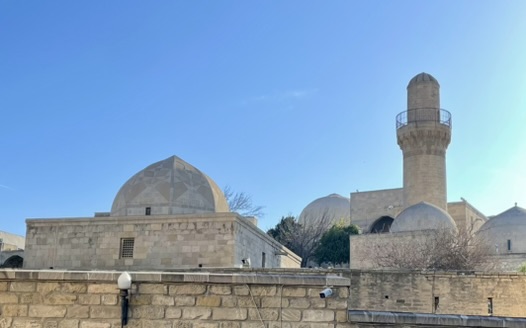
The 15th century Shirvanshahs Palace was hard to get a good angle on. Being a small country influenced by Persian, Ottoman, and Russian empires and their successor states, there were periods of time when the area of Azerbaijan was ruled piecemeal by Khans. We have visited a few of the palaces from this time.
We go in and get lost for a little while and then we pop back out. Blindly choosing twists and turns, orienteering by curiosity, until we glimpse the wall and either turn back in, or get on to the next part of our day.
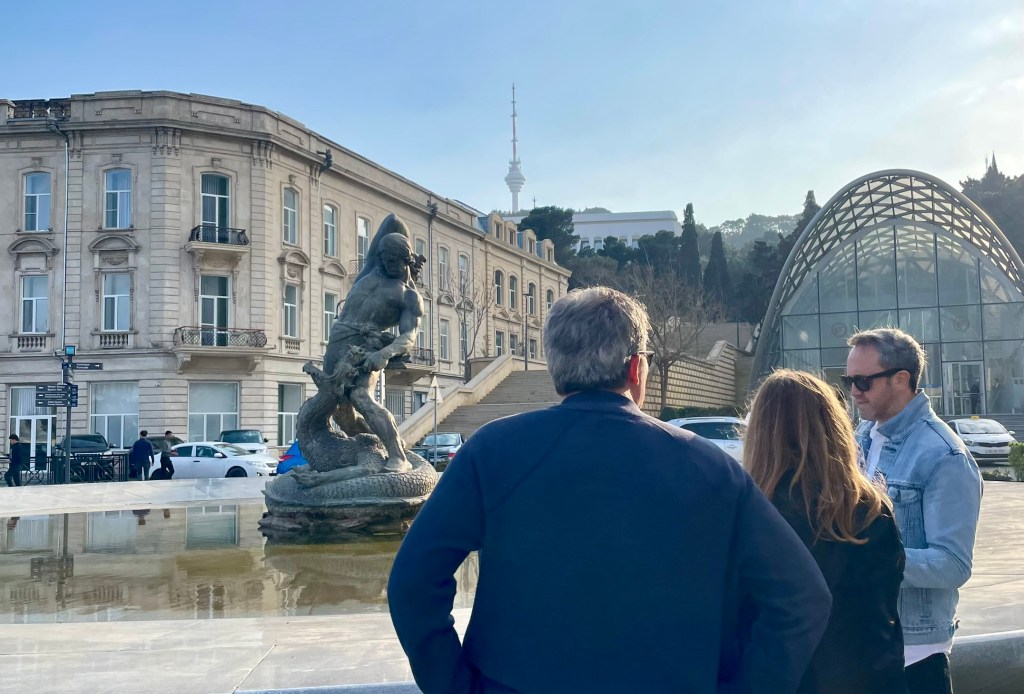
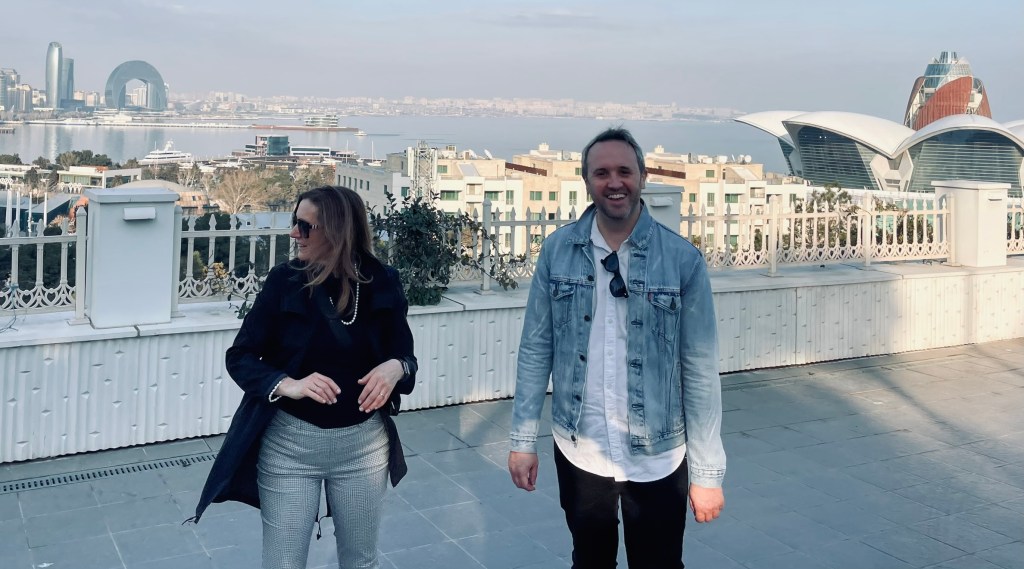
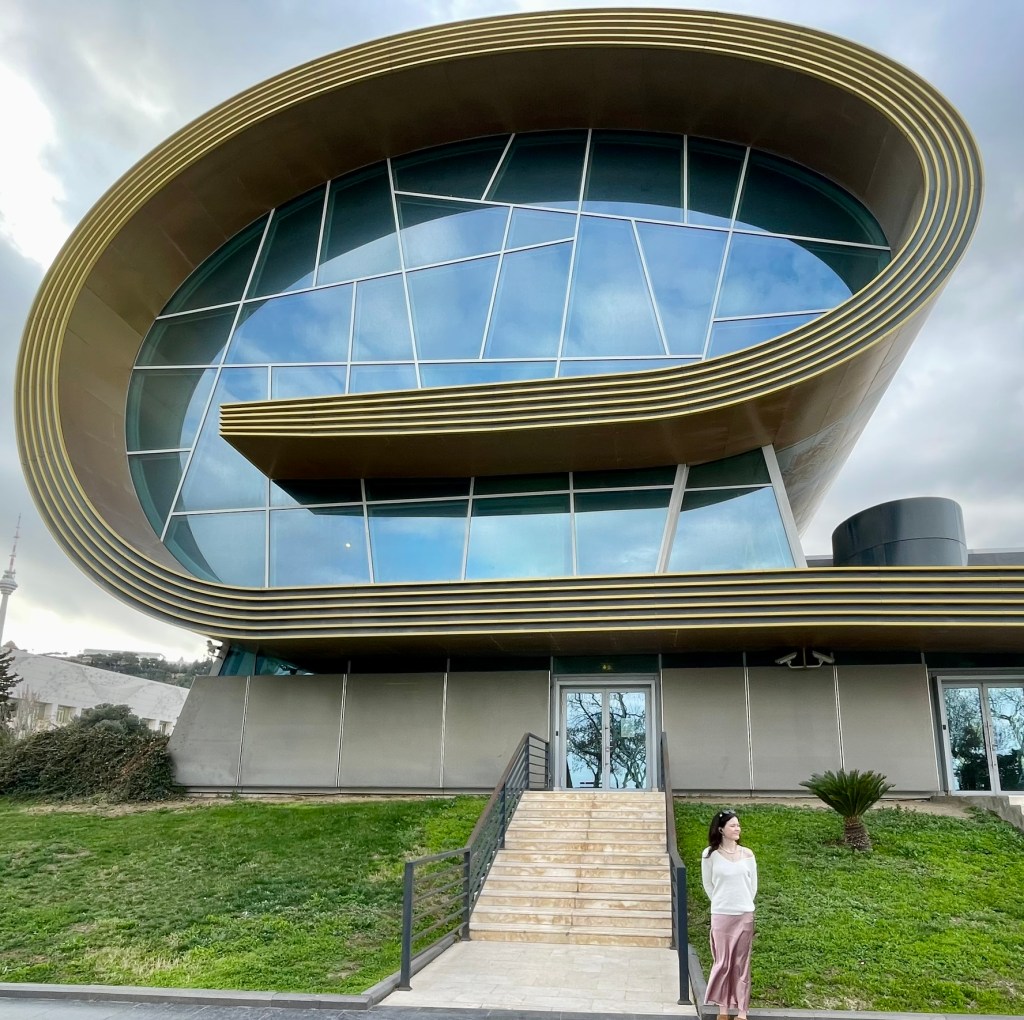
I knew Baku had some striking, world famous, and UNESCO recognized buildings. Only after arriving did I realize how architecturally fascinating this place is. I live right outside the oldest, walled part of the city and a block from the seafront walkway, from where you can see many of Baku’s architectural features. Fortunately, my fellow Fulbright Scholar here in Baku (see below) is a Ph.D. in Architectural History with expertise on Soviet era Brutalism; and he agreed to take me, Eva, and Michelle on a tour.
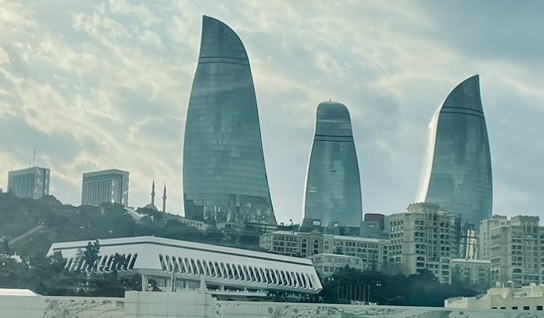
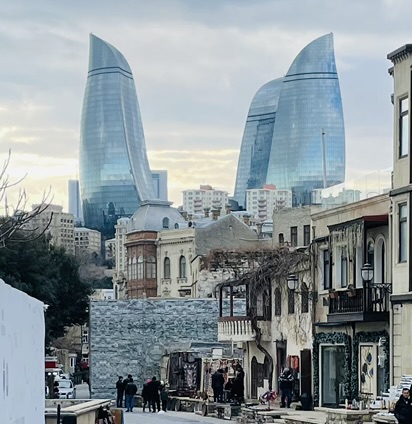
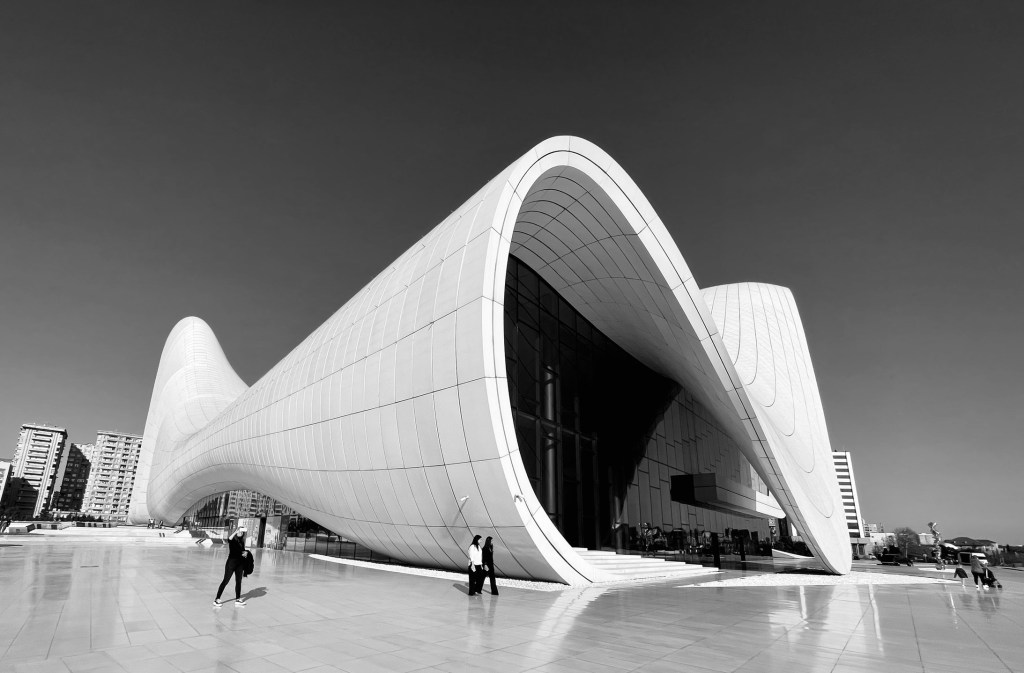
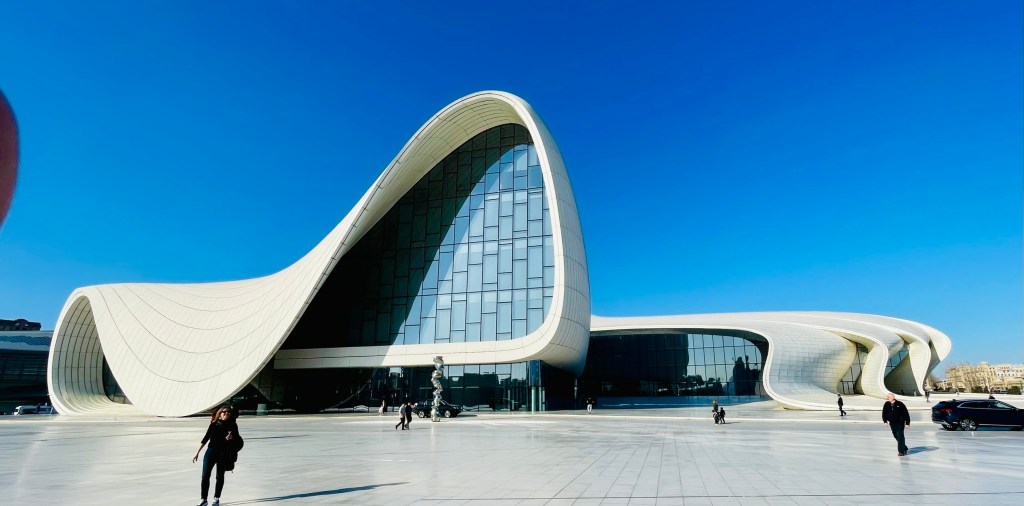
First, here are some pictures of the buildings that first brought Baku’s architecture to my attention. Some of these building were built in the last twenty years, following Azerbaijan’s independence and the lucrative oil agreement called “The deal of the century.” To this small-town guy, these ambitious buildings communicate Baku’s modernity, economic power, and bright prospects. However, they are also strongly linked to Azerbaijan’s cultural identity.
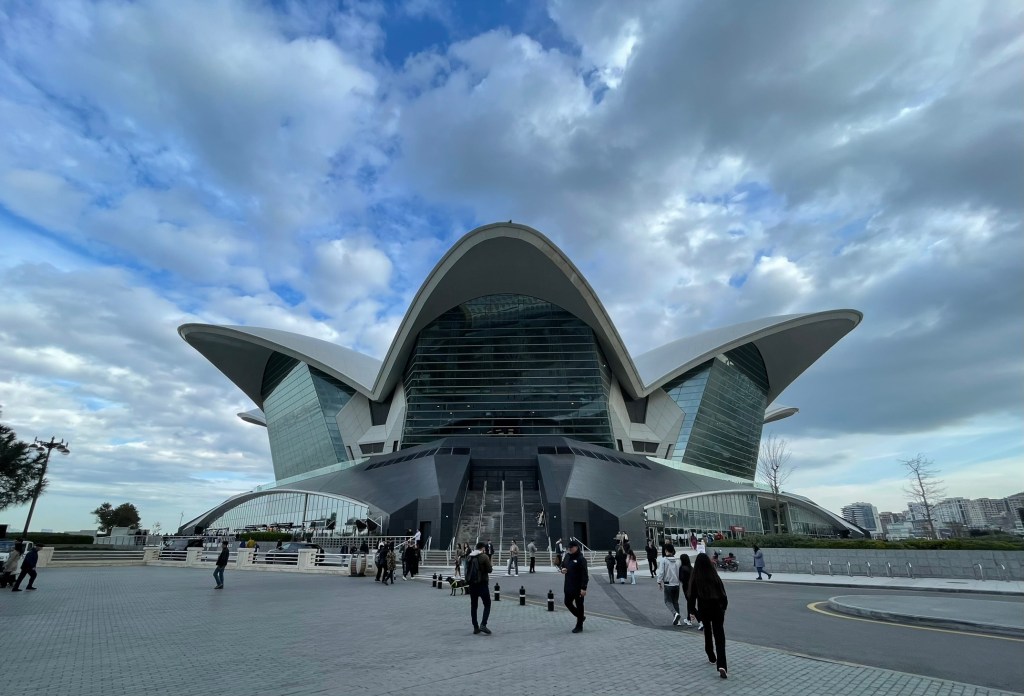
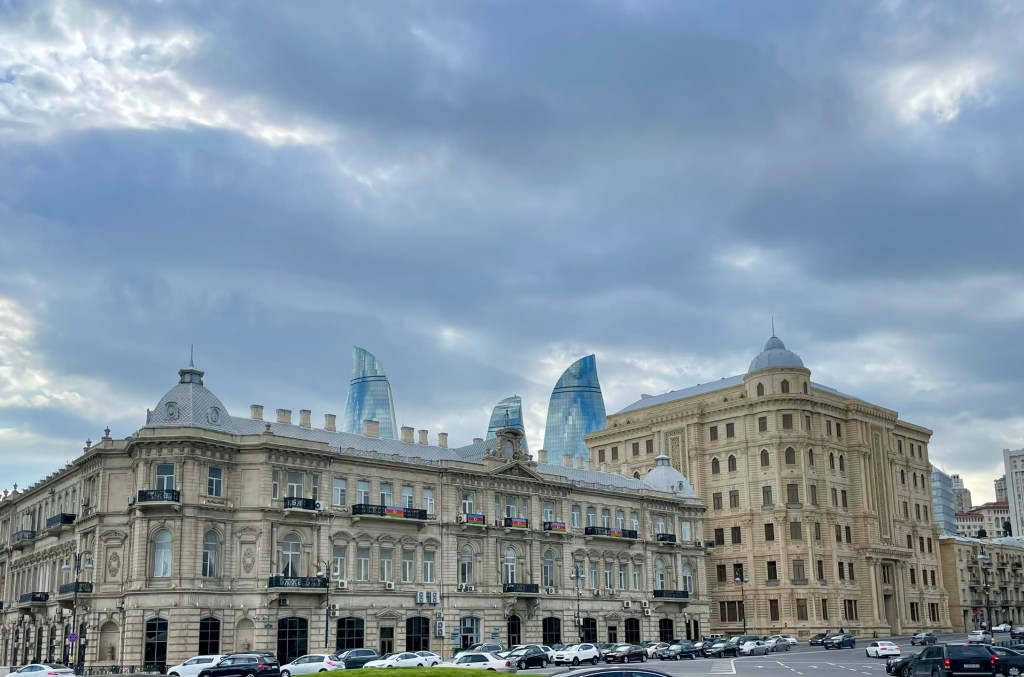
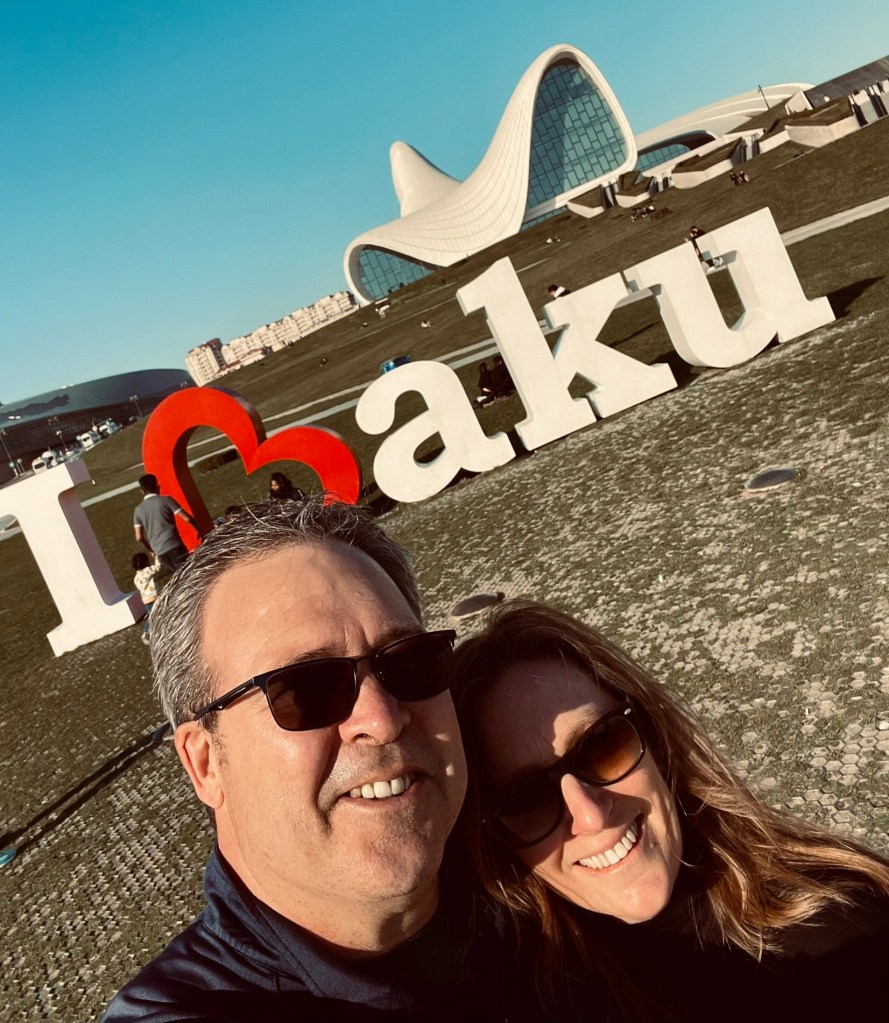
The Flame Towers above are certainly modern, but also represent Azerbaijan, which means Land of Fire. The towers don’t blend in, they provide both contrast and connection between past and future. Below are pictures of the Heydar Aliyev center by famous architect Zaha Hadid. The inside is equally interesting and houses interesting collections.
Michelle is in both pictures.
These buildings helped me realize I might benefit from my first architecture tour. My fellow Fulbright Scholar, Lincoln Nemetz-Carlson, who is here studying Baku’s architecture took us through a small portion of the city.
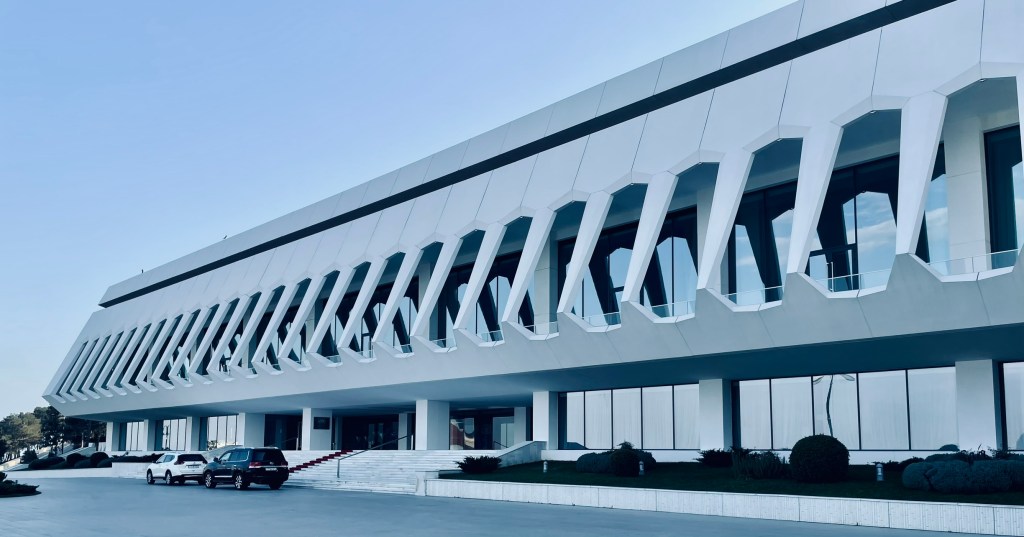
It’s really great to have someone explain a building like this Soviet era events hall, the Gulustan Palace (1982). I like it, its definitely interesting.
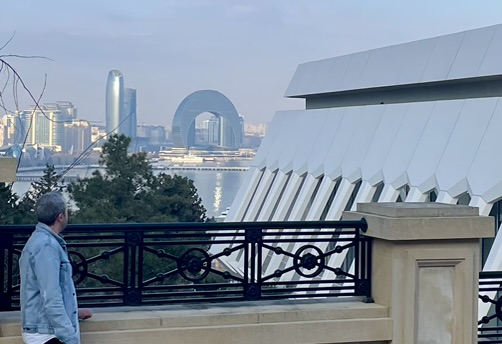
Baku rises up the hills from the Caspian sea, allowing great views of many buildings. The Crescent Development project can be seen across the bay, it is plenty modern and resembles the image on the Azerbaijani flag.
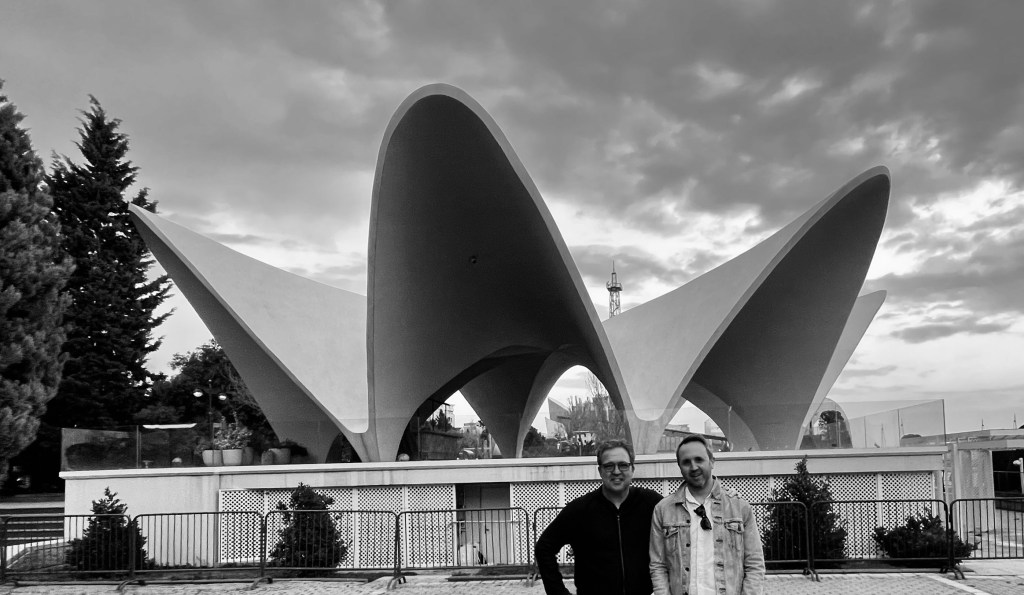
The modern Denis (seaside) Mall seen above is modeled after the famous Cafe Pearl (1961) structure below.
Lincoln’s appreciation for these buildings is infectious and has stayed with me as I walk around the city. Lincoln shared design insights, told stories about the architects, and described the ever shifting influences on architecture.
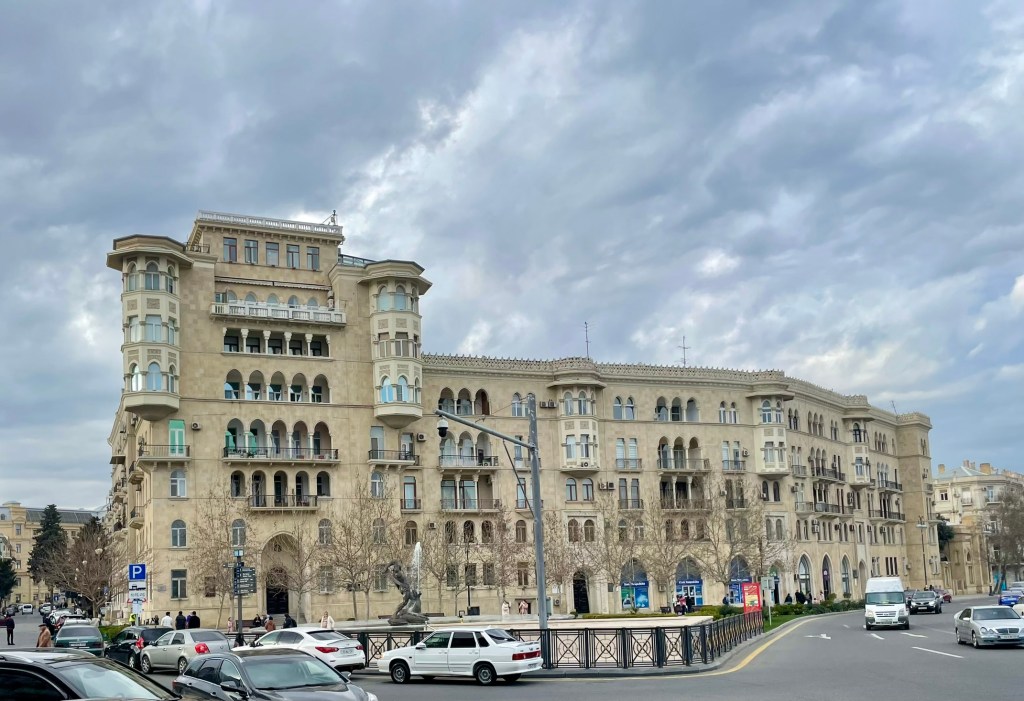
This Stalinist era building was the Residential House of Science Workers (1946). I am reading some about this era and seeing how socialist ideas impacted architecture is fascinating. (The House of Government by Yuri Slezkine)
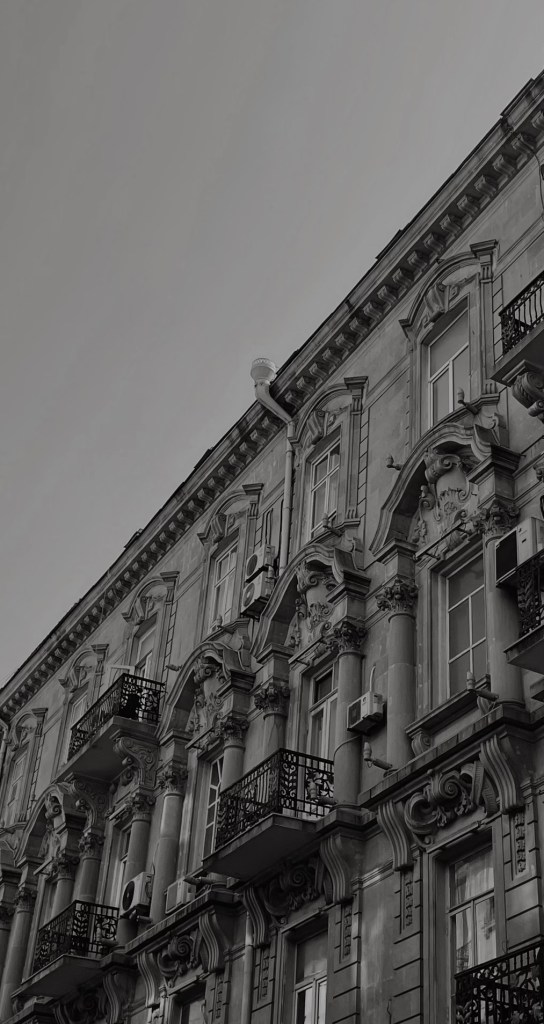
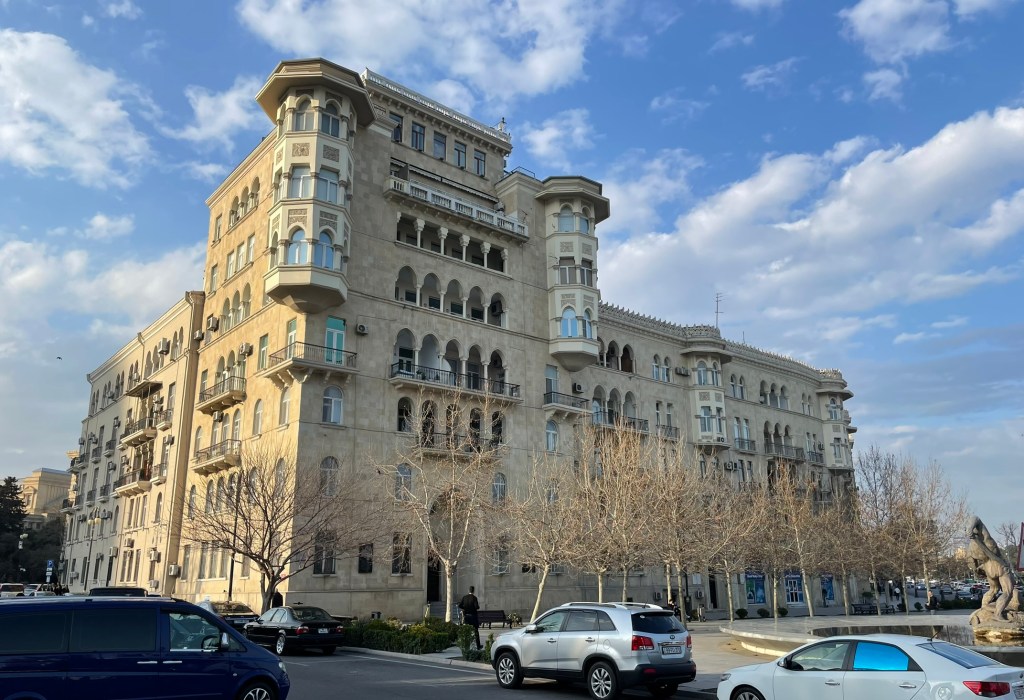
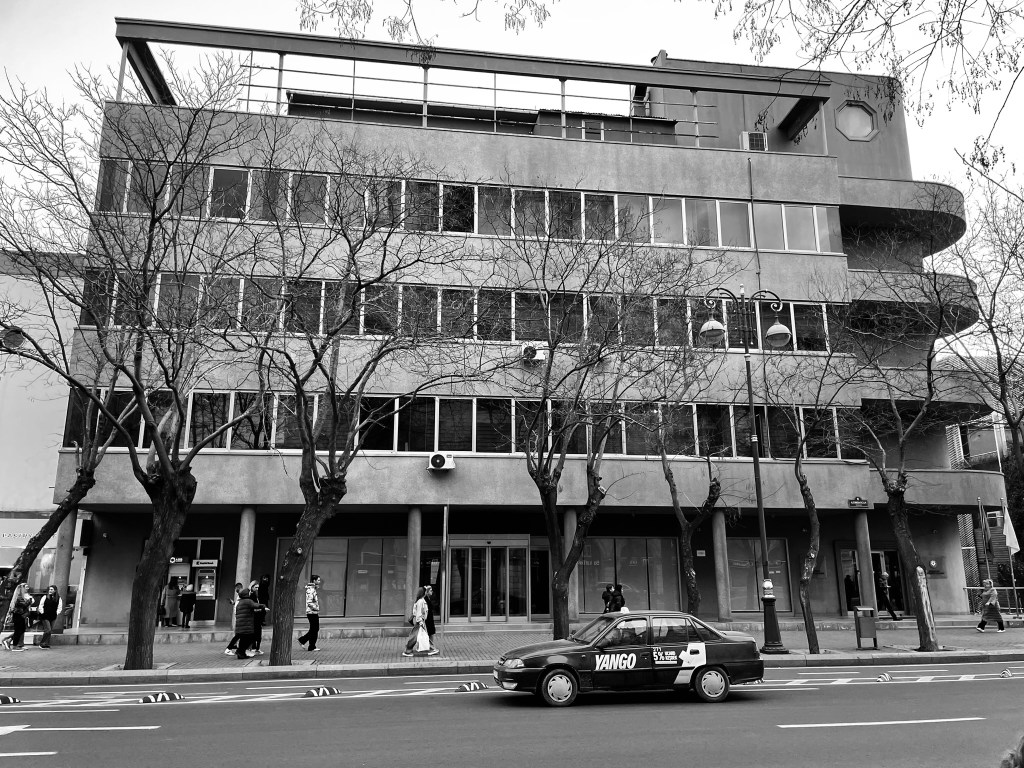
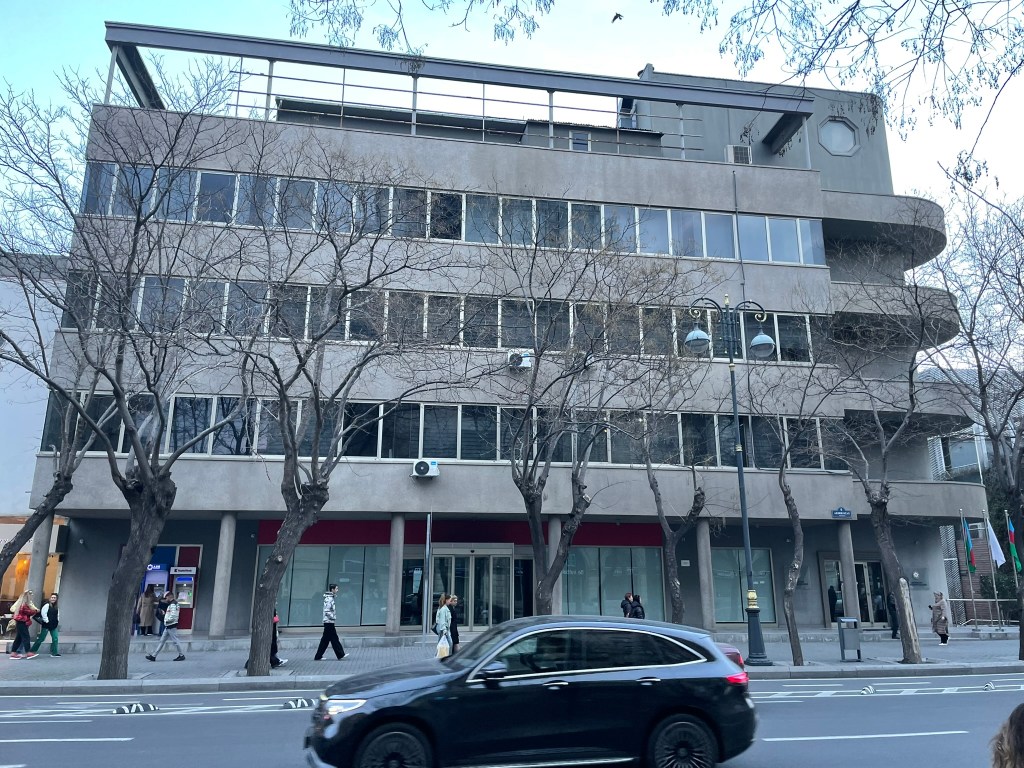
I never would have given a second look at the building above, without some expert guidance. It looks modern but actually predates (early 1900’s) the Stalinist building above it. I don’t think my picture captures it.
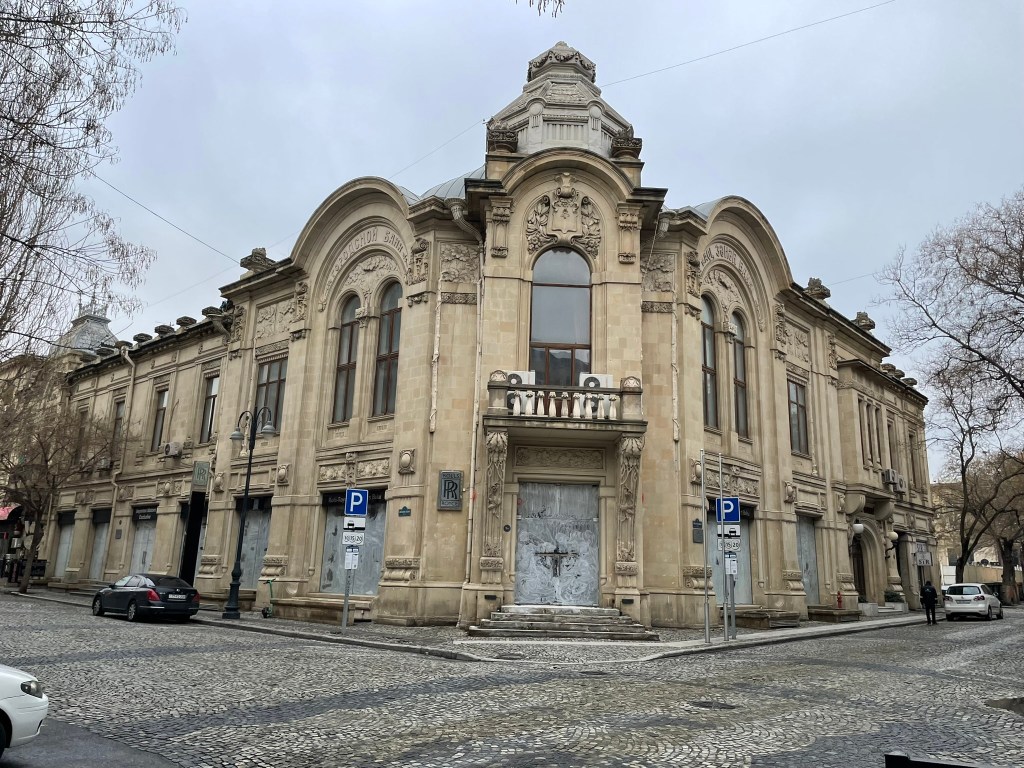
This is a Czarist era building in my neighborhood that I did not get to ask Lincoln about. Fortunately, Lincoln is in Baku for a full academic year because he has a lot of ground to cover.
I will be in Baku for six months and won’t get to see or understand all of the interesting buildings. So much to see and so helpful to get to see a bit of it through expert eyes.
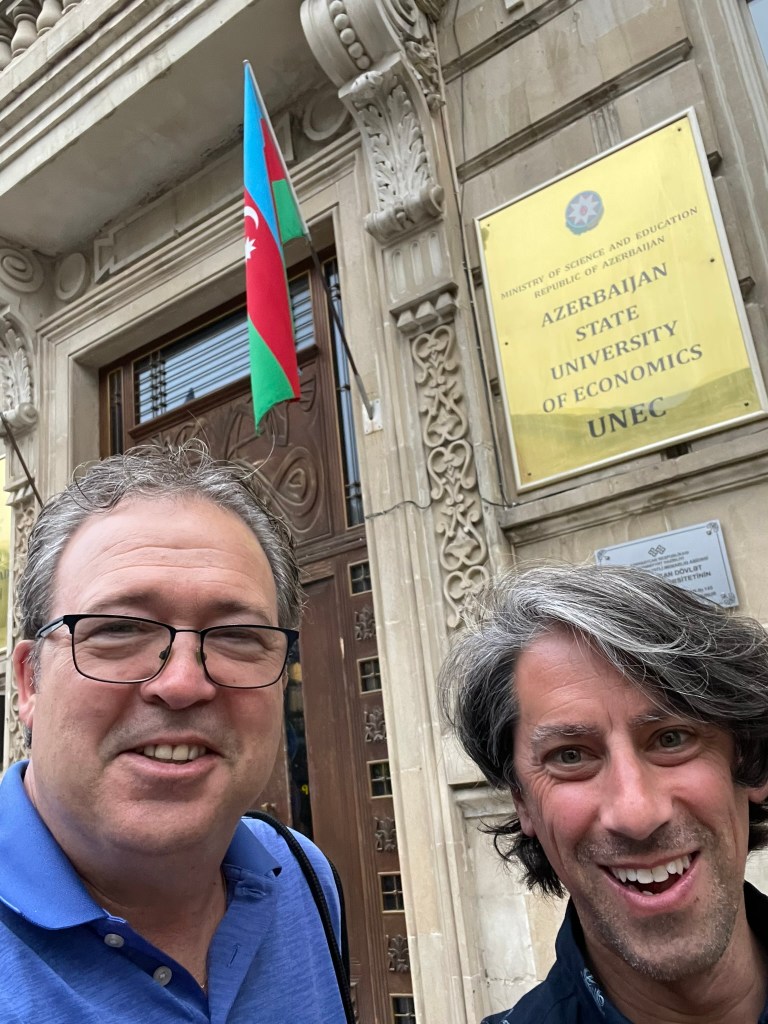
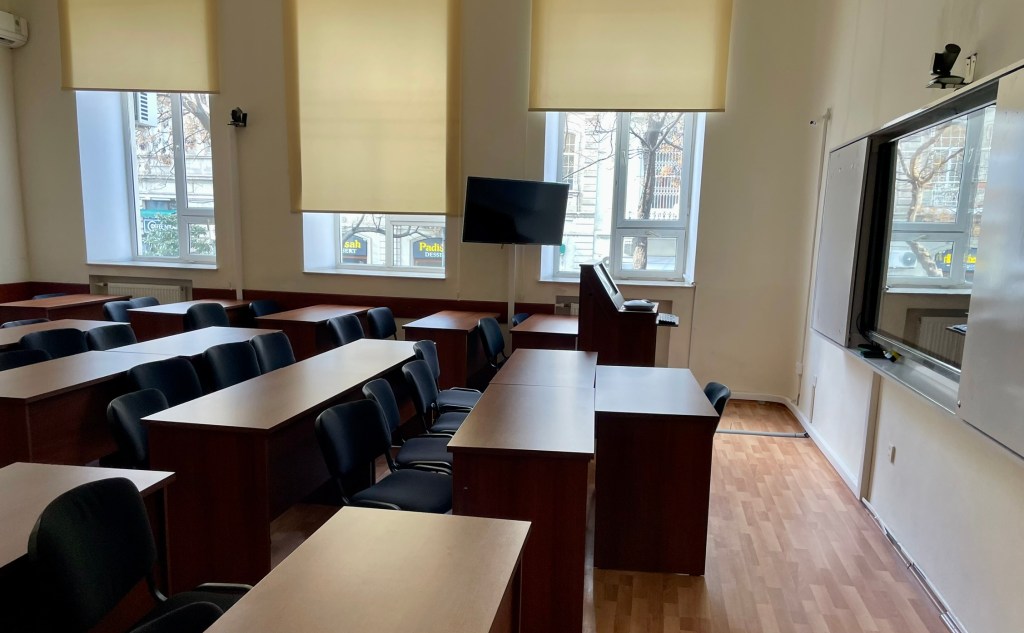
I am just getting started at UNEC, the Azerbaijan State Economics University. Teaching always presents a bit of mystery at the beginning of the semester, with new students, new developments in the business world, and new teaching ideas to try out. This semester, I am teaching two MBA courses, one in Marketing and the other in Entrepreneurship, subject areas where I have done most of my teaching. I was typically nervous about my first classes, but after three class meetings I am feeling more comfortable. My voice did give out, as I had not taught in two months and did not bring water to my first class.
I am still working on making adjustments to my syllabi. I am working hard to line my teaching up with the UNEC standards and the Azerbaijani culture. My students are working full-time and taking four 1.5-hour classes per week. They really cannot afford to have me floundering too badly. One student gets up and helps me operate the online attendance program at the beginning of each class. In the other class, I have to ask which buttons to click to navigate the system. I am never great at getting the students’ names down, but I am trying here and the pronunciations are unfamiliar but not too hard. So, I start every class with a stunning display of technical and linguistic ineptness. Like my SUNY Plattsburgh students, the UNEC students have been kind and forgiving.
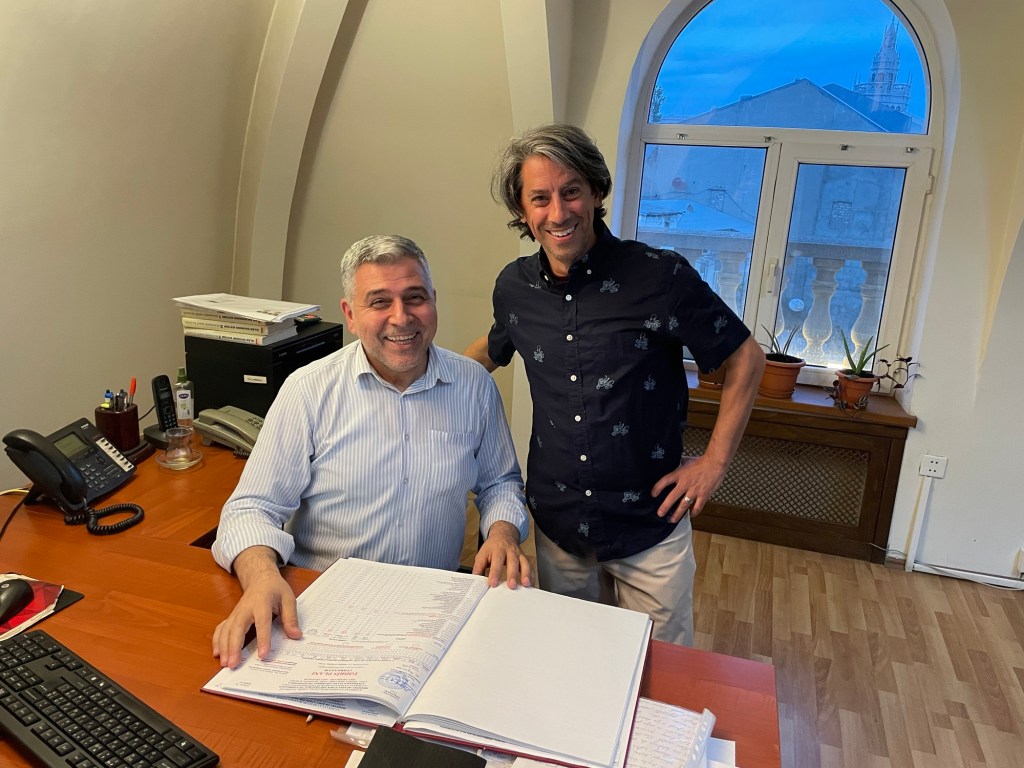
The building is a very nice older structure that has facilities comparable to our Hawkins Hall. It very much aligns with my idea of a place for learning. They do have a great faculty cafeteria that I eat at weekly and will have pictures of in my upcoming food post. The Dean of the MBA program has been very helpful to me at work and in getting the most out of our experience in Azerbaijan. Nazim will show up in many pictures and posts.
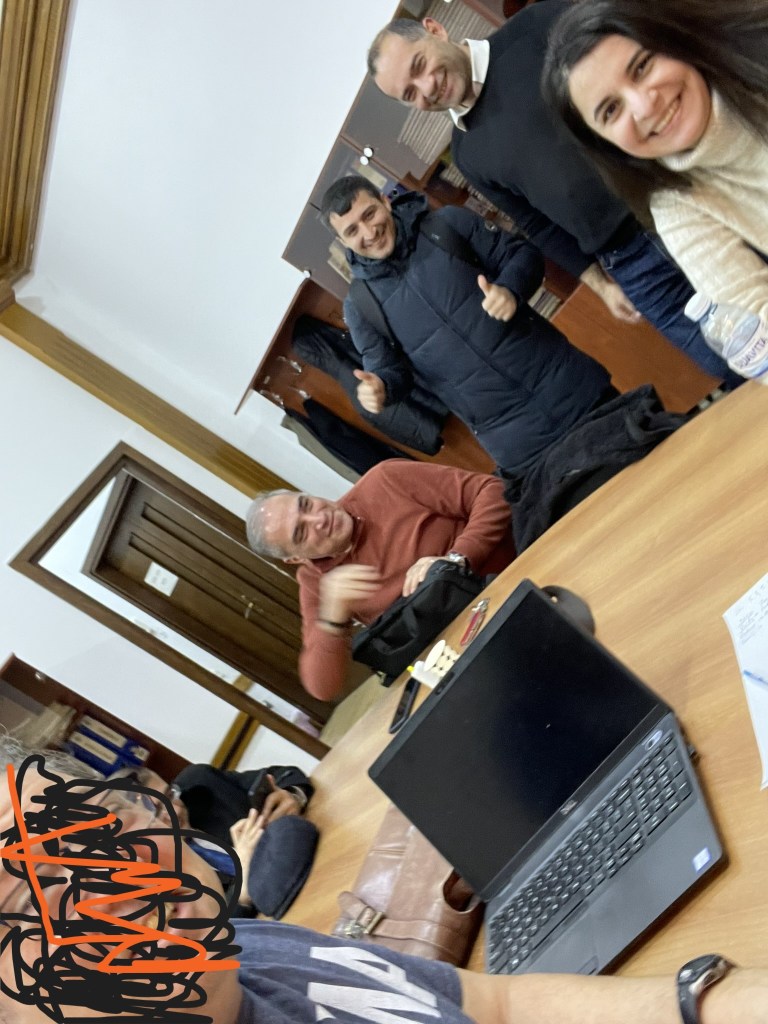
I was assigned to teach on Wednesdays and Fridays for 8:10 to 9:30 – at night! Even though the people have been so friendly, I have wondered if the American guy got the worst shift. Accidently, I found where a group of teachers congregate before their classes. I am going to try and spend time here and get to know my colleagues better. I am also working with my colleagues on the syllabi for my courses and have had some really interesting conversations about Azerbaijani culture as it relates to education, gender, religion, etc. I have been here for two months and it feels really good to be learning about Azerbaijan and having to adapt my practices.
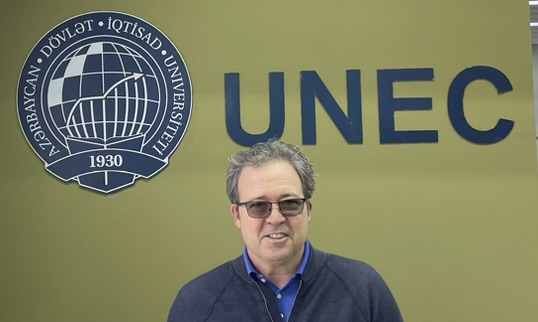
No apologies for my vanity in defacing myself. Selfies can be so cruel. I didn’t know this office is where the teachers hang out and was wearing a t-shirt and making funny faces. I promise to be better prepared now that I know how this all works. I am cautious about taking pictures of students or posting them, as I don’t know if they would feel comfortable denying my request to take some pictures.
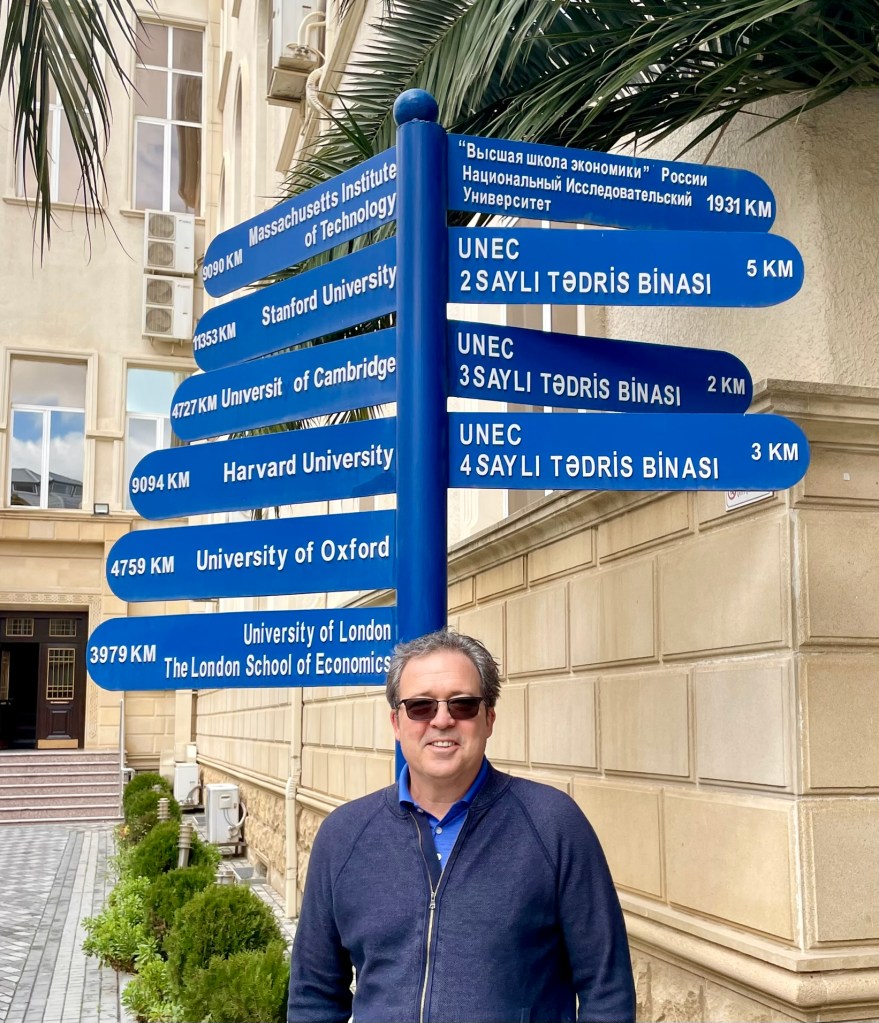
I have about a 10 minute walk from home to school. It is slightly uphill getting there, so I have to be careful about breaking a sweat. Right between my apartment and the school is the old walled city. So my commute is pretty nice. More pictures of the Old City later.
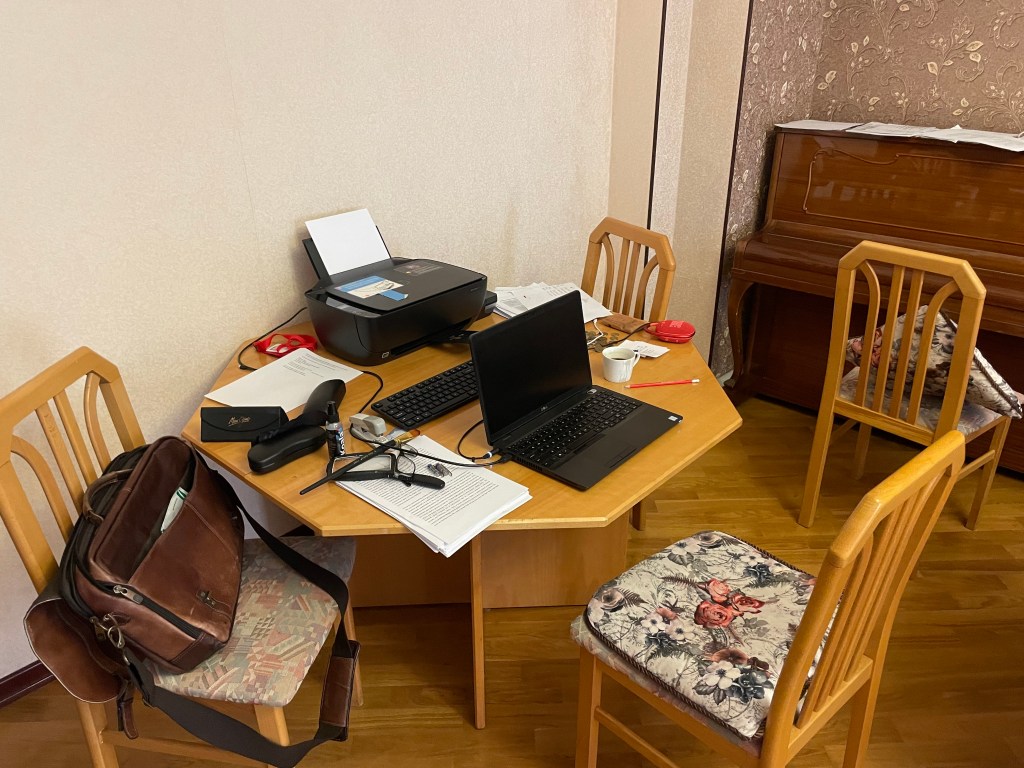
Its interesting trying to establish a temporary life. I am really happy that I purchased a printer/copier/scanner my second week in Azerbaijan. With it being difficult to get the simplest things done, its nice to have a pretty functional home office. There are some common areas where I could work at UNEC but I would rather be more social at school than have my head buried in a laptop. But, I add this picture because its a pretty important part of getting my work done.
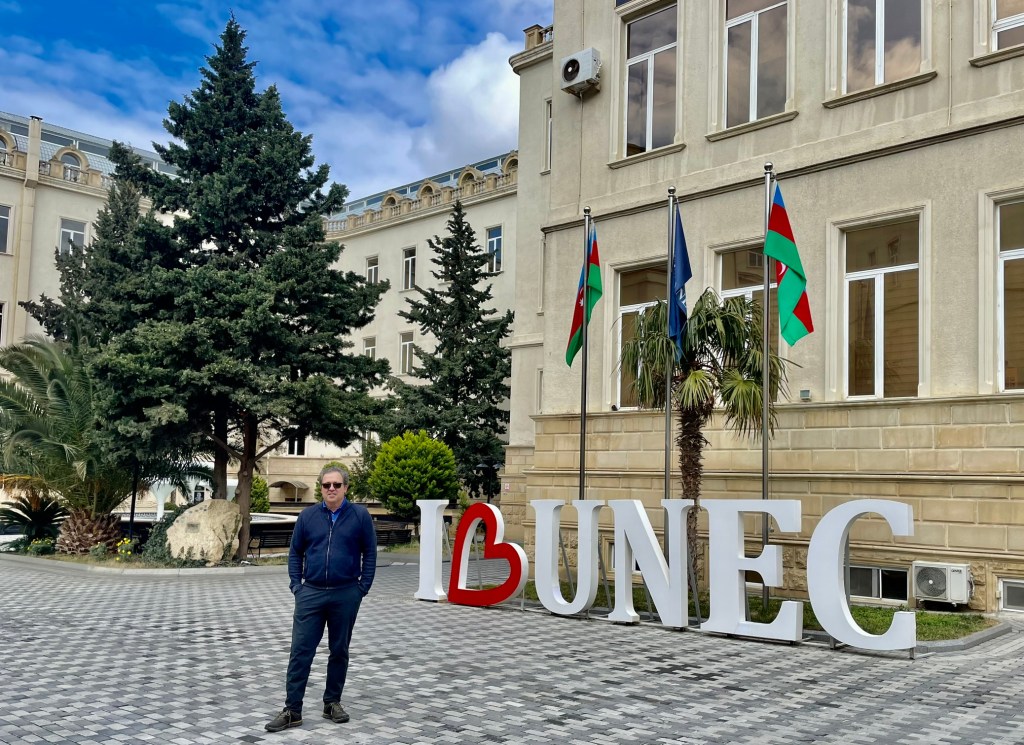
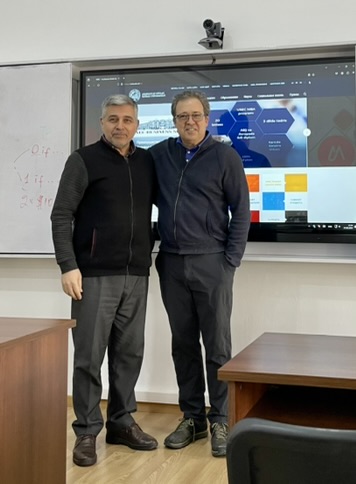
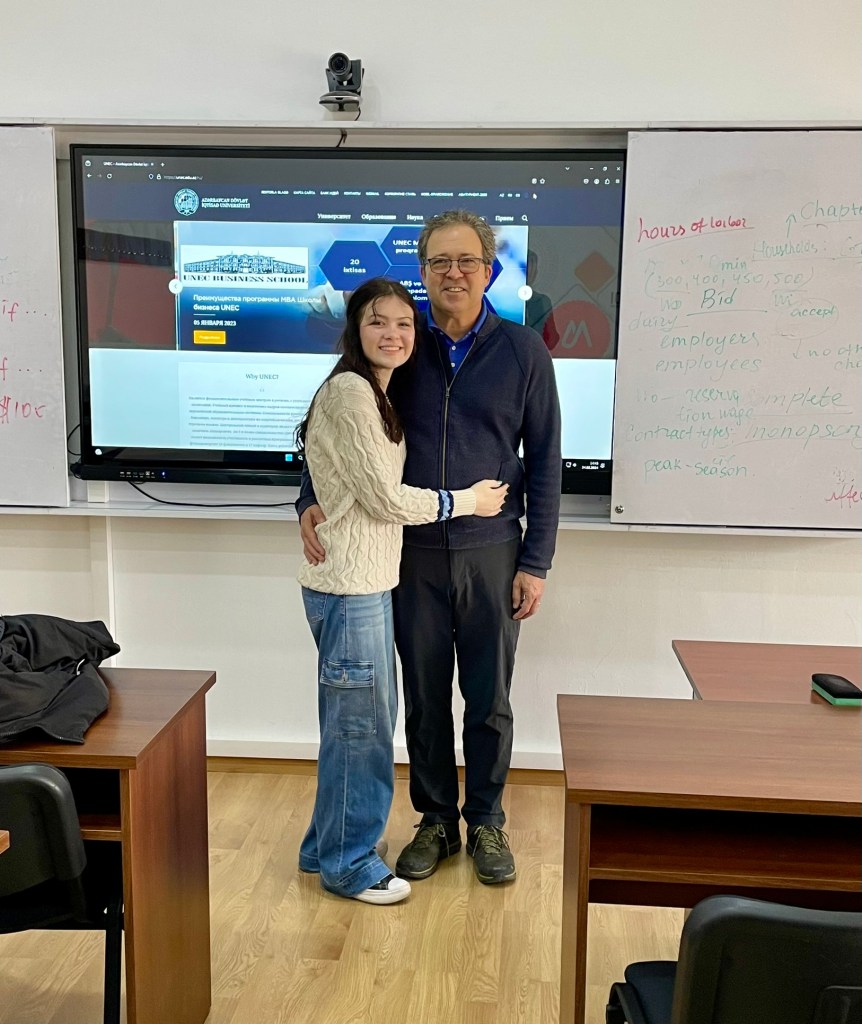
One more picture of me in the school surrounded by words and things I have little hope of understanding. I try not to let it bother me that I know so little about this place and just enjoy what little I do learn everyday. Also, can’t have a post without Evie, who came to UNEC on the weekend to help me take some pictures.
I am slowly collecting pictures on different themes. I have folders for 1) Food and drink, 2) Soviet stuff, 3) Religion, 4) Sustainability, 5) Markets and small business, 6) Buildings and architecture, 7) USA activities, 8) Music, 9) and specific outings. Next week we hope to visit our first area of Azerbaijan outside of Baku, so that would be a post on its own I imagine. We have been in Baku for two months now and we need to see other parts of Azerbaijan.





















 RLG
RLG 