I knew Baku had some striking, world famous, and UNESCO recognized buildings. Only after arriving did I realize how architecturally fascinating this place is. I live right outside the oldest, walled part of the city and a block from the seafront walkway, from where you can see many of Baku’s architectural features. Fortunately, my fellow Fulbright Scholar here in Baku (see below) is a Ph.D. in Architectural History with expertise on Soviet era Brutalism; and he agreed to take me, Eva, and Michelle on a tour.
First, here are some pictures of the buildings that first brought Baku’s architecture to my attention. Some of these building were built in the last twenty years, following Azerbaijan’s independence and the lucrative oil agreement called “The deal of the century.” To this small-town guy, these ambitious buildings communicate Baku’s modernity, economic power, and bright prospects. However, they are also strongly linked to Azerbaijan’s cultural identity.
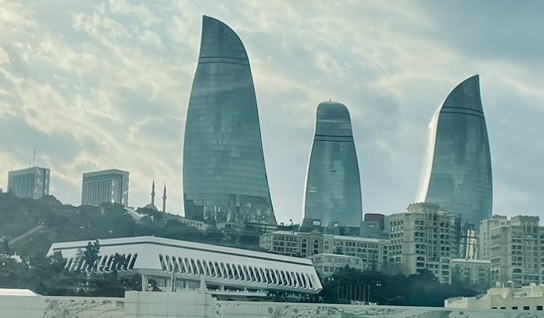
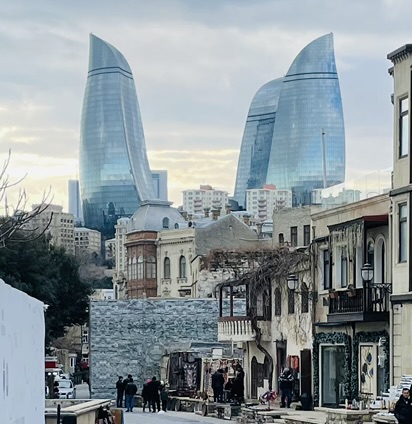
The Flame Towers above are certainly modern, but also represent Azerbaijan, which means Land of Fire. The towers don’t blend in, they provide both contrast and connection between past and future. Below are pictures of the Heydar Aliyev center by famous architect Zaha Hadid. The inside is equally interesting and houses interesting collections.
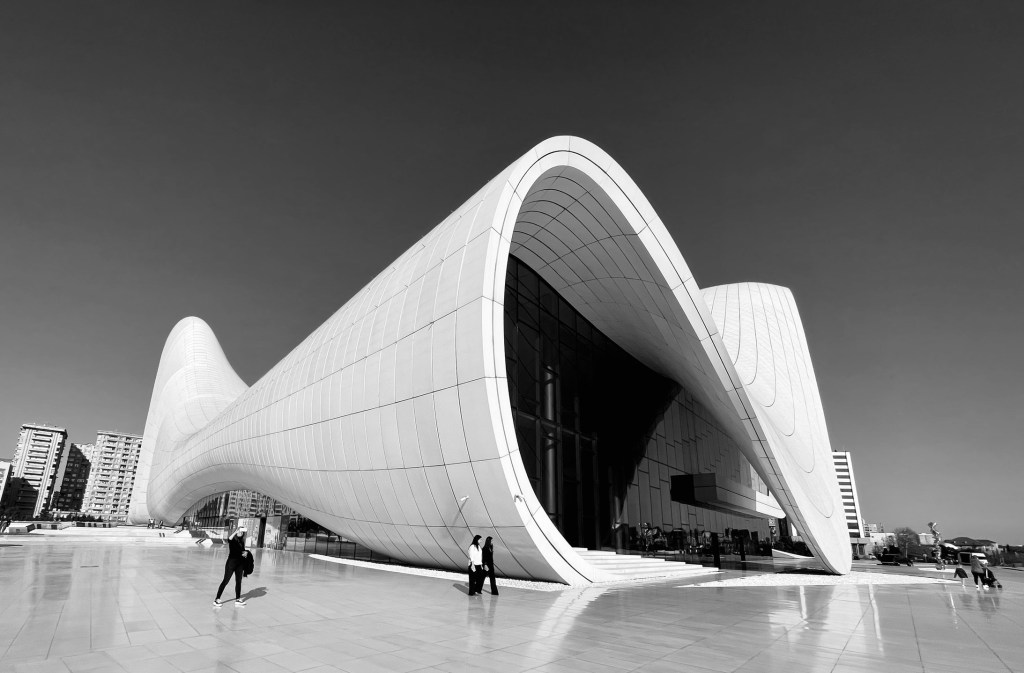
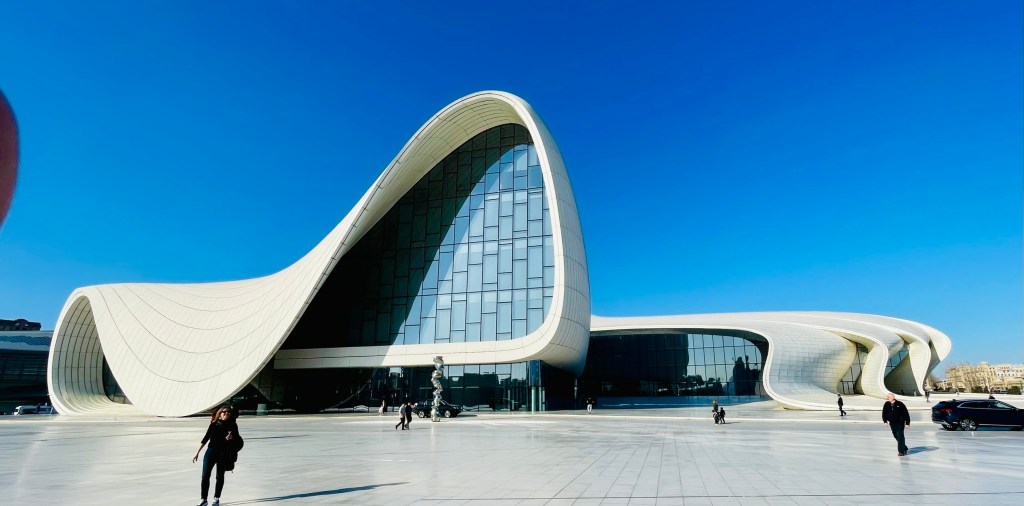
These buildings helped me realize I might benefit from my first architecture tour. My fellow Fulbright Scholar, Lincoln Nemetz-Carlson, who is here studying Baku’s architecture took us through a small portion of the city.
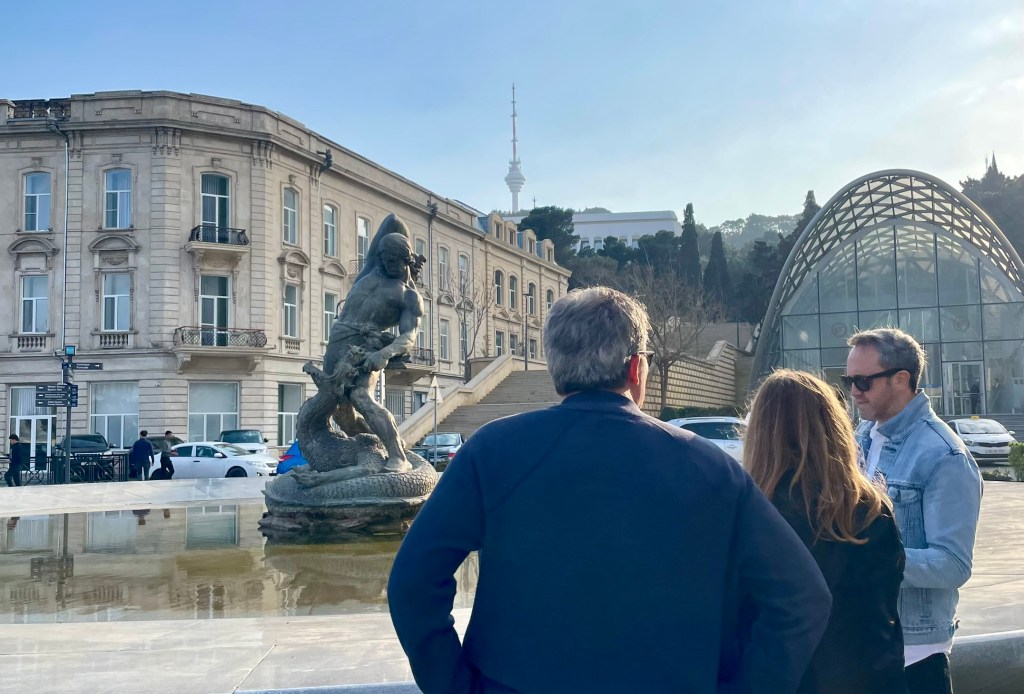
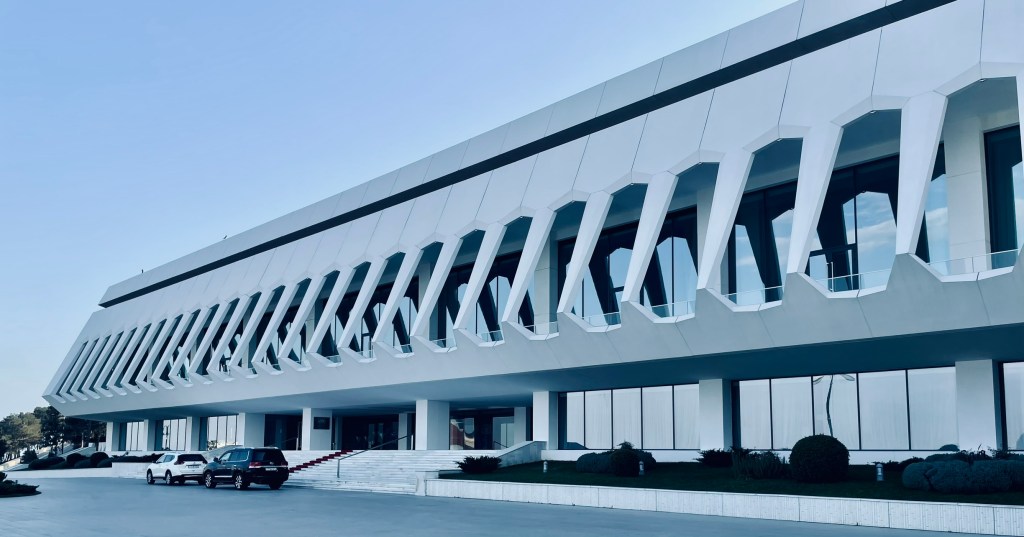
It’s really great to have someone explain a building like this Soviet era events hall, the Gulustan Palace (1982). I like it, its definitely interesting.
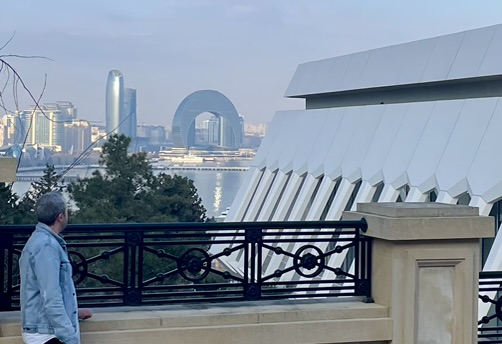
Baku rises up the hills from the Caspian sea, allowing great views of many buildings. The Crescent Development project can be seen across the bay, it is plenty modern and resembles the image on the Azerbaijani flag.
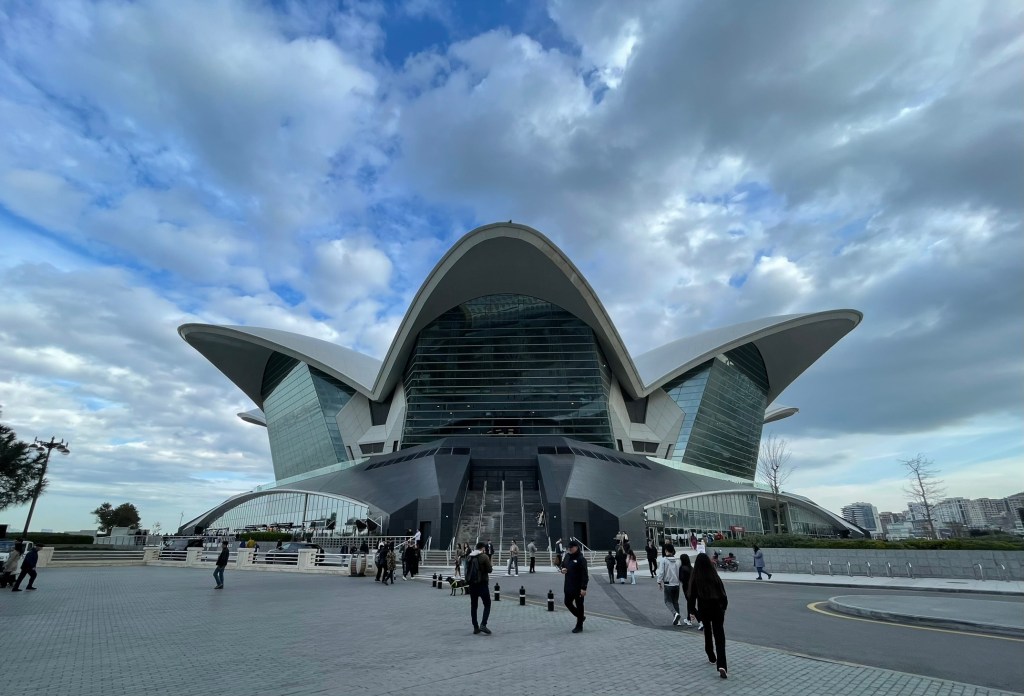
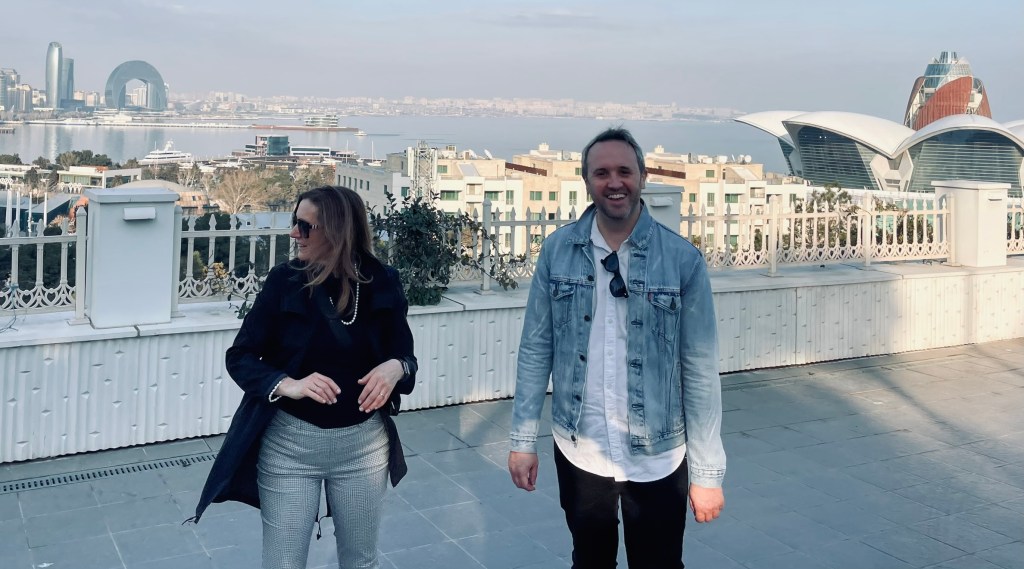
The modern Denis (seaside) Mall seen above is modeled after the famous Cafe Pearl (1961) structure below.
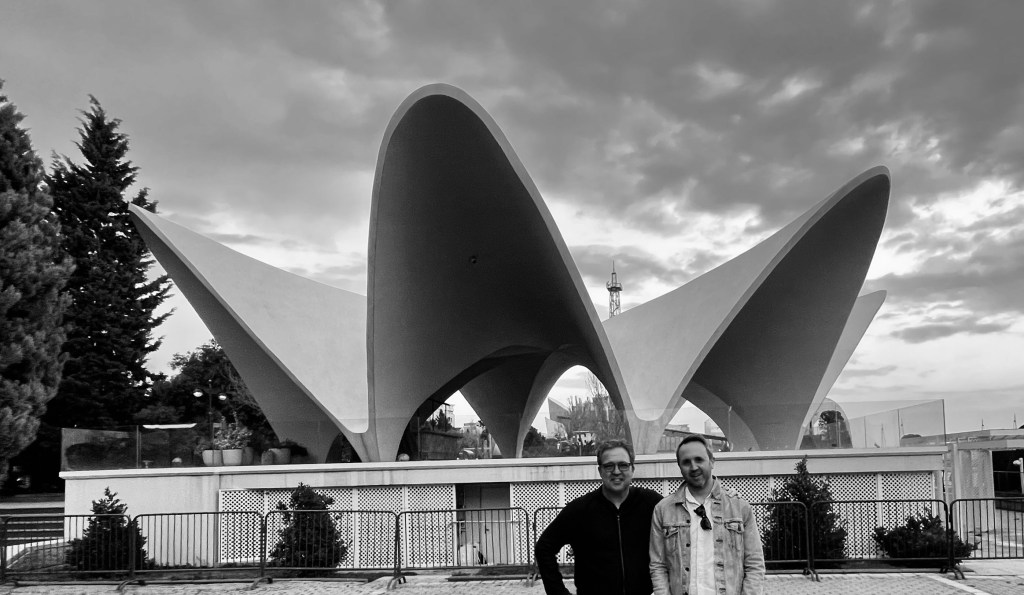
Lincoln’s appreciation for these buildings is infectious and has stayed with me as I walk around the city. Lincoln shared design insights, told stories about the architects, and described the ever shifting influences on architecture.
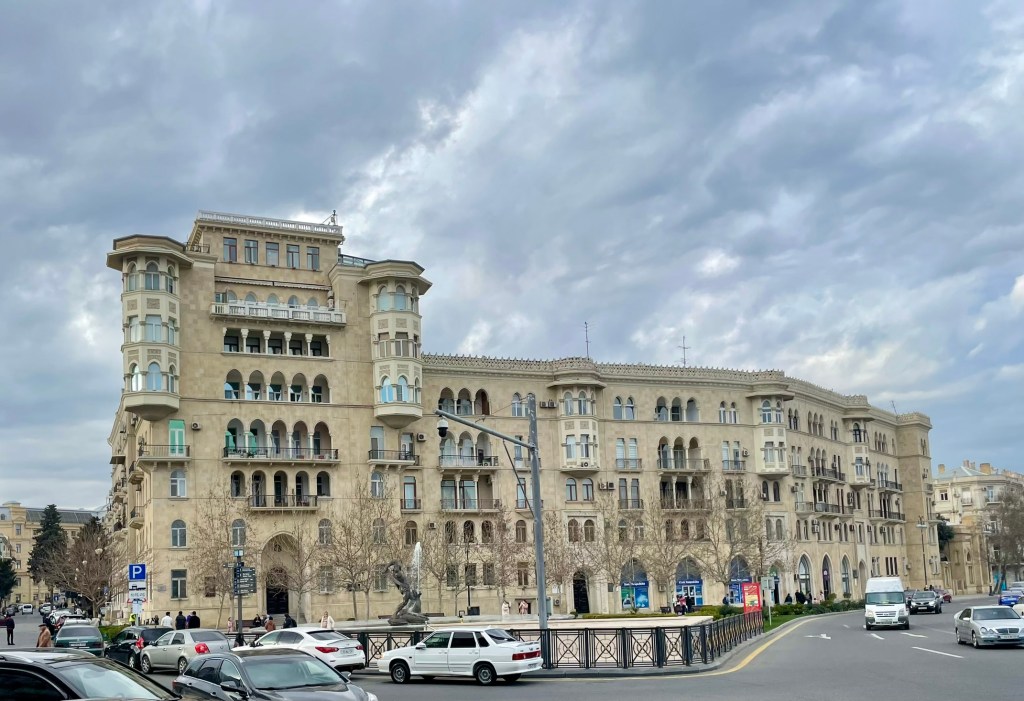
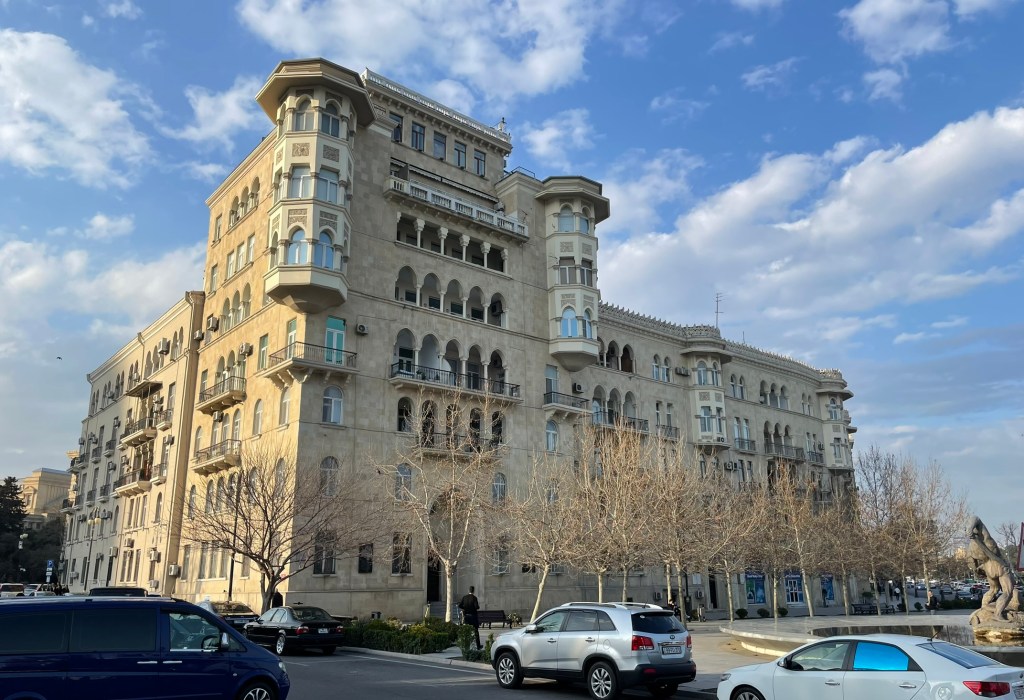
This Stalinist era building was the Residential House of Science Workers (1946). I am reading some about this era and seeing how socialist ideas impacted architecture is fascinating. (The House of Government by Yuri Slezkine)
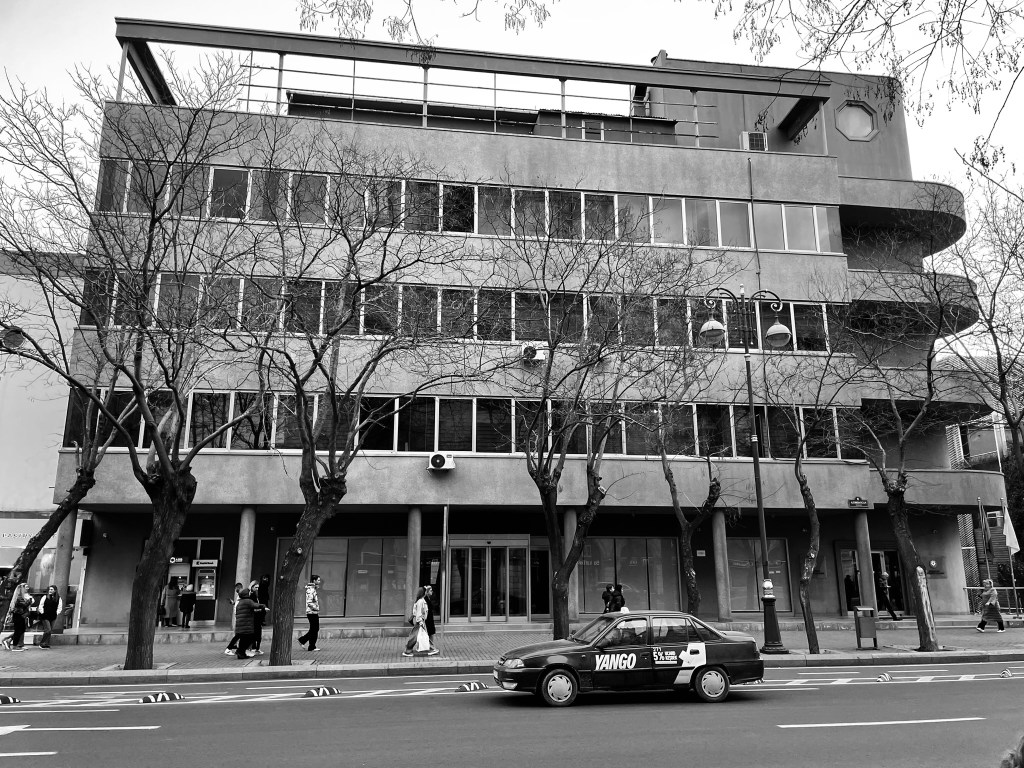
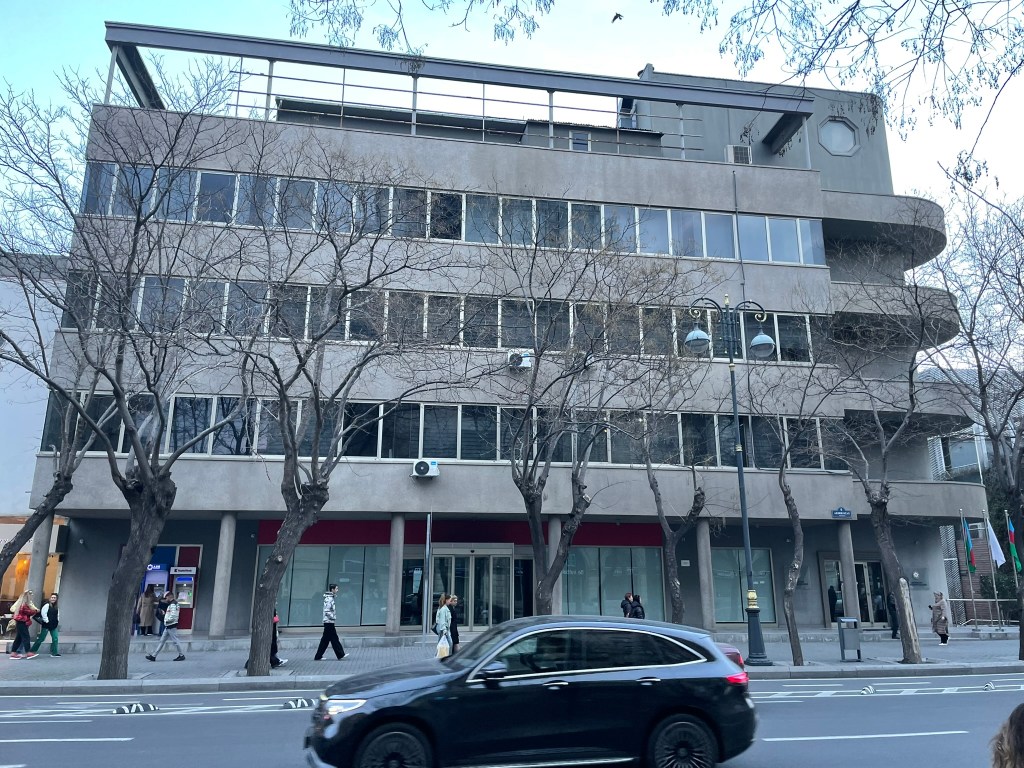
I never would have given a second look at the building above, without some expert guidance. It looks modern but actually predates (early 1900’s) the Stalinist building above it. I don’t think my picture captures it.
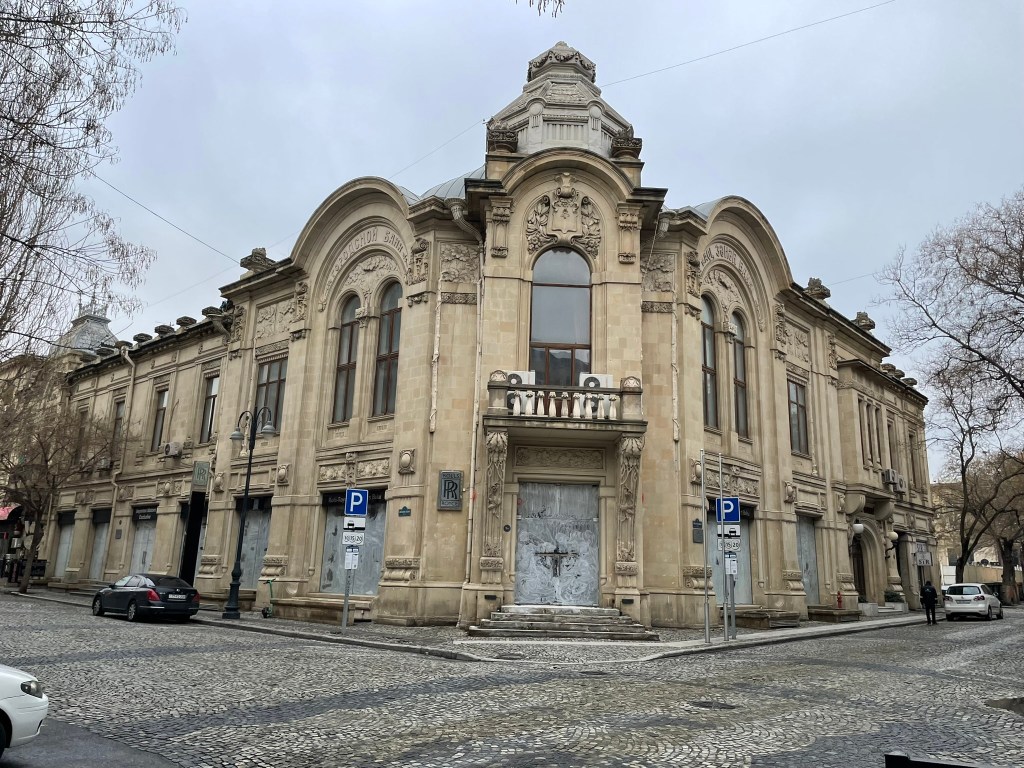
This is a Czarist era building in my neighborhood that I did not get to ask Lincoln about. Fortunately, Lincoln is in Baku for a full academic year because he has a lot of ground to cover.
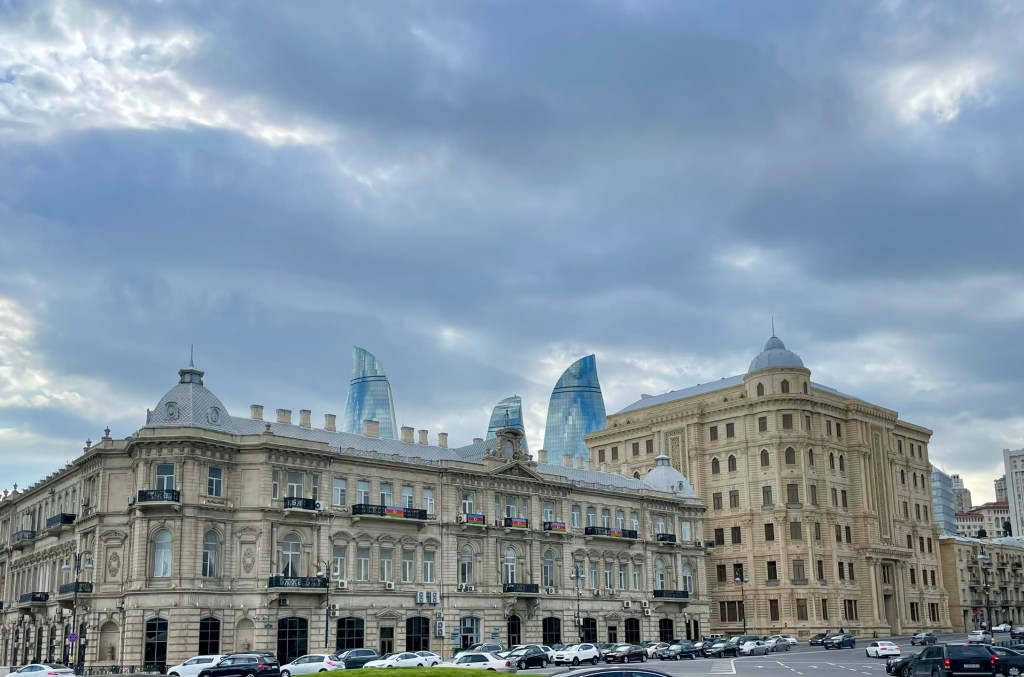
Above, just another couple buildings in Baku.
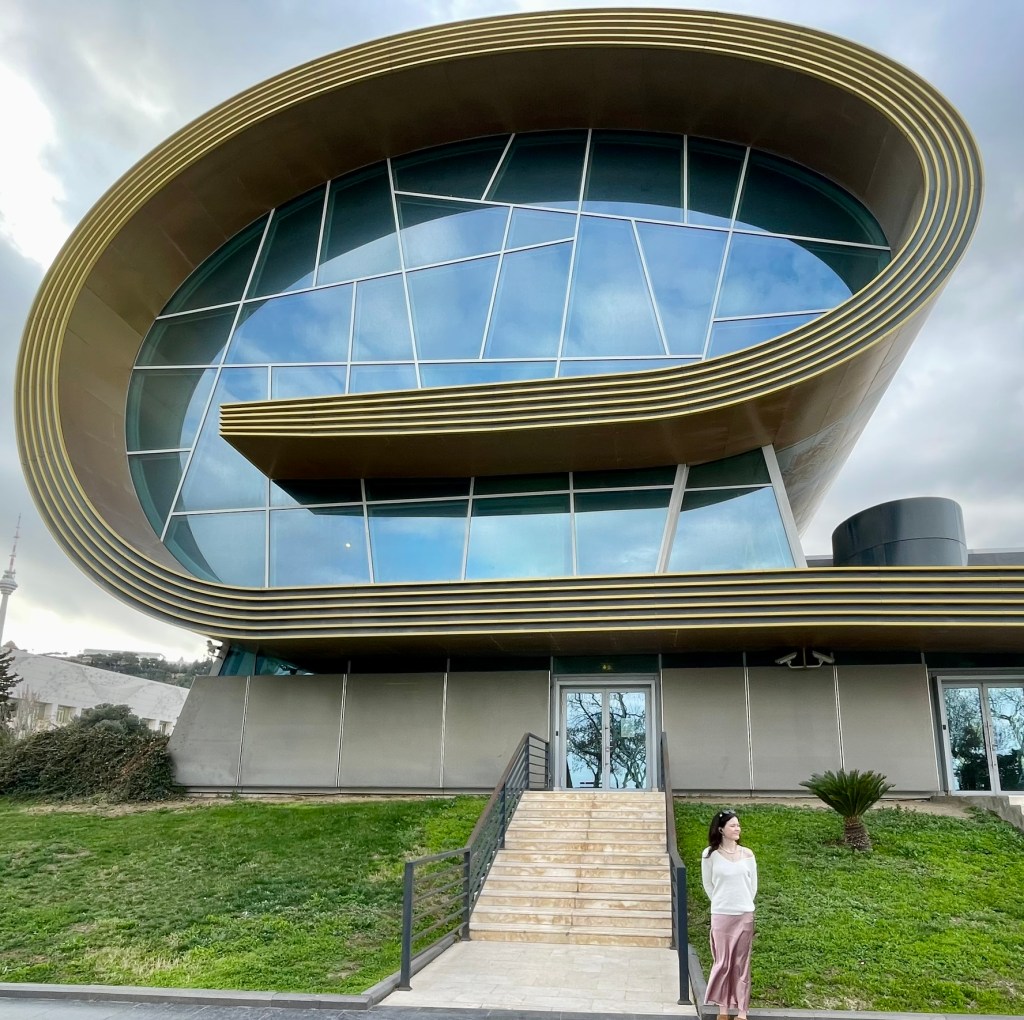
Modern carpet museum near our apartment. Here is a site with more Soviet style architecture in Baku – https://ganinasirov.com/2019/07/10/bakus-soviet-modernism-architecture/
I will be in Baku for six months and won’t get to see or understand all of the interesting buildings. So much to see and so helpful to get to see a bit of it through expert eyes.


One response to “Hey, Baku has Cool Buildings”
Hey Rich,
I loved this post. What a surprise that Baku has such amazing architecture! Great that you had Lincoln as a guide and Michelle and Eva by your side to learn with you.
I saw some more great pictures of your anniversary adventures with Michelle on her Facebook page. What a wonderful way to celebrate.
I also just saw a What’s App text from you this morning announcing your latest post. Haven’t had a chance to read it yet am looking forward to checking it out.
I’m off to Chatham to see Jon & Susana later today. Jon and I will drive to Fenway Park tomorrow to see a Red Sox/Giants game. One of our favorite teams emerge victorious and it will be lots of fun whoever wins. The Amazing Travels of Rich Gottschall will no doubt be a big topic during the drive.
Keep on enjoying – and writing!
Scott
LikeLike